Author: Yi Ng

  • Project 5: Research Proposal

    (WHAT-WHY-HOW-WHAT IF)

    WHAT

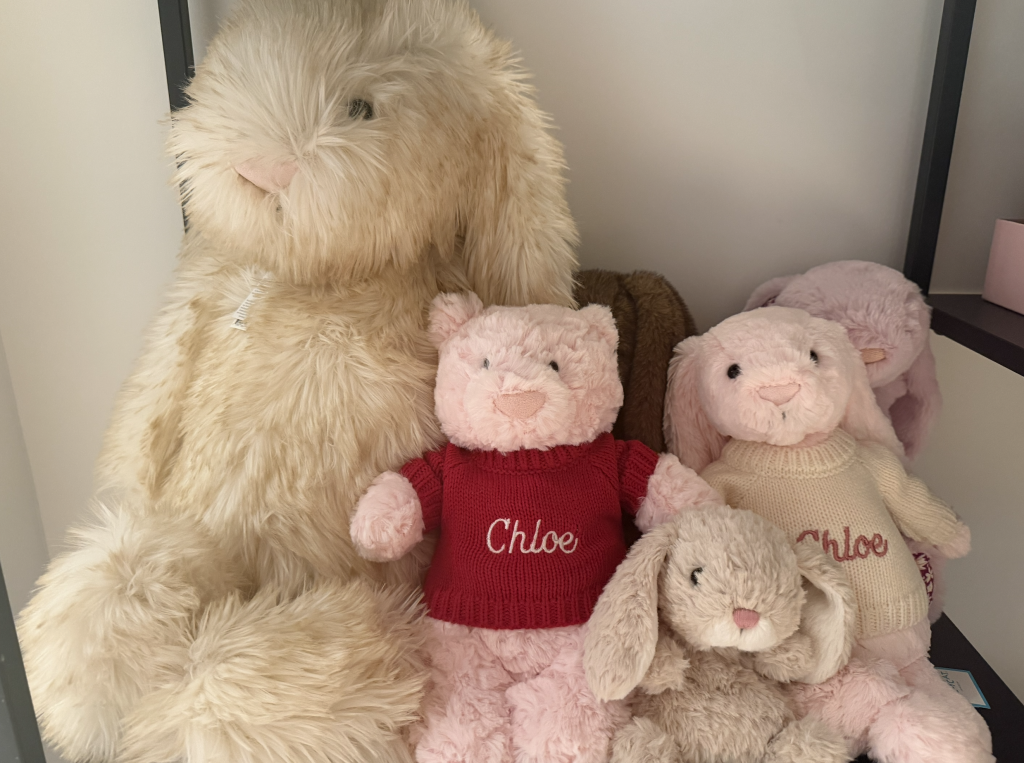
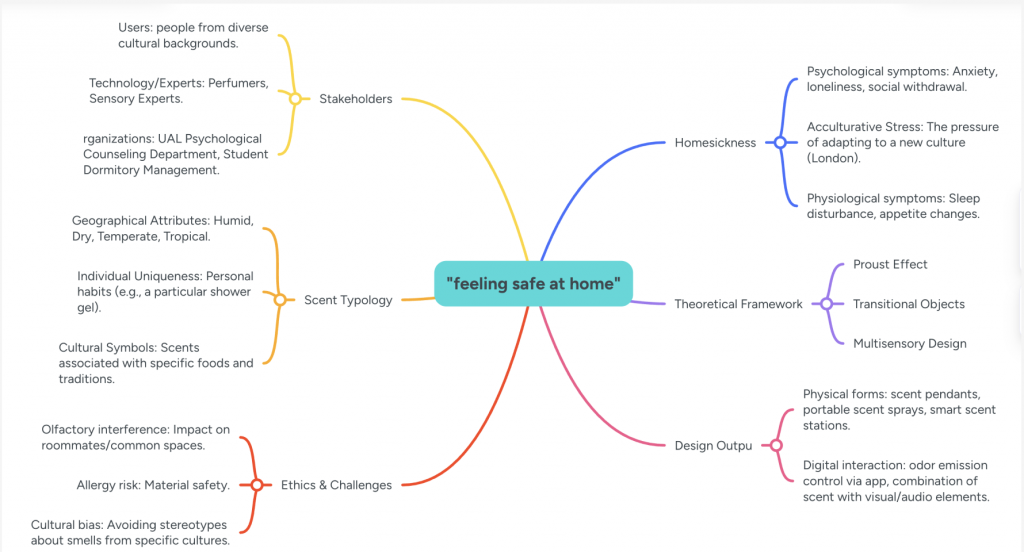
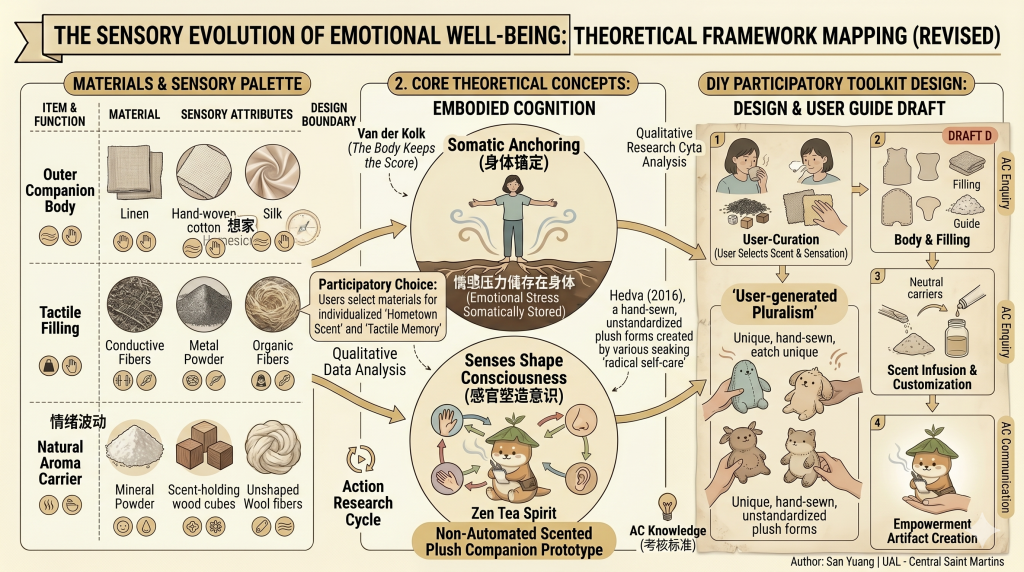
    This study investigates how material, physical treatments can lessen emotional precocity in people who are emotionally spent and temporarily relocated. It explicitly addresses the following research question: How can Chinese people abroad (for longer than 6 months), who feel homesickness, find comfort through objects that provide familiarity, tactile and olfactory memories? The target stakeholders are precisely defined as international professionals and students who have moved for temporary corporate assignments rather than permanent immigration. Among the key concepts are somatic anchoring, olfactory cultural legacy, temporary well-being, and functional sensory design. The primary objective is to produce non-electronic, scented plush companions that serve as physical links to the users’ home countries by incorporating human-curated regional scents, such as local teas or native soil. This is predicated on the empiricist philosophy of Serres (2016), which maintains that bodily senses shape human consciousness.

    WHY

    I am motivated both personally and professionally by the widespread temporary international mobility for education and career advancement, which leaves people in a prolonged state of emotional “drifting.” Every year, between 600,000 and 700,000 Chinese professionals and students go abroad, experiencing severe yet transient cultural isolation. This research is crucial since the well-being support that is now provided in academic institutions and business settings is often overly clinical or distant from real-world situations. By highlighting the neglected senses of touch and smell, this concept provides a tactile, sympathetic alternative. According to Classen’s (1993) anthropology of odor, it demonstrates that the “smell of home” is a key sign of cultural identity too precious and sensitive to be automated, supporting human-to-human connection over industrial standardization.
    HOW                      

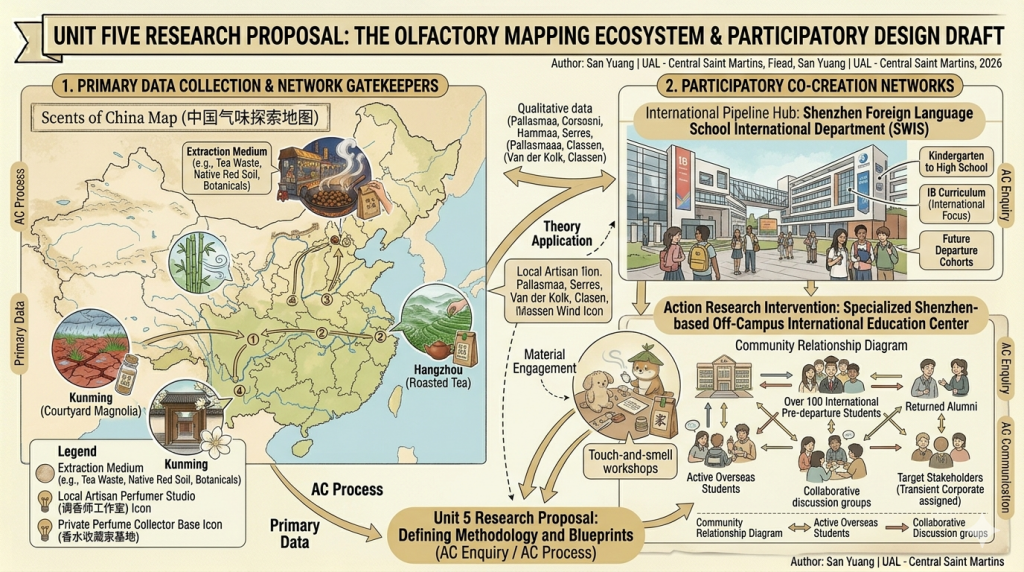
    The method is framed under “Action Research” through cycles of qualitative, iterative inquiry that support co-creation by participants. This study creates an open-ended experimental framework that allows people complete creative freedom under only two non-negotiable boundaries: a calming tactile feel and a scent that evokes memories of home, moving away from strict, designer-led prototyping. In practical terms, my current action cycle converts this theory into open-source courses and a participative toolbox. I provide consumers a blank canvas of raw materials (different unshaped textiles, conductive fillers, and neutral carriers) rather than imposing a predetermined style, like my original utilitarian phone-grip buddy. Participants are invited to externalize their own subjective displacement through touch-and-smell workshops held inside global academic and professional networks. These seminars serve as forums for discussion, guided by Van der Kolk’s (2014) thesis on the somatic storage of emotional stress. The study analyzes the wide ideological and psychological differences in how “home” is uniquely expressed through human memory by documenting how various people naturally shape, weigh, and infuse these elements.
    WHAT-IF

    If successful, this research creates a decentralized archive of various, self-soothing artifacts by replacing standardized items with user-generated pluralism for emotional support. Giving participants complete autonomy, however, would result in extremely unpredictable consequences; some products might be too deeply subjective for anybody but the maker to comprehend, structurally brittle, or practically impracticable. In the end, our study shows that true well-being is attained through an open framework that permits the unanticipated variability of raw sensory memory to retake its position at the core of human connection rather than through uniform technology.

    Bibliography

    Classen, C. (1993) Worlds of sense: exploring the senses in history and across cultures. London: Routledge.

    Drobnick, J. (ed.) (2006) The smell culture reader. Oxford: Berg.

    Hedva, J. (2016) ‘Sick Woman Theory’, Mask Magazine, (2016年1月). Available at: http://www.maskmagazine.com/not-again/struggle/sick-woman-theory (Accessed: 21 May 2026).

    Malafouris, L. (2013) How things shape the mind: a theory of material engagement. Cambridge, MA: MIT Press.

    Pallasmaa, J. (2012) The eyes of the skin: architecture and the senses. 3rd edn. Chichester: John Wiley & Sons.

    Sanders, E.B.N. and Stappers, P.J. (2008) ‘Co-creation and the new landscapes of design’, CoDesign, 4(1), pp. 5–18.

    Serres, M. (2016) The five senses: a philosophy of mingled bodies. Translated by M. Sankey and P. Cowley. London: Bloomsbury Academic.

    Van der Kolk, B.A. (2014) The body keeps the score: brain, mind, and body in the healing of trauma. New York: Viking.

  • Reflective Writing: “The Change I Want to See.”

    The Context and the Area of Change

    My research is based on a very personal observation I made about the emotional struggles faced by young professionals and international students who live away from home. Many people, like myself, are “drifting”—managing life in distant locations while harboring a deep, even agonizing longing for their origins. The “area of change” is, in my opinion, how we offer this displaced population emotional support. Nowadays, a lot of mental health tools are digital or clinical. I suggest a change to human-centered, sensory-based therapies that use touch and aroma to create a connection between a distant home and a foreign space.

    The Concept: Scented Plush Companions

    The development of scented plush friends is the change I wish to implement. These are more than just toys; they are “sensory anchors” that preserve the distinct scent of a person’s own country. According to research, the sense most strongly associated with emotion and memory is smell. I want to provide users a concrete link to their past by infusing dolls with fragrances that symbolize particular national or regional backgrounds, such as the aroma of particular tea kinds, native flowers, or spices. The goal of this intervention is to create a haven of comfortable familiarity in the “unknown” and “intimidating” areas of a strange city.

    Integrating Theoretical Frameworks

    A variety of theoretical stances have influenced my path to this conclusion. I use Van der Kolk’s (2014) explanation that the body “keeps the score” of emotional stress in order to comprehend the physical weight of homesickness and worry. In times of extreme anxiety, a tangible, weighted doll offers the tactile anchoring required to calm the nervous system. In addition, I use Johanna Hedva’s (2015) Sick Woman Theory to support the vulnerability of people who are lost in a very competitive metropolitan environment. This project promotes a type of “radical self-care” for both workers and students, recognizing that their yearning for home is a real need that merits a committed, sensory-rich solution.

    Stakeholders and Engagement

    Using Freeman’s (2010) Stakeholder Theory, I have determined that this shift requires cooperation between the “drifters” (users), scent experts who can select genuine local scents, and universities like UAL that host international populations. Accurately capturing the “essence” of a home while eschewing preconceptions and concentrating on genuine cultural indicators is the difficult part. In order to make sure that the design is driven by human experience rather than technology convenience, I plan to start conversations with my peers to find out which particular scents make them feel like they belong.

    Personal Reflection and Future Goals

    This project pushes me to step outside of my comfort zone by fusing cultural psychology with product design. Realizing that the most potent “change” I can effect is not through intricate procedures but rather through a straightforward, fragrant item that conveys the message, “You are not alone; your home is still with you,” has been a life-changing experience. I want to work on this topic for my MA since it combines my technical research abilities with a very humane goal: using memory and touch to alleviate the loneliness of the displaced.

    References

    Freeman, R. E. (2010) Stakeholder Theory: The State of the Art. Cambridge: Cambridge University Press.

    Hedva, J. (2015) Sick Woman Theory. [online] Mask Magazine. Available at: http://www.maskmagazine.com/not-again/struggle/sickwoman-theory (Accessed: 12 April 2026).

    Kolk, B. (2014) The Body Keeps the Score: Brain, Mind, and Body in the Healing of Trauma. London: Penguin.

    McNiff, J. (2017) Action Research: All You Need to Know. London: SAGE Publications.

    Moon, J. (1999) Learning Journals: A Handbook for Academics, Students and Professional Development. London: Kogan Page.

  • Project Three: Investigating Impact—Reflective Writing

    1. Personal Motivation and Positionality

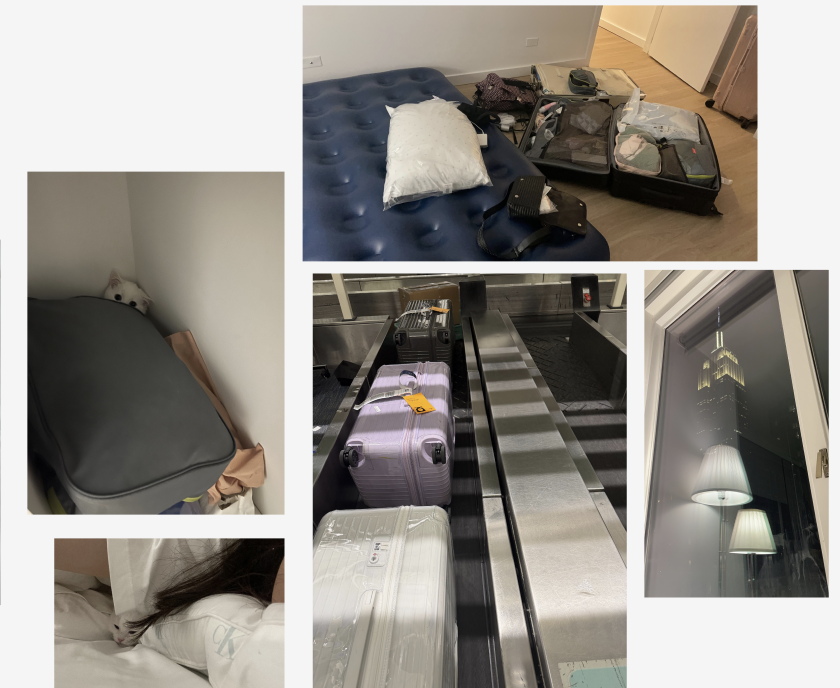
    I started my study by asking myself, “Where does my sense of safety at home come from?” Cross-cultural mobility has influenced my life. I was born in Hong Kong, grew up in Shenzhen, and went on to study abroad, graduating from Parsons with a background in fashion design.

    Since I was around eleven years old, I had known that I would eventually pursue my education abroad. This affected my objectives, but it also meant that I would feel dislocated from my homeland and culturally displaced. As a result, I entered an international school to prepare for studying abroad. This experience made me more aware of the need to actively construct a sense of “home” within changing cultural contexts.

    1. Sensory exploration and observation

    I was in what Moon (1999) refers to as the “Notice” stage of reflective learning at the start of the project. I started by focusing on the little things in my everyday life that gave me a sense of security. I found that routines, familiar places, and well-organized surroundings helped foster a feeling of peace and order.

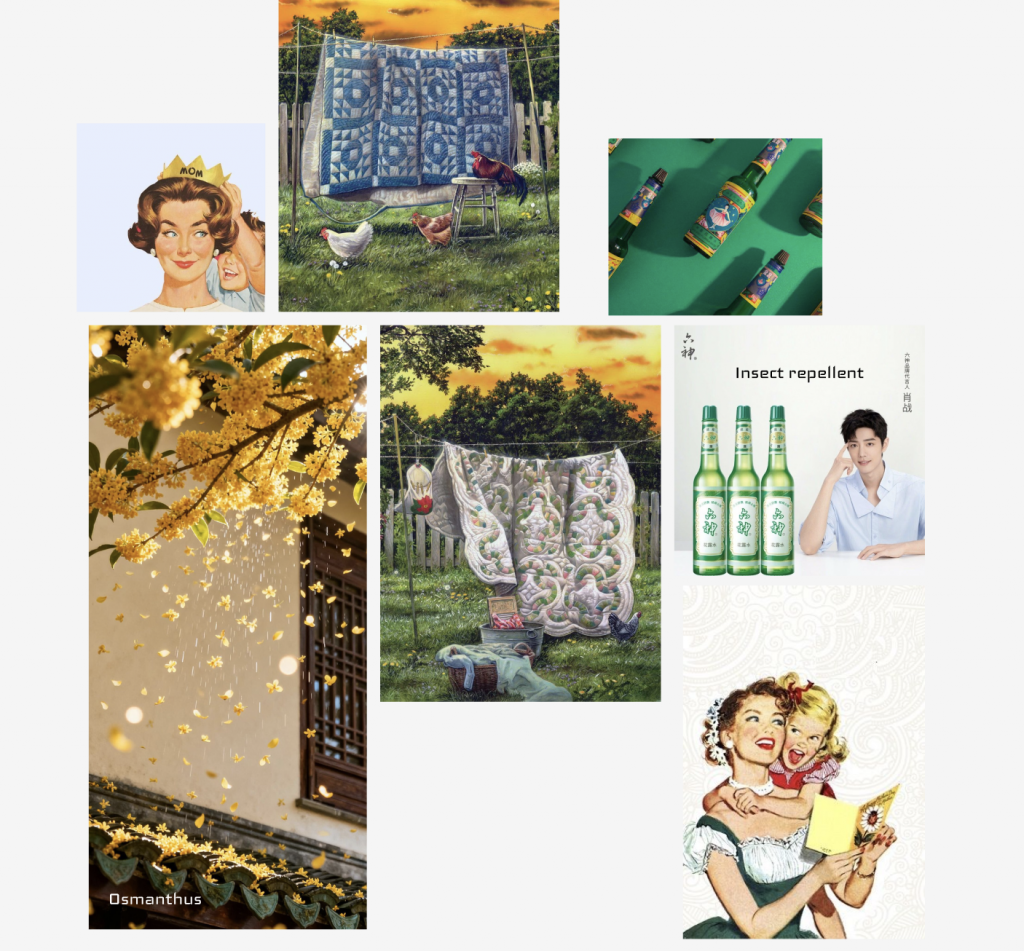
    I also found that comfort was greatly enhanced by sensory components like flowers, fragrance, and soft items like stuffed animals. I did informal research on Chinese online forums like Tieba to see whether anyone else had a similar experience. I noticed a lot of similarities: people described the aroma of osmanthus, floral water, sun-dried bed linens, and their mother’s scent. Childhood memories were closely associated with these scents.

    This insight has to do with how the body and memory are related. According to Kolk (2014), emotional experiences are both cognitive and embodied, which explains why powerful sentiments of familiarity and safety can be triggered by scent.

    1. Making Sense and Research Methodology

    I entered Moon’s “Making Sense” stage as the investigation progressed (Moon, 1999). I started to examine the significance of these sensory impressions and came to the conclusion that routine, memory, and emotional attachment are all strongly linked to a feeling of safety.

    I viewed my study as a type of action research in order to advance this investigation. Action research is a cyclical process of observation, reflection, and concept refinement, according to McNiff (2017). I constantly switch between research and firsthand observation in my project so that my concepts can develop via practice.

    1. Audience and Prospects

    I started to see how important my endeavor is to other people in addition to being personal. International students who struggle with homesickness and cultural adjustment make up my main audience.

    I’m now at Moon’s “Working with Meaning” stage, when I look at these experiences from other angles. I’m creating a design direction centered on multimodal emotional environments by tying together sensory memory, emotional attachment, and spatial experience. This research investigates how people who live in different cultures can have brief but significant moments of psychological ease through design.

    References

    Moon, J. (1999) Learning Journals: A Handbook for Academics, Students and Professional Development. London: Kogan Page.

    McNiff, J. (2017) Action Research: All You Need to Know. London: Sage.

    Kolk, B. (2014) The Body Keeps the Score. London: Penguin.

  • R. Edward: 《Stakeholder Theory: The State of the Art》, 2010

    According to Freeman’s Stakeholder Theory, an organization’s ability to successfully manage and create value for all of its stakeholders is equally as important to its success as its shareholders.

    Key Concept: It asserts that any group or people who has the potential to influence or be impacted by an organization’s actions is considered a stakeholder, including workers, clients, communities, and the environment. By balancing and co-creating value with these varied groups and prioritizing ethical considerations above a solitary focus on profit, sustainable success can be attained.

    I was also able to reevaluate how my project should be positioned beyond my own experience thanks to Freeman’s concept of stakeholder theory. According to Freeman (2010), a project’s success should be determined by taking into account the relationships and demands of several stakeholders rather than just one viewpoint. This concept forced me to consider my work’s target audience and potential effects on other groups.

    People who are facing emotional stress or homesickness, especially those who are living away from their familiar surroundings, are the main stakeholders in my initiative. Other stakeholders, such as those who may share a place yet have varying sensitivity to sensory factors like aroma, must also be taken into account. This helped me realize that creating for emotional comfort requires balancing many wants and experiences rather than being a neutral procedure.

    I also realized that these stakeholders are not separated because of Freeman’s concept of interdependence. Cultural background, environmental design, and emotional well-being are all related. I should look at more inclusive design strategies that let different experiences coexist rather than favoring one group over another.

    This viewpoint changed how I perceived the project. I started to consider my work as a negotiation between other users, situations, and emotional reactions rather than just expressing my own feelings. This has inspired me to approach design with greater responsibility and inclusivity.

    Freeman, R. (2010) Stakeholder Theory: The State of the Art. Cambridge: Cambridge University Press.

  • McNiff:《Action Research: All You Need to Know》,2017

    Action Research: An Overview of Essential Information
    Action research is described in this book as a practitioner-led approach that focuses on enhancing one’s own practice via an ongoing cycle of action and reflection.

    Essential Ideas:

    Cyclical Process: Each cycle of the spiraling, iterative Plan → Act → Observe → Reflect process enhances comprehension and improves practice.

    Self-Improvement: “How do I improve my work?” is the central question that drives action research. In order to improve professional efficacy, it places a strong emphasis on personal inquiry. 

    “Living Theory”: Theory is not abstract; rather, it arises from and is tested in practice. It is an individualized, values-based framework that changes as the practitioner acts.

    Educational Accountability: Practitioners are accountable for their work and must explain how their efforts result in improvements.

    I was better able to comprehend my project as a continuous process of learning by doing thanks to McNiff’s idea of action research. Planning, acting, observing, and reflecting comprise the cyclical structure of action research, with each step influencing the subsequent one (McNiff, 2017). This paradigm is strongly related to my research into the sources of my sense of security at home.

    For instance, I started by looking at my everyday surroundings and noting things, rituals, and smells that made me feel at ease. I subsequently took action by recording these encounters and looking into related online conversations. I identified patterns through observation and introspection, especially the link between childhood memory and scent. As I develop my ideas and turn them into design concepts, this process keeps changing.

    In this way, my effort might be viewed as a type of “living theory,” in which knowledge is constantly formed by my own experiences and deeds rather than being static. Instead of keeping research and practice apart, I’m starting with my own experiences to create a more comprehensive design approach that emphasizes emotional and sensory well-being.

    McNiff, J. (2017) Action Research: All You Need to Know. London: Sage.

  • Jenny Moon:《Learning Journals》, 1999

    Stages of Representation:

    1. Notice: Simply recording what happened.
    2. Making sense: Beginning to integrate information and trying to figure out what happened.
    3. Making meaning: Beginning to connect new experiences with existing knowledge.
    4. Working with meaning: Being able to examine the same event from multiple perspectives.
    5. Transformative learning: Reflection that ultimately changes your behavior, attitudes, or worldview.

    I was in the “Notice” phase at the beginning of the project. I just noted specifics of my everyday life, like how certain areas, items, or routines at home made me feel comfortable. For example, I started to observe emotional changes that were brought on by ordinary actions like staying in a familiar room, arranging things, or taking in my home’s surroundings.

    I entered the “Making Sense” phase as the research went on. I collected these experiences into more lucid observations and started to examine why these commonplace components offered a sense of comfort. For example, I found that a sense of security is connected to memories, routines, and individual experiences in addition to actual locations.

    I progressively advanced into the “Making Meaning” level through additional introspection. I started making connections between these intimate experiences and more general ideas like “home,” emotional attachment, and personal development. This helped me understand that a person’s psychology and past experiences play a significant role in their sense of security, rather than just the exterior world.

    I’m currently trying to go into the “Working with Meaning” stage through constant observation and documenting. During this stage, I reexamine previous memories from many angles. For example, I use the three dimensions of place, memory, and emotion to comprehend the “sense of security at home.” I am able to comprehend my own emotional structure better because of this multifaceted approach.

    According to Moon (1999), the most profound kind of introspection is “transformative learning,” which implies that introspection eventually alters a person’s thoughts or actions. This project offers me the chance to reconsider my relationship with home spaces, memories, and personal identity in addition to analyzing the sources of a sense of security.

    Moon, J. (1999) Learning Journals: A Handbook for Academics, Students and Professional Development. London: Kogan Page.

  • Hello world!

    Welcome to myblog.arts. This is your first post. Edit or delete it, then start blogging!