Author: Yi Ng

  • Wednesday Class Reflection

    The conversation this Wednesday caused me to reevaluate what “home” and “homesickness” really mean.

    One intriguing takeaway from the discussion was that homesickness encompasses more than just want to return to a physical location. Both we and the location we leave behind continue to change when we are away from home for an extended period of time. Meanwhile, we progressively create new routines, connections, and memories in other places. Once unknown, a foreign location might gradually become a part of our daily existence.

    This also caused me to consider what it was like to go back home. Sometimes we think of home as something steady and unaltered, but it could not feel exactly the same when we return after a lengthy absence. Even while we are eager to return, we also recognize that we have already started a new life somewhere else. This produces an intriguing emotional gap between departing, missing, coming back, and adjusting.

    This conversation made it easier for me to comprehend homesickness as a more nuanced emotional experience for my research. In order to investigate ways to lessen homesickness among international students, I must first identify the specific aspects of home that they miss and the things that emotionally bind them to it. These emotions could be connected to familiar routines, relationships, memories, sensory experiences, or a feeling of security and comfort.

    As a result, my research continues to concentrate on ways to lessen homesickness while investigating various strategies for providing international students with emotional support while they are away from home.

    In the future, I want to know what aspects of “home” can make me feel the most at ease and how I can incorporate these aspects into my interventions. This will enable me to create more effective strategies for helping overseas students deal with homesickness.

  • Reflection on Tutorial Feedback

    I became aware that my project requires a more precise and targeted study strategy thanks to this tutorial. I’m currently investigating a number of related concepts, such as comfort, belonging, stress, anxiety, and homesickness. However, combining all of these could result in an overly expansive undertaking. I need to be more clear about what I am really studying and what I hope my intervention will address.

    The requirement for more substantial evidence was another crucial aspect. I should integrate these insights with secondary research and input from outside experts or pertinent stakeholders rather than depending only on the individual experiences of the participants. This will enable me to determine whether the trends I am seeing have broader cultural, societal, or psychological implications.

    Additionally, I need to use language with greater caution. For instance, while experiencing homesickness, tension, anxiety, or discomfort are similar, they are not always the same. My research question and intervention will be more persuasive if these concepts are defined more precisely.

    In the future, I will focus my research more narrowly, examine the evidence I already have, and get input from pertinent external stakeholders. Additionally, rather of predetermining the meaning of the object or experience, I want to reevaluate my intervention depending on what participants actually tell me.

    I was reminded by this instruction that the intervention should assist me find something new through investigation, not only show my idea.

  • Two Questions and One Object

    I created two questions for my project about home, belonging, and international students:

    1. If you were studying on a different planet, what would you bring from home and why?

    2. When did you first begin to feel at home in a foreign place?

    I want to created a “Home Cube”—a clear, non-melting ice cube with a tiny star frozen inside—for the object.

    After showing it to the participants, I would inquire:

    “What do you think is frozen inside if this came from your home planet?”

    It might stand for a person, cuisine, voice, scent, memory, or anything else they connect to home.

  • Homesickness: What Is It?

    I discovered after my most recent instruction that I had been using the term “homesickness” throughout my project without providing a clear definition.

    My personal experience of studying overseas was the primary source of my initial understanding of homesickness. I associated it with feelings of emotional “unsafe,” discomfort, loneliness, and unfamiliarity. But a straightforward topic posed a problem to me during the tutorial: Are homesickness and feeling frightened really the same thing?

    They’re not, I realized.

    It is possible for someone to feel quite secure in London and yet sense a sudden longing for home. However, a person may feel uneasy or insecure in a foreign location without experiencing any homesickness at all. This prompted me to go back to the start of my investigation and pose a more basic query:

    Homesickness: What is it?

    Missing a home is not the only aspect of homesickness.

    One of the most relevant books I found through the UAL Library was Ryan Hediger’s Homesickness: Of Trauma and the Longing for Place in a Changing Environment (2019).

    The connection between homesickness and location is what drew my attention to Hediger’s method. Home is more than just a structure we wish to go back to. Familiar locations, surroundings, memories, bodies, language, and our material past are all linked to our bond with home.

    This altered my perspective on the term “home.”

    What precisely are people missing when they remark, “I miss home”?

    It may be their family, but it could also be their bedroom, the food they used to eat, the fragrance of their clothes, the humidity of a city, the sound of a certain language being spoken nearby, or the sensation of touching an item they’ve had for years.

    This implies to me that being physically far from home is not the sole factor contributing to homesickness. It may also be a want for a comfortable interaction with our surroundings.

    Being here but yearning to be there

    I also found Hannah Collins’ A Worldwide Case of Homesickness through the UAL Library.

    One concept from Collins’ work in particular stuck with me: homesickness can be defined as being emotionally yearning for one place and time while physically being in another.

    This definition describes a contradiction, which is why I find it helpful.

    A part of me is somewhere else, yet my body is here.

    This may be sitting in a London bedroom and then remembering a Shenzhen kitchen for an overseas student. The person’s focus briefly shifts, but they do not physically depart London.

    But there’s another issue.

    It’s possible that the “home” we recall isn’t exactly the same.

    Individuals evolve. Cities evolve. Families evolve. We transform ourselves.

    As a result, homesickness might not always represent a wish to go back home. There are moments when we yearn for a specific, nostalgic version of home.

    Can we take it home with us?

    Romalyn Ante’s Antiemetic for Homesickness offered me a another perspective on this issue.

    Migration, family, country, heritage, and the complex experience of belonging across cultural boundaries are all explored in her work. Her work made me consider the items migrants continue to carry from one place to another rather than viewing home as a single, fixed geographical location.

    This concept seems especially pertinent to my project.

    People who relocate overseas don’t come empty-handed.

    They carry with them clothing, photos, cuisine, customs, languages, items, scents, and memories. Even though some of these objects can appear unremarkable, they have the power to emotionally connect two locations.

    This raises the question of whether the absence of these comfortable sensory connections contributes to the onset of homesickness.

    Perhaps we miss more than just home.

    Perhaps we overlook the little sensory information that indicates:

    I am familiar with this feeling; it is mine.

    Touch, smell, and objects

    This returns me to my project’s sensory focus.

    Smell intrigues me since it can unintentionally evoke memories of a location. Because familiar textures and soft materials can foster physical connection, contact piques my curiosity. Because they can go with us when places cannot, items pique my attention.

    Home cannot be replaced by a blanket, a toy, an article of clothing, or a comforting smell.

    This distinction, in my opinion, is crucial.

    My project shouldn’t make the promise that something can “cure” homesickness. Rather, I’m starting to wonder if sensory items can serve as transient links to home.

    As a result, the question shifts from:

    How can I prevent people from experiencing homesickness?

    to:

    When someone is away from home, how might an object assist them reconnect with a sensation, memory, or sensory experience?

    This seems a lot more in line with what I really want to look into.

    What does homesickness mean in my project, then?

    I would characterize homesickness at this point as:

    A person’s emotional perception of the distance between their current location and the people, places, rituals, things, and sensory memories that make their “home” seem comfortable and significant.

    This term is purposefully more inclusive than “missing family.”

    A person can be home.

    A place can be called home.

    However, home can also be an object, a ritual, a language, a scent, a texture, a memory, or a sense of familiarity.

    This also means that before I ask my participants what “home” means to them, I must exercise caution.

    Therefore, rather than starting with my definitions, I should start my next action research phase with theirs.

    Rather than posing the question, “Do you feel safer with this object?”I would want to inquire:

    What are you really missing when you’re homesick?

    For you, what makes a place seem like home?

    Is there a thing, aroma, or texture that makes you think of home right away?

    What does it feel like to be at home when you get back?

    I believe that by asking these questions, I will be able to comprehend homesickness as a lived experience rather than an assumption.

    And maybe this is the most significant shift in my perspective:

    I’m not attempting to create a “home” anymore. I’m attempting to figure out what remnants of home people take with them, what they leave behind, and whether design may aid in reestablishing the connection.

    References

    Hediger, R. (2019). Homesickness: Of Trauma and the Longing for Place in a Changing Environment. Minneapolis: University of Minnesota Press.

    Ante, R. (2020). Antiemetic for Homesickness. London: Chatto & Windus.

    Collins, H. (1996). A Worldwide Case of Homesickness. Dublin: Irish Museum of Modern Art.
  • Reflection on Tutorial Feedback

    I’ve learned from this tutorial that my project needs to make a stronger link between homesickness, the evidence, and the intervention I’m creating.

    My current study investigates how Chinese expatriates may use touch, smell, and things to cope with homesickness. Up until now, a large portion of the project has evolved from my personal experience studying overseas and my observations of others. Although this personal beginning is significant, I came to the conclusion that the project’s broader assertions cannot be supported solely by personal experience.

    One crucial conversation concerned how I perceived safety and homesickness. I had previously associated homesickness with feelings of loneliness, nervousness, and being uncomfortable. But I was forced to consider whether these emotions are truly the same during the tutorial. It is possible for someone to feel insecure without experiencing homesickness or to feel comfortable but still experience homesickness. I realized that I had blended a number of distinct emotional experiences too rapidly as a result.

    Going future, I must define homesickness more precisely by conducting scholarly study and having direct discussions with my stakeholders. I could ask people more honestly, “When do you feel homesick?” instead of making assumptions about what homesickness is like. For you, what does homesickness mean? What items, scents, locations, or experiences come to mind when you think of home?

    My intervention is the subject of another crucial reflection. In order to provide emotional support, especially for Gen Z overseas students, I have been creating a unique character and stuffed animal. But I came to the realization that I had assumed that soft toys are inherently calming to young people. I started to doubt the reasoning for this choice after watching the tutorial. How might I convince an investor that a plush item is actually a suitable way to deal with homesickness rather than just a design choice based on my personal taste?

    This alters my perception of the project’s next phase. I should utilize action research to determine whether my current notion is correct rather than attempting to prove it.

    Therefore, I will strengthen the initiative in two ways as my next move. I’ll start by delving deeper into the topics of homesickness, belonging, sensory memory, and emotional attachment to items. Instead of depending solely on materials that support my preconceived notions, I will also consult the course librarian to find pertinent academic resources.

    Second, I’ll keep using stakeholders to test the intervention. In addition to determining whether participants enjoy the character or plush item, I also want to know why it makes them feel comfortable, when they would use it, what they would associate with it, and whether touch or aroma affects their emotional reaction.

    I became more conscious of my place in the research as a result of the instruction. I am both the researcher and, in a sense, a stakeholder because this project started with my own experience of studying overseas. Instead of eliminating my experience entirely, I must identify the ways in which it shapes my presumptions and consistently contrast them with data from other sources.

    After this tutorial, my largest change has been from creating a solution based on what I believe people need to creating an intervention based on what I can learn from them. The character, stuffed animal, and aroma shouldn’t be considered the definitive response just yet. They are instruments that enable me to explore the experience of homesickness and the ways in which sensory items could foster a sense of belonging.

  • Reflection: Strengthening My Research

    I realized that even though my project has advanced much, I still need to strengthen my research foundation for the next phase after thinking back on my most recent instructional feedback.
    Finding more pertinent material to bolster my comprehension of multisensory experience, fragrance, memory, comfort, and cultural belonging is one of my top concerns. This will enable me to more effectively situate my project within the body of existing research and provide a clearer explanation of how my method differs.


    At the same time, instead of rushing to a final design result, I should schedule extra interventions. I was able to comprehend the possibility of mixing scent and touch because to my prior interventions, but there are still a lot of questions that need to be explored with people.


    I want to involve people more actively in the process going forward, especially when it comes to selecting and reacting to various fragrances and sensory combinations. I want their experiences and input to direct the project’s evolution rather than determining what is consoling to them.
    Therefore, my next course of action is to concentrate more on research, testing, reflection, and iteration than on creating a final product. I intend to create a more precise and evidence-based course for the ultimate result through additional literature research and interventions.

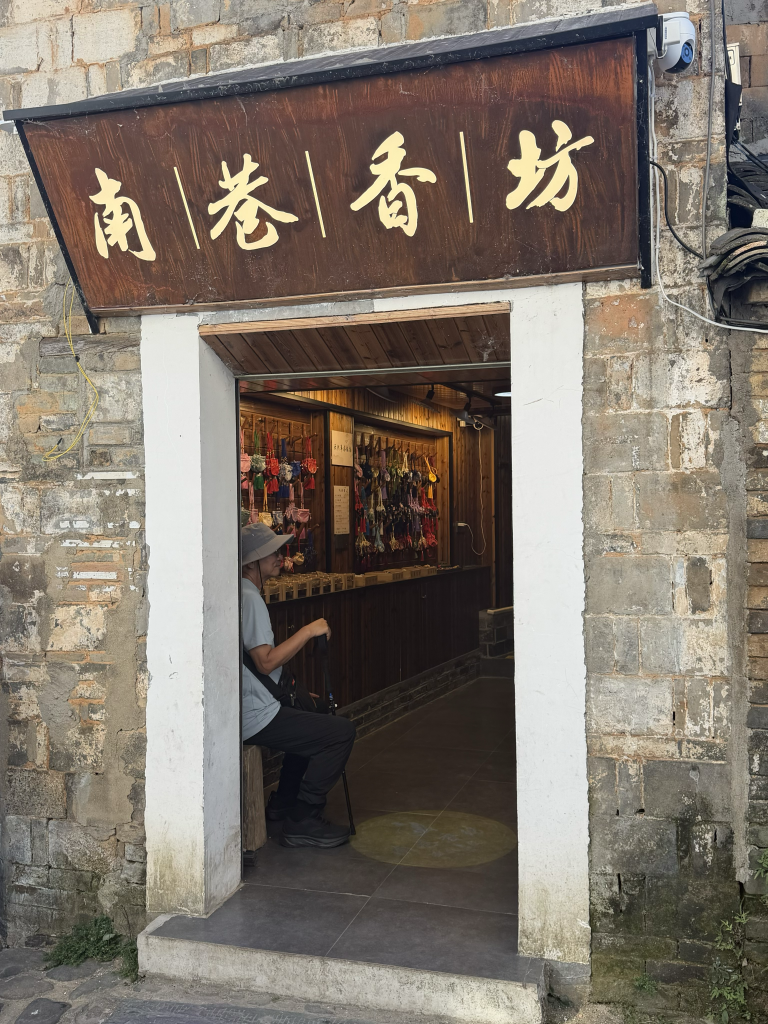
  • Olfactory Journey across China (Ⅷ): Learning the Traditional Craft of Chinese Scented Sachets

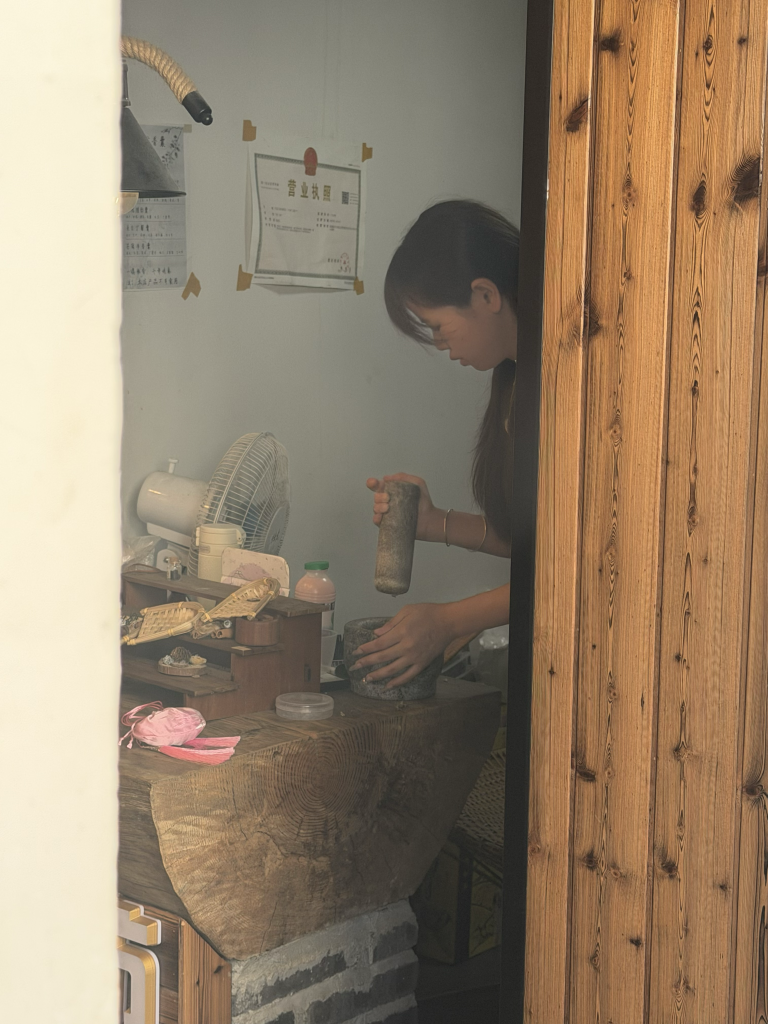
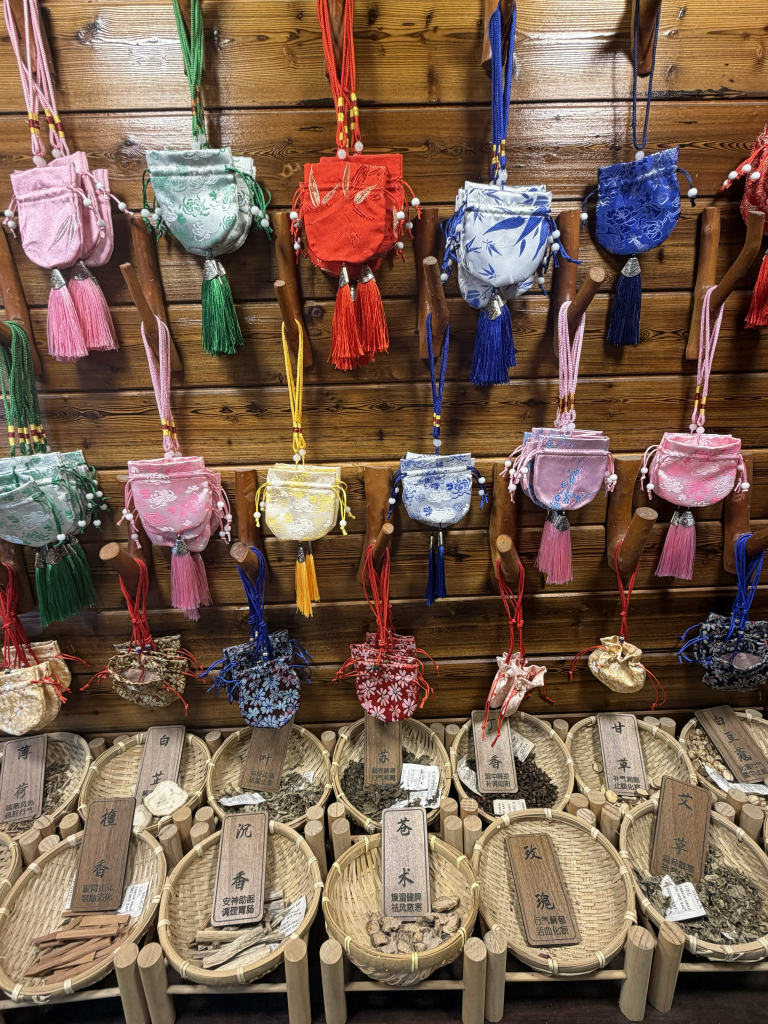
    I investigated the traditional Chinese practice of creating scented sachets (香囊) at this phase of my olfactory trip. I was very curious about how smell was transported prior to the invention of contemporary perfume goods and how various natural elements were chosen and blended into a compact, portable item.

    Finding Out How to Make a Traditional Sachet

    I gained knowledge about the steps involved in making a traditional sachet, including choosing and mixing dried aromatic ingredients, grinding them, and putting them inside a cloth container. The fact that the sachet is more than just a receptacle for a nice scent piqued my interest. It functions as a single sensory item because of its substance, fragrance, tactile qualities, and mobility.

    This had an instant connection to my own endeavor. I’ve been investigating a portable sensory companion that can surround the user with a tiny psychological safe space. The traditional sachet demonstrated to me China’s long-standing cultural custom of keeping fragrances near to the body.

    Examining Herbal Materials from China

    Learning about various Chinese herbal materials (中药材) that are traditionally linked to relaxation, relaxation, and well-being, as well as how various ingredients might be combined, was another crucial aspect of this research.

    I began focusing more on the qualities of each raw material, such as its intensity, how it changes when coupled with other ingredients, and how the entire aroma might be balanced, rather to just if a fragrance “smells good.”

    The blending process was especially motivating. Different materials can provide distinct layers to the ultimate sensory experience rather than depending on a single prominent scent. This caused me to reconsider how I might create smell profiles for my own project.

    From Fragrance to a Transportable Fragrance Product

    Additionally, this encounter altered my perception of what an olfactory object might be.

    In the past, perfume and fragrance design were my primary sources of inspiration. Another option was presented by the sachet: the fragrance does not always have to be actively dispersed into a space or sprayed on the body. When a user carries, handles, or holds an object, it can stay contained within it and gradually disseminate.

    After my second intervention, this seems especially pertinent. Scent needs to stay personal rather than impacting everyone around the user if my sensory partner is going to be used in restaurants, on public transportation, at university, or in other strange settings.

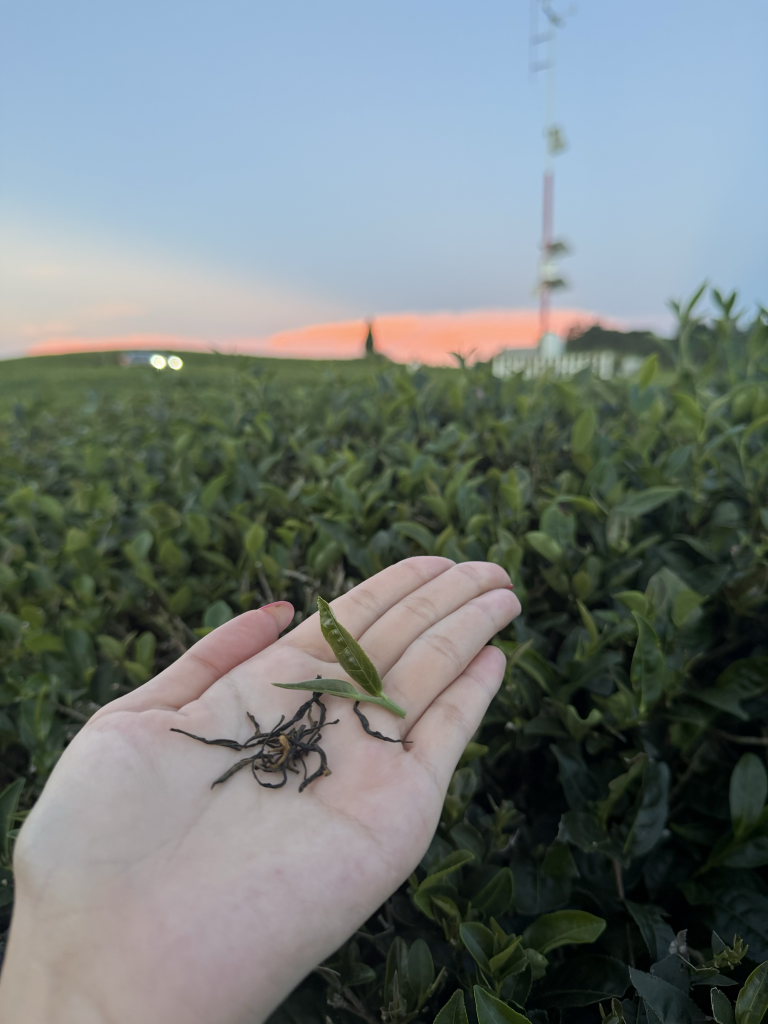
  • Olfactory Journey across China (VII): Visiting the Origin of Fuliang Tea

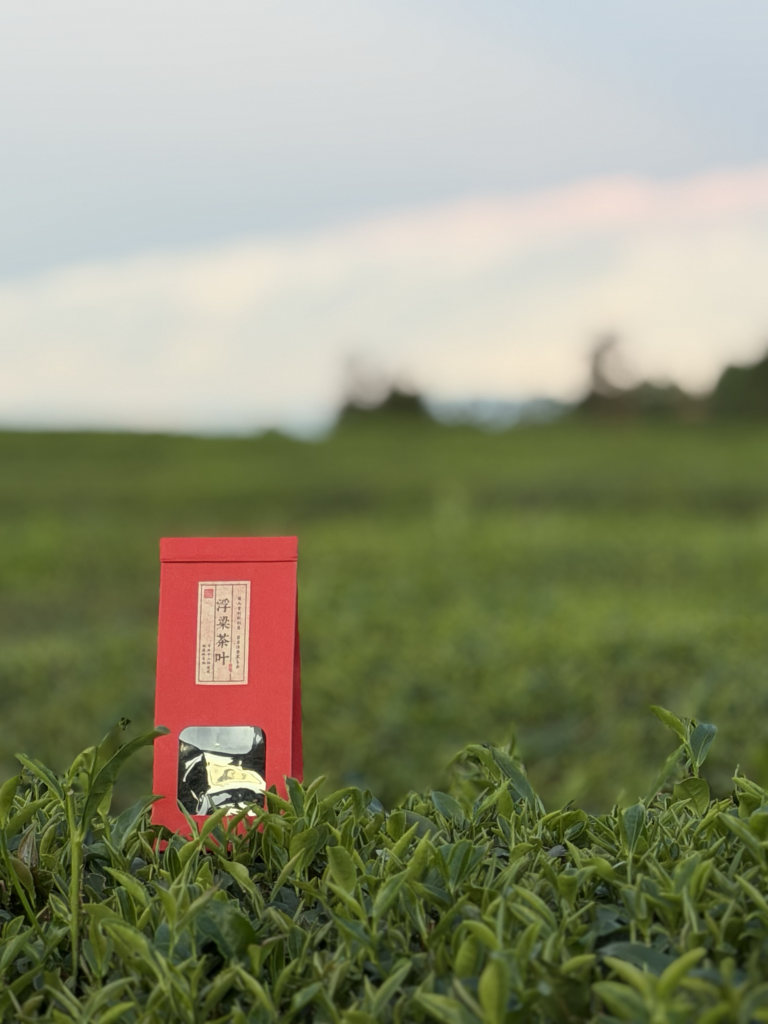
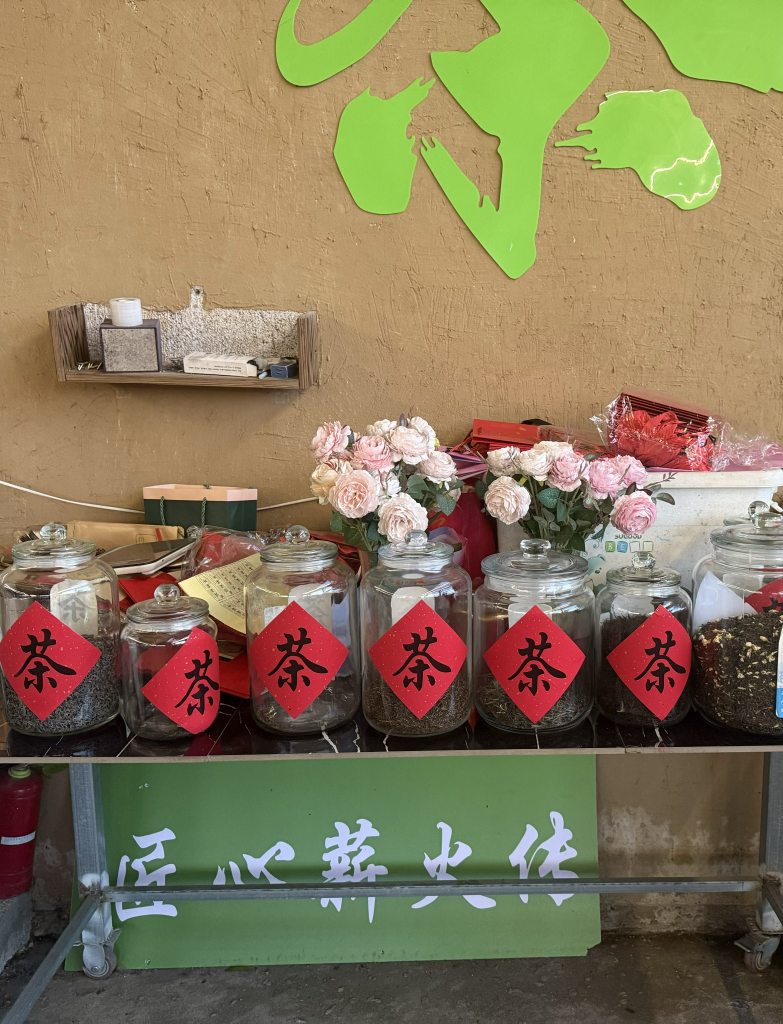
    I visited Fuliang, Jiangxi, as part of my olfactory field research around China, to investigate tea not just as a beverage but also as a sensory substance associated with location, memory, and daily Chinese culture.

    Throughout my investigation into fragrances that could evoke sentiments of warmth and familiarity, tea has frequently come up. But I didn’t want to learn about tea from a finished scent or perfume sample alone. I wanted to go back to the place where the material comes from so I could smell it more directly.

    From Aroma to Location

    My perception of tea as an aromatic substance was altered when I arrived at the tea-growing region. Rather than feeling a single, distinct “tea scent,” I became conscious of a much broader sensory experience, which included the surrounding vegetation, the leaves themselves, the air and humidity of the surrounding area, and the way the smell of tea changed as it was handled.

    This encounter caused me to consider the distinction between emulating a fragrance and actually experiencing its source.

    Tea is an easily identifiable smell element in perfume composition. However, fragrance coexists with the environment, materials, labor, and cultural history at its site of origin. As a result, the scent is part of a broader sensory context rather than just something that can be isolated and included into a product.

    Tea, Recollection, and Knowledge

    This was very pertinent to my topic since I’m investigating the ways in which Chinese individuals residing overseas could utilize tactile and olfactory experiences to foster a feeling of security and community.

    In my earlier interventions, I found that certain autobiographical recollections were frequently awakened by familiar scents. Tea was especially intriguing because it doesn’t always symbolize a single dramatic “home” memory. Rather, it can be subtly present in day-to-day activities, such as studying, having discussions, sitting at family tables, or just going about daily business.

    This caused me to reevaluate what kind of fragrance would be appropriate for my project. Maybe comfort doesn’t have to come from the most potent or blatantly nostalgic scent. Because it relates to recurring everyday experiences, a faint, everyday scent may occasionally be more potent.

  • Turning points

    Intervention 1 – “Micro-Comfort Zone”
    Six adult participants from overseas were recruited for the “5-Day Micro-Comfort Zone Challenge” to use their own tactile and olfactory goods (such as cozy transitional items, blankets, and familiar aromas) to create a dedicated domestic sanctuary. The study used transitional object theory and olfactory memory activation to test whether actively exercising spatial agency over an immediate micro-environment can alleviate homesickness and spatial disorientation by having participants interact with this sensory nook for 10 to 15 minutes every day for five days in a row. The results were then assessed through semi-structured debrief interviews.

    Reclaiming Spatial Agency: In order to shut out visual memories of academic work and regain control over generic rental rooms, participants purposefully avoided high-stress desks and beds and dropped to the floor (within a 1-2 square meter footprint).

    Deep Pressure Touch: Using familiar transitional plush toys successfully decreased physical restlessness and muscle stiffness, while thick blankets and firm cushions offered somatic anchoring through deep pressure touch.

    Pre-Cognitive Olfactory Recall: Self-selected fragrances (including sandalwood, pine resin, spiced fruit tea, and dried peel) immediately activated the limbic system, transforming intense homesickness into consoling, introspective nostalgia that confirmed cultural continuity.

    Physical Synergy Over Screen Reliance: The closed loop of tactile warmth and instant smell offered an offline, embodied sense of calm that anchored the nervous system, in contrast to digital screens and video calls that highlight time zones and physical distance.


    Intervention 2 – “Mobile Sensory Companion”
    A “semi-bespoke design probe” technique is used in this second action-research cycle to change the experimental focus from a static home nook to dynamic public settings. In order to verify the effectiveness of a portable dual-sensory companion in creating a discrete “psychological boundary,” assess the privacy of passive scent diffusion in public areas, and collect participant-led criteria for future modular prototype iterations, the study uses daily mobile diaries and post-intervention debrief interviews with overseas Chinese participants who attach a standardized natural solid scent pack (such as roasted oolong tea, sweet osmanthus, or mountain cedar) to their own personal plush charms and interact with them for one to two minutes during times of acute stress, homesickness, or language anxiety.

    Dual-Sensory Synergy: Cedarwood calms breathing and heart rate, osmanthus-tea scents convey cultural affiliation, and a variety of textures (plush, vinyl, satin) reduce physical strain.

    Invisible Psychological Boundary: In high-stress public areas (such as transit, supermarkets, and social gatherings), rapid tactile kneading and close sniffing create an instant, private safety zone.

    Discreet Passive Diffusion: The practical, non-intrusive practicality of the solid-state smell core is confirmed by the fact that it stays private and personal without spreading into the common area.


    Turning points
    The idea of a “psychological safe zone” experiences a drastic spatial compression during the two action-research cycles, changing from a stationary physical niche to a transportable, handheld artifact. Intervention 2 condensed this territorial haven into a transportable scented plush charm, while Intervention 1 confirmed the effectiveness of recovering a 1-2 square meter residential corner through tactile and olfactory curation. Fragrance serves as an invisible sensory barrier in this dynamic environment: in alienating, chaotic public spaces, the non-intrusive scent immediately creates an olfactory buffer that shields the user from environmental stressors and translocates them into a familiar, internalized space to effectively alleviate homesickness and spatial dislocation.

  • Reflection on Tutorial Feedback

    I was able to see how much my project has changed since I first proposed it thanks to this instruction. Initially, my concept was centered on the Micro-Comfort Zone, in which participants used aroma, familiar objects, and soft materials to create a small, secure area in their rooms. The training helped me realize that this concept was still quite comparable to existing sensory comfort or sensory regulation rooms, even if the intervention shown that participants found these places helpful for relaxation. Although I had tested the intervention’s effectiveness for my subjects, I had not made it apparent how my method differed.

    The addition of mobility and olfactory experience was the most significant turning point in my research. I started to realize that homesickness does not only occur when a person is by themselves at home thanks to my second intervention, the Mobile Sensory Companion. Additionally, it may manifest when traveling, dining alone, studying, commuting, or interacting with strangers. My perspective shifted from building a physical “comfort corner” to a movable psychological safe zone as a result. The idea that fragrance could establish an imperceptible personal barrier between a user and an unfamiliar environment piqued my interest.

    The tutor’s comments also caused me to reevaluate my perfume selection. Through perfume workshops, hotels, tea gardens, museums, and traditional fragrance objects, I investigated many culturally identifiable materials and scents during my field research in China. I now understand, though, that I shouldn’t presume that a single fragrance can symbolize “home” for every Chinese person. Personal memories and sensory preferences are still highly unique, while cultural memory is somewhat common.

    As a result, I should make my next intervention more interactive. Rather than distributing a single scent that I have chosen, I may offer multiple scent profiles and let participants select the one that most closely relates to comfort, safety, or home. I may then learn which sensory attributes need more development based on their selections and comments. Instead of framing me as the designer who determines what comfort should smell like, this would shift the project toward co-design.

    Strengthening my scholarly references, especially in relation to multisensory settings, multisensory items, and olfactory design, was another crucial takeaway from the session. This will enable me to explain my project’s unique contribution and place it more clearly in connection to current practices.

    Ultimately, the comments altered my perspective on documentation. Throughout my fieldwork, I have gathered a large number of photos, which are not limited to serving as proof of my travels. I may turn them into a visual journal that depicts the individuals, locations, supplies, smells, and choices that progressively influenced the project.

    Overall, this lesson made it clear to me that creating a cozy scented object is no longer the only aspect of my project. It is evolving into an inquiry into the ways in which involvement, touch, scent, and cultural memory might assist individuals in creating a transportable sense of identity.