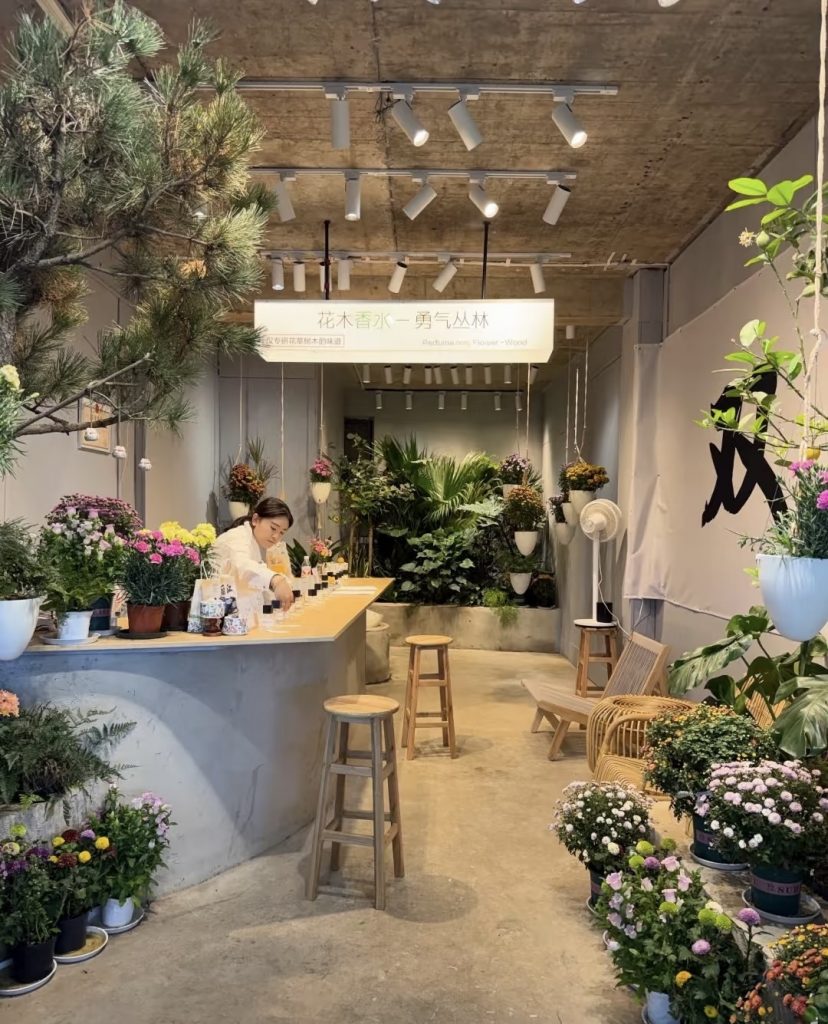
Participant 1: Lin (24, MA Design, London)
Section 1: Preparation and Micro-Space Configuration
- Could you explain the nook or area where you established your “Micro-Comfort Zone”? Why did you choose that particular location?
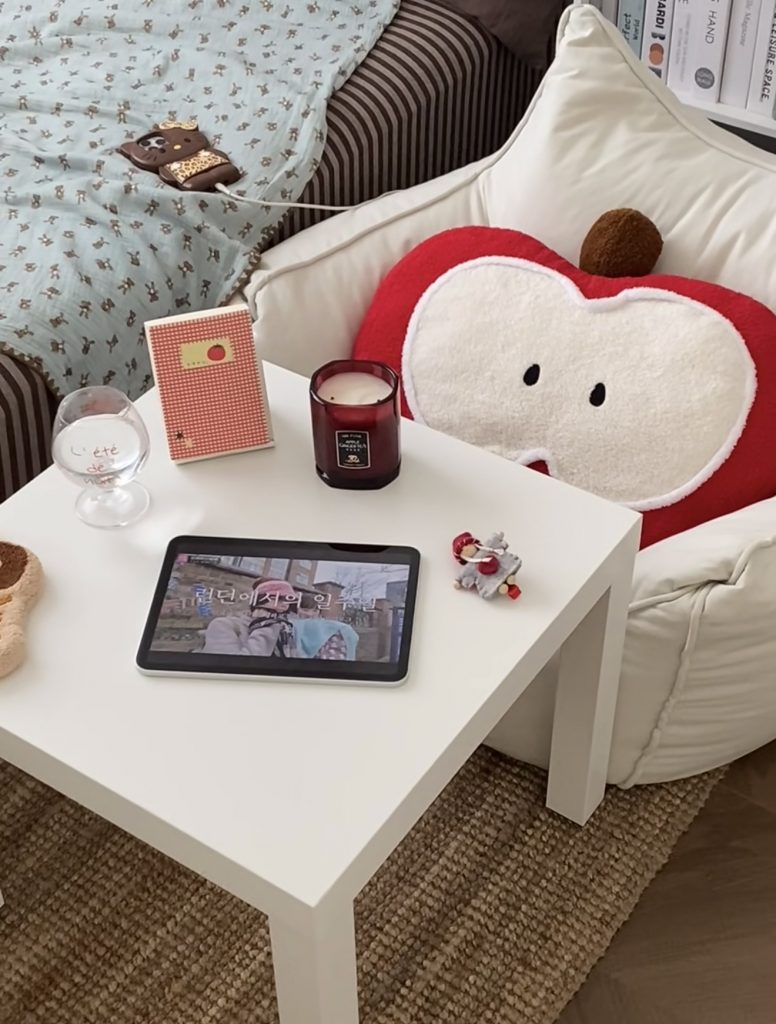
- Lin: I positioned my nook in the small space between the white wardrobe and the edge of my mattress on the floor. The typical study desk faces a clinical-looking bare plaster wall in my small, boxy London dorm. I established a floor-level haven where my line of sight remains low and I am visually isolated from the academic clutter stacked on the main desk by setting a low white coffee table and a beige beanbag on top of the woven jute rug.
- For the tactile and olfactory sections, what particular objects did you collect?
- Lin: I used a lightweight checkered travel blanket folded over the bed and a high-density, plush apple cushion with a soft sherpa backing and deep red fleece for touch. Before I boarded my trip to Heathrow, an old friend gave me a red glass-jar candle that was perfumed with warm baked apple and ginger tea.
Section 2: Memory Recall & Sensory Engagement
- Tactile Dimension: Over the course of ten to fifteen minutes, how did you feel when you held or touched these objects? Did they offer a feeling of security or physical grounding?
- Lin: Immediate postural comfort came from sinking onto the beanbag and pressing the firm apple cushion against my chest. Working on digital CAD models causes my shoulders to become stooped and tight during the day. My upper body was grounded by the continuous physical counter-pressure that came from clutching the soft, durable plush, which caused my shoulders to naturally sink.
- Olfactory Dimension: What particular recollections sprang to mind? Did the aroma increase homesickness or arouse contemplative nostalgia?
- Lin: The scent of warm, spiced apples instantly brought back memories of the winter fruit teas my family used to make on an induction stove while watching TV in our living room. Instead of evoking agonizing longing, the rich sweetness replaced the sterile smell of academic paint and filled the chilly, drafty room with a sense of domestic coziness.
- Dual-Sensory Synergy: In contrast to seeing a picture or using a screen, how did touch and scent operate together?
- Lin: When video calls malfunction or social media shows people hanging out at home, screens require cognitive attention and frequently intensify emotional distance. Breathing in spicy steam and giving each other a tactile hug had a pre-cognitive effect. It grounded me in physical body warmth rather than digital abstraction and required no mental interpretation.
Section 3: Emotional Changes & Spatial Agency
- Has your current bedroom overseas changed as a result of deliberately constructing and maintaining this micro-space?
- Lin: The room’s territorial balance was altered. The room used to be just a practical place to sleep in between studio sessions. Now, just one square meter of woven rug serves as a deliberate transition area that lets my body know that the workday is officially over.
- Did you see any pivotal moments or changes in your everyday mood during the five days?
- Lin: Day 3, after a critical studio review, was the pivotal moment. I used to spend hours numbly scrolling through my phone on the bed. Rather, I lit the jar, sat right on the rug, and spent twelve minutes with my chin resting on the apple cushion. I had a concrete way to deal with my frustration without becoming paralyzed by homesickness thanks to the routine.
Participant 2: Yuting (22, MSc Finance, London)
Section 1: Preparation and Micro-Space Configuration
- Could you explain the nook or area where you established your “Micro-Comfort Zone”? Why did you choose that particular location?
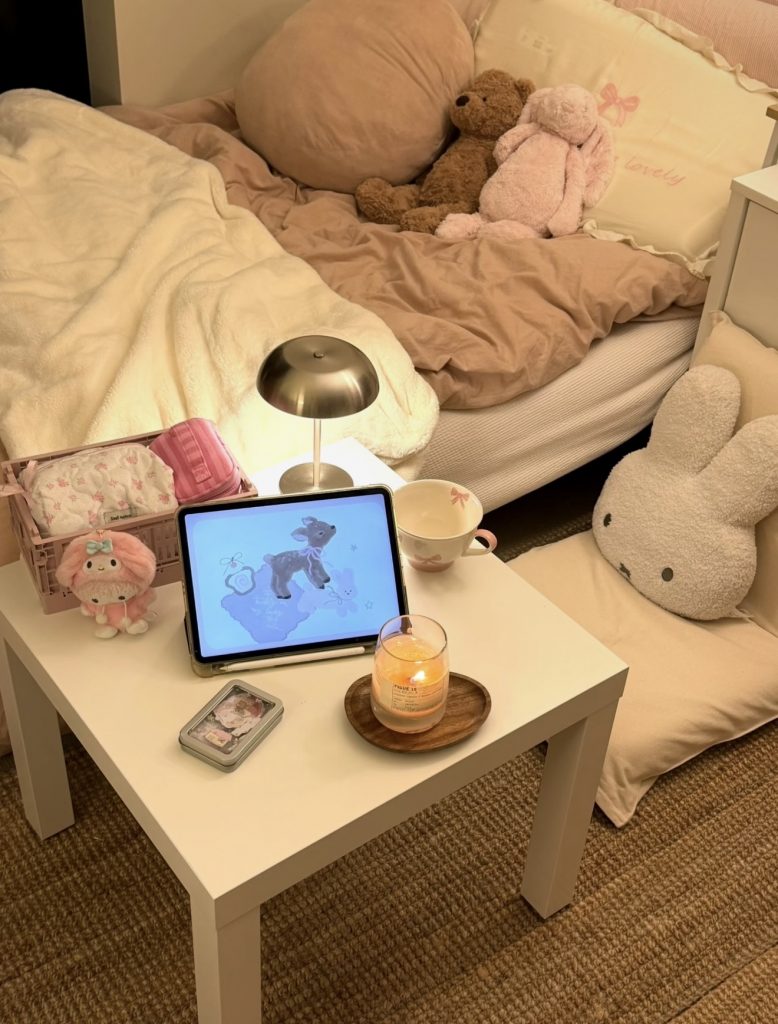
- Yuting: I placed an upright Miffy fleece floor lounger next to the bed valance on the woven carpet between my bed frame and the bedside shelf. The shared apartment’s central heating is tightly controlled, and the floorboards are drafty. This particular pocket transforms an uncomfortable hallway into a private haven by capturing the gentle ambient glow of my brushed-metal mushroom lamp.
- For the tactile and olfactory sections, what particular objects did you collect?
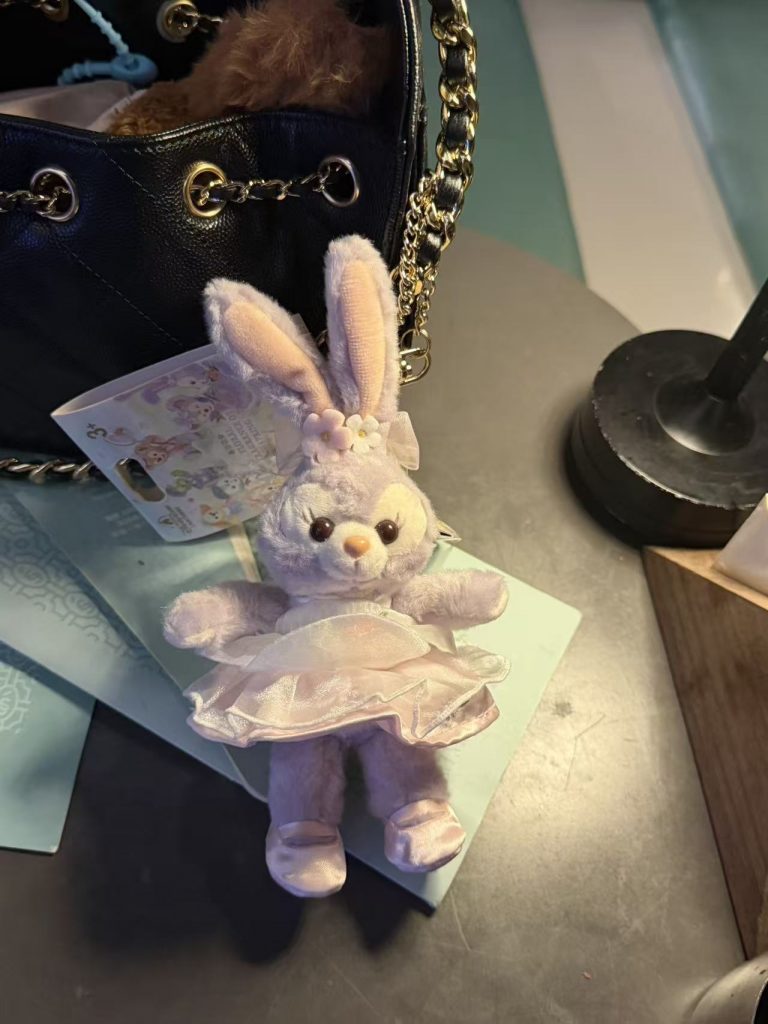
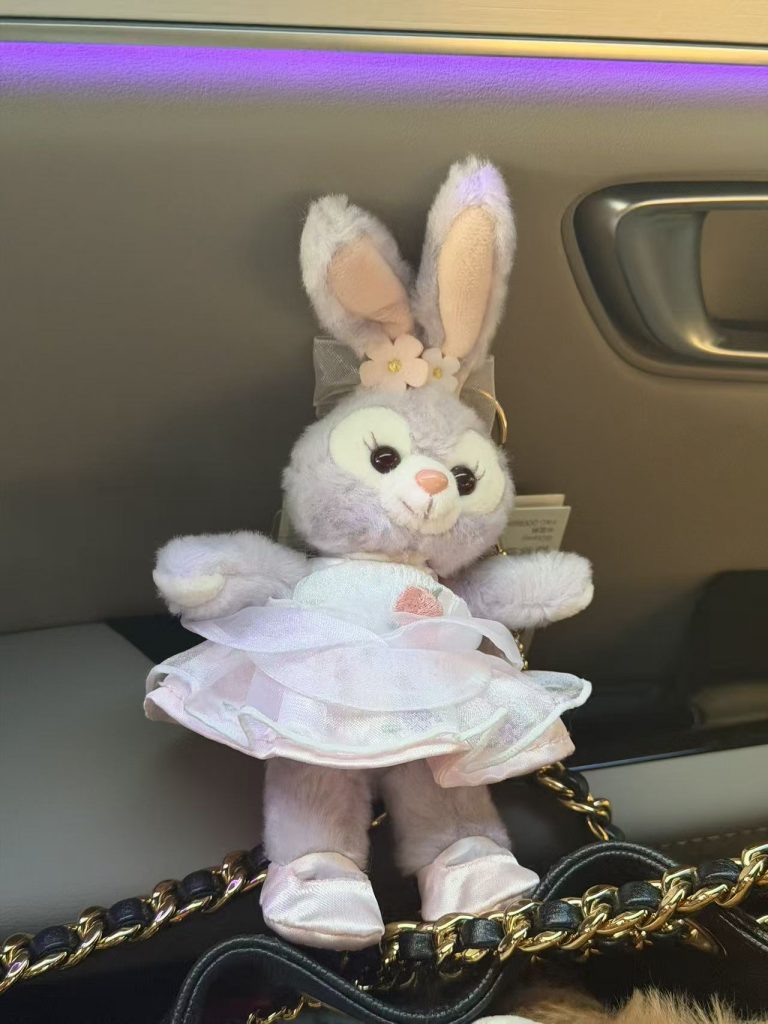
- Yuting: A cream microfiber fleece duvet hanging from the mattress, a brown teddy bear, a floppy Jellycat bunny, and a tiny pink rabbit pendant were among the tactile goods, along with a cozy, cord-edged Miffy floor chair. I set a porcelain teacup with warm water and an amber jar soy candle with fragrant honey milk and toasted oats on a wooden saucer for olfactory cues.
Section 2: Memory Recall & Sensory Engagement
- Tactile Dimension: Over the course of ten to fifteen minutes, how did you feel when you held or touched these objects? Did they offer a feeling of security or physical grounding?
- Yuting: Regular soft bedding does not offer the same level of mild lower-lumbar support as the Miffy chair. I felt completely enclosed when I tucked my bare feet under the fleece blanket and ran my fingertips over the curly fur of my plush bear. My hands remained motionless and anchored thanks to the range of materials, which included plush ear linings and fine microfibre.
- Olfactory Dimension: What particular recollections sprang to mind? Did the aroma increase homesickness or arouse contemplative nostalgia?
- Yuting: The aroma of oats and honey immediately reminded me of warm breakfast porridge made before school runs on weekend mornings when I was younger. The room smelled inhabited rather than rented, and the familiar culinary warmth soothed the unusual dampness of the London evening rather than causing intense grief.
- Dual-Sensory Synergy: In contrast to seeing a picture or using a screen, how did touch and scent operate together?
- Yuting: Sensory engagement binds you where you are, whereas digital photographs remind you of places you can’t go. My heart rate was dropped and my racing thoughts were soothed by the direct sensorimotor loop produced by holding the plush and breathing in the milky wax.
Section 3: Emotional Changes & Spatial Agency
- Has your current bedroom overseas changed as a result of deliberately constructing and maintaining this micro-space?
- Yuting: The floor area between the desk and bed used to be squandered. By converting the corner into a lighted sensory zone, a localized sensation of domestic safety was established and the corner no longer seemed like an anonymous leased apartment.
- Did you see any pivotal moments or changes in your everyday mood during the five days?
- Yuting: Settling into the warm lamp pool with the fuzzy toys on Day 4, when the room felt dark by 4 PM due to the constant London drizzle, broke an emerging episode of seasonal blues. It produced an internal haven that was unaffected by the weather or remote location.
Participant 3: Bowen (25, PhD Mechanical Engineering, Sheffield)
Section 1: Preparation and Micro-Space Configuration
- Could you explain the nook or area where you established your “Micro-Comfort Zone”? Why did you choose that particular location?
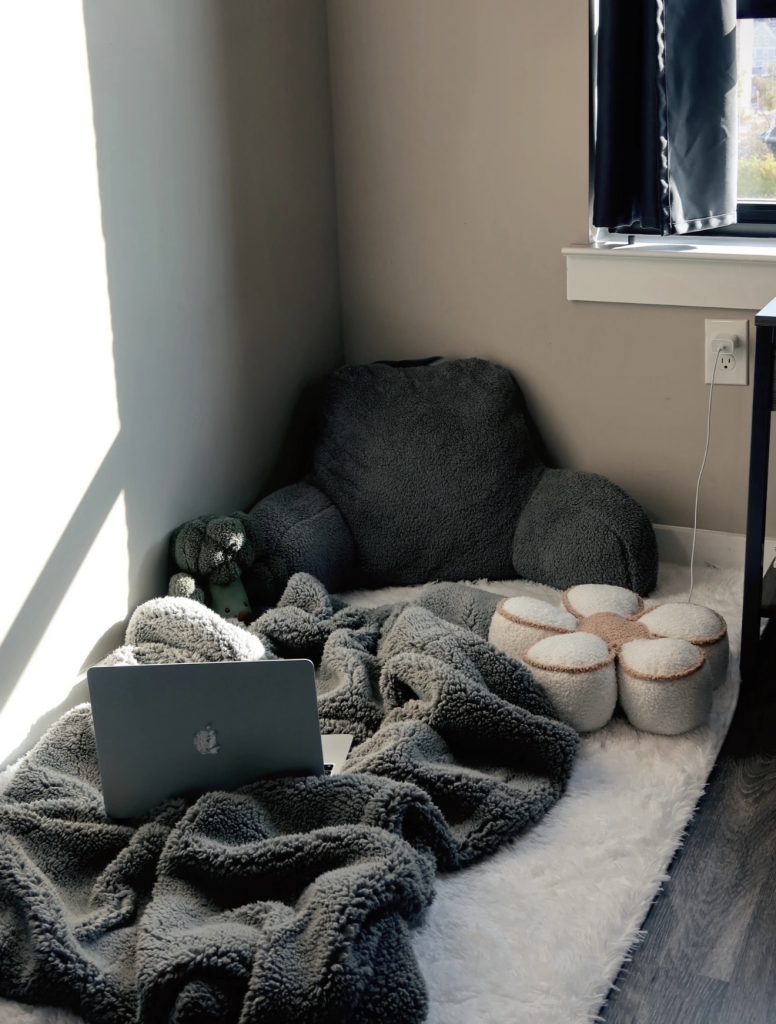
- Bowen: I set up a white shag rug and a hefty, dark-charcoal sherpa reading lounger in the furthest corner of my studio, right under the window. My desk is filled with gear, charging wires, and monitors because I’m an engineer. The only area of the flat without any cables touching the floor is this corner, where morning sunlight casts clear, geometric wall shadows.
- For the tactile and olfactory sections, what particular objects did you collect?
- Bowen: I used a segmented plush flower cushion, an ergonomic back-support armchair pillow with armrests, and an extra-thick, curly charcoal fleece throw with significant physical heft for touch. Since open flames are forbidden in my building, I put an unlit sachet filled with dried Sichuan pine needles and crushed cedar shavings within the lounger seam for aroma.
Section 2: Memory Recall & Sensory Engagement
- Tactile Dimension: Over the course of ten to fifteen minutes, how did you feel when you held or touched these objects? Did they offer a feeling of security or physical grounding?
- Bowen: The distinguishing feature was the charcoal fleece blanket’s actual weight. I felt a deep pressure touch when I draped it across my lap, which instantly stopped my bodily restlessness. My upper back was stabilized by leaning into the thick sherpa lounger, which ended the tendency of constantly changing positions brought on the unpleasant computer chairs.
- Olfactory Dimension: What particular recollections sprang to mind? Did the aroma increase homesickness or arouse contemplative nostalgia?
- Bowen: During my university breaks, I hiked through southwestern mountain forests with my father, and the dry, sharp smell of pine and aromatic cedar brought back memories. It imparted mental clarity without being overly nostalgic. It carried a crisp, organized airiness that eliminated the stale smell of institutional carpets and heating units.
- Dual-Sensory Synergy: In contrast to seeing a picture or using a screen, how did touch and scent operate together?
- Bowen: I often get homesick when I look at photos on my phone because it draws attention to what is missing. On the other hand, smelling crisp resin and feeling heavy, warm wool activated my nervous system somatically. It brought my focus back to the present moment’s bodily comfort.
Section 3: Emotional Changes & Spatial Agency
- Has your current bedroom overseas changed as a result of deliberately constructing and maintaining this micro-space?
- Bowen: It no longer feels like an ad hoc computer lab in my room. Now, the window corner functions as an offline area where I may stop tackling analytical problems and let my mind relax.
- Did you see any pivotal moments or changes in your everyday mood during the five days?
- Bowen: Day 2 was crucial. Instead of resting down on the mattress, I withdrew to the floor covering after battling through an eight-hour coding block. My cerebral headache was eased after ten minutes of weighted pressure and the aroma of resin, which proved to be considerably more healing than watching passive media.
Participant 4: Meng (23, MA Media & Communications, Leeds)
Section 1: Preparation and Micro-Space Configuration
- Could you explain the nook or area where you established your “Micro-Comfort Zone”? Why did you choose that particular location?
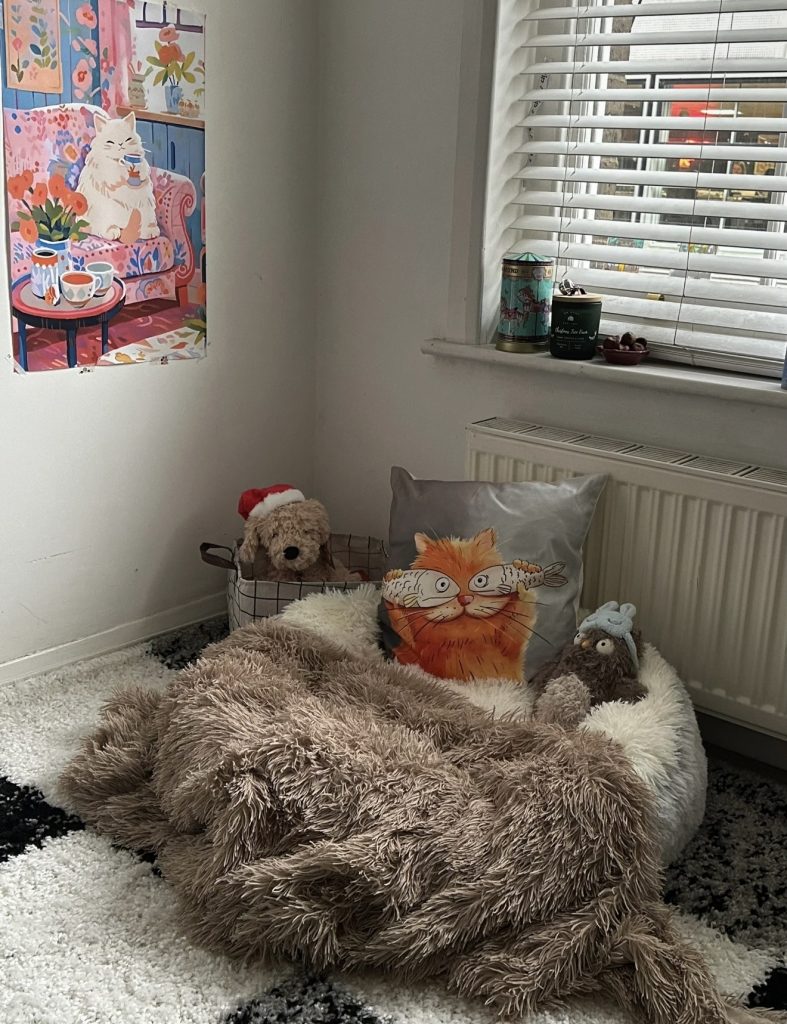
- Meng: I set up a deep, high-pile black-and-white wool rug with an incredibly luxurious circular faux-fur pet nest on top, and I found my comfort zone beside the radiator behind the big window shades. I chose this location because the window shades let me block out the drab urban street view outside, and sitting next to the working radiator offers consistent physical warmth.
- For the tactile and olfactory sections, what particular objects did you collect?
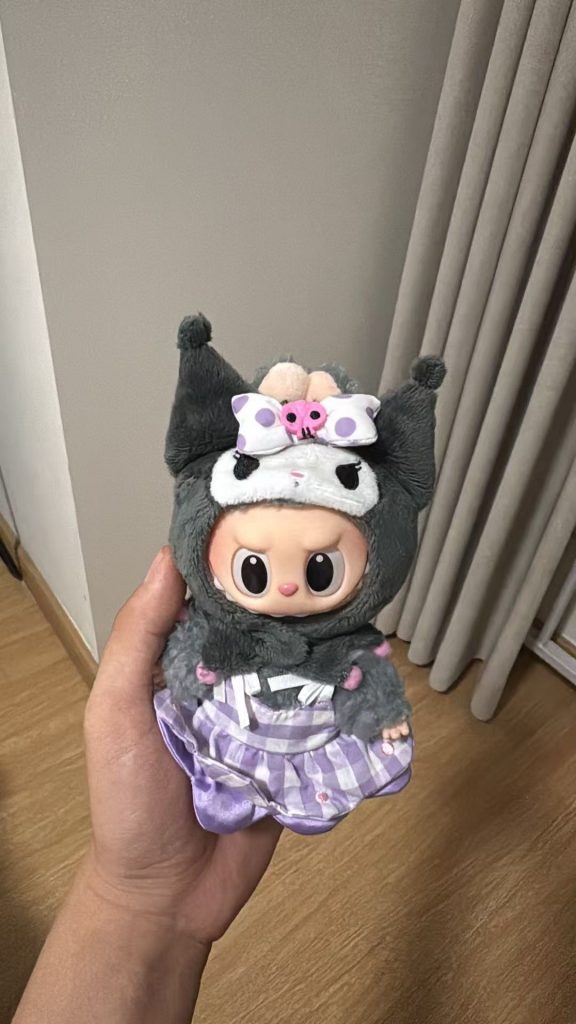
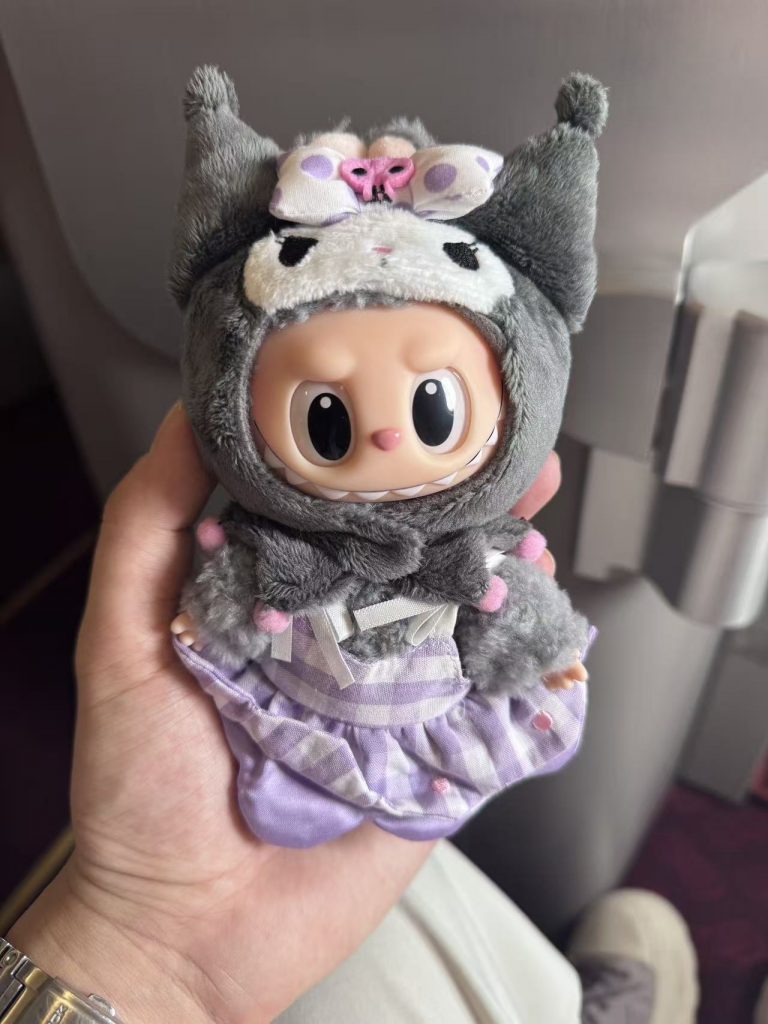
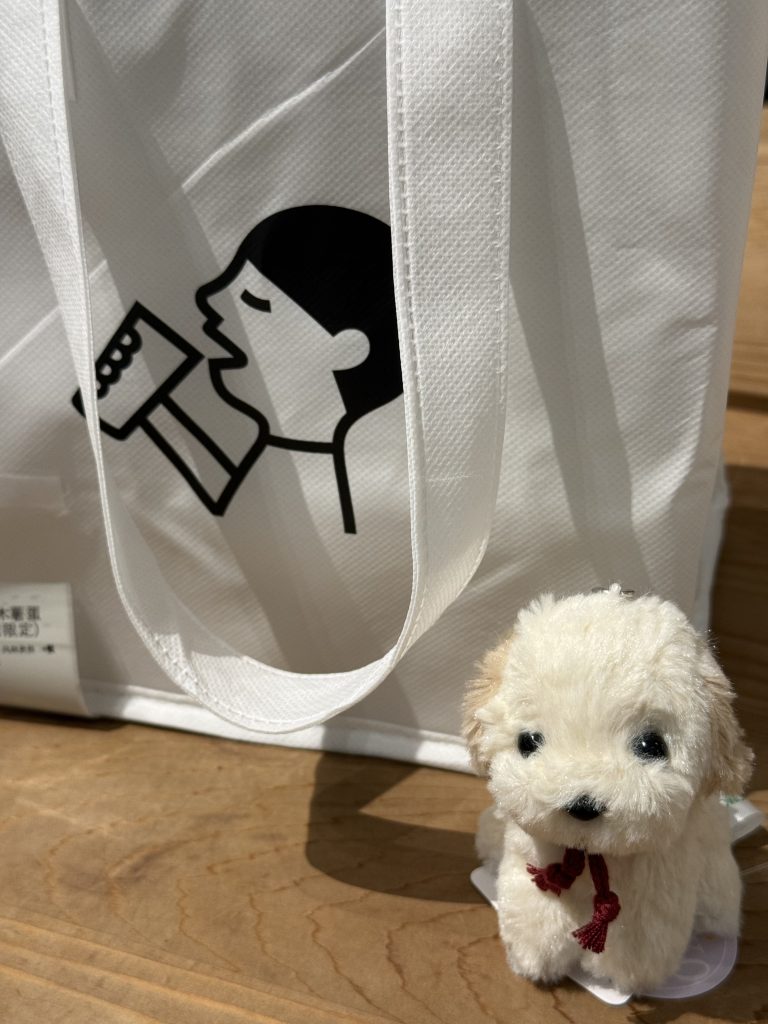
- Meng: The tactile components were a curly sheepskin throw, a soft puppy plush with a red winter hat, a smooth silk-screened cat cushion, and a large, long-pile faux-fur donut lounger. I placed a tiny beautiful tin canister with dried osmanthus and dried mandarin peel (chenpi) on the nearby windowsill, along with a dark green jar candle for aroma.
Section 2: Memory Recall & Sensory Engagement
- Tactile Dimension: Over the course of ten to fifteen minutes, how did you feel when you held or touched these objects? Did they offer a feeling of security or physical grounding?
- Meng: Curling up inside the round nest resembled a safe, contained burrow. Holding the cat cushion across my stomach and burrowing my hands into the long, fluffy synthetic fibers produced a cocooning warmth that immediately reduced the physical signs of anxiety, such as cold extremities and shallow breathing.
- Olfactory Dimension: What particular recollections sprang to mind? Did the aroma increase homesickness or arouse contemplative nostalgia?
- Meng: The windowsill’s faint scent of beautiful flowers and dried citrus brought back memories of sunny fall afternoons spent drying orange peels on woven bamboo trays in my grandmother’s apartment. It provided a comforting sense of domestic continuity that significantly reduced the alienating atmosphere of the chilly northern English room.
- Dual-Sensory Synergy: In contrast to seeing a picture or using a screen, how did touch and scent operate together?
- Meng: I frequently feel alone when I close an app after staring at family images on a bright screen. On the other hand, I felt embodied reassurance when I wrapped myself in a deep pile and smelled the familiar scent of sun-dried peel. It directly stimulated my senses, transforming longing into peaceful reflection.
Section 3: Emotional Changes & Spatial Agency
- Has your current bedroom overseas changed as a result of deliberately constructing and maintaining this micro-space?
- Meng: I used to dread being in my room throughout the day because I felt confined by the gloomy views beyond the window. Reclaiming the negative border by creating a sensory nest on the floor next to the radiator transformed a chilly window nook into the most healing area of the apartment.
- Did you see any pivotal moments or changes in your everyday mood during the five days?
- Meng: After group presentations on the third evening, I sat in the fur nest without turning on the overhead lights since I was experiencing extreme second-language tiredness. A dependable daily recuperation routine was established by just kneading the fur fibers while inhaling the citrus overtones, which produced an unanticipated sensation of emotional stability.
Participant 5: Chen (26, LLM International Law, Edinburgh)
Section 1: Preparation and Micro-Space Configuration
- Could you explain the nook or area where you established your “Micro-Comfort Zone”? Why did you choose that particular location?
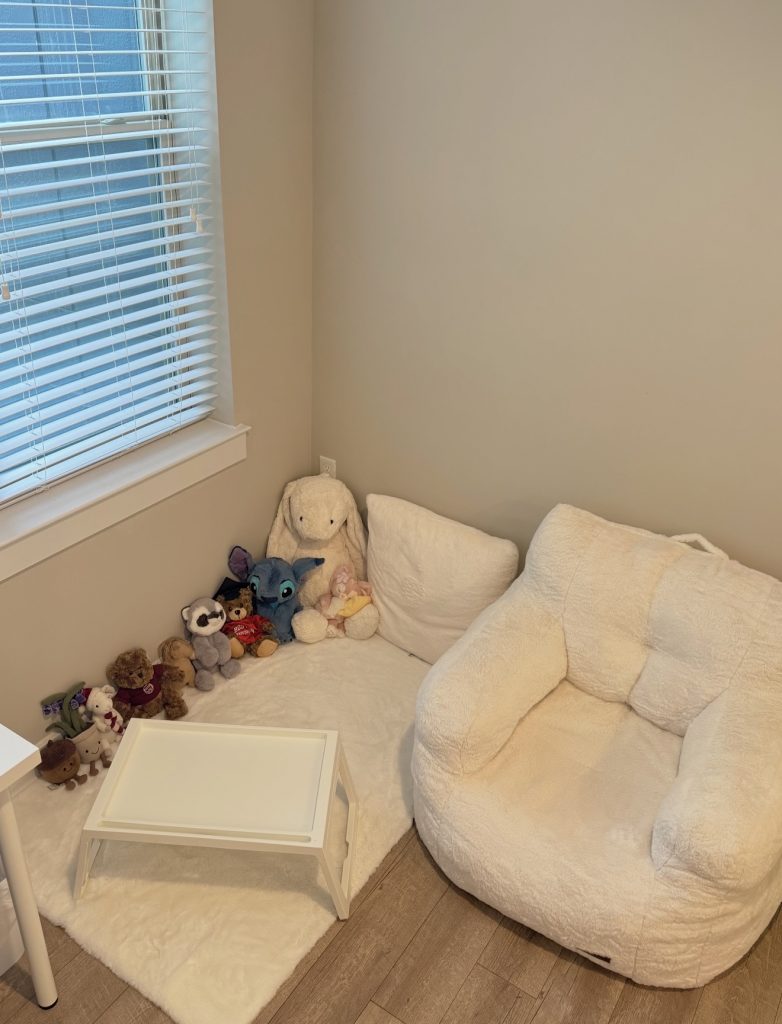
- Chen: I placed a rectangle fleece rug and a deep off-white sherpa beanbag armchair next to a low folding bed tray in the quietest corner of my bedroom, across from the window blinds. Old Edinburgh tenements have large, drafty, and unwelcoming rooms due to their high ceilings. I was able to create a safe haven with distinct boundaries by consolidating this tiny corner.
- For the tactile and olfactory sections, what particular objects did you collect?
- Chen: My tactile elements included a structured backrest cushion, an off-white fleece armchair, and a personal assortment of transitional companions arranged neatly against the skirting board, such as graduating bears, Stitch, a long-eared plush hare, and tiny felt plants. I put a tiny tin with sandalwood balm and fragrant camphor wood blocks next to the tray table for aroma.
Section 2: Memory Recall & Sensory Engagement
- Tactile Dimension: Over the course of ten to fifteen minutes, how did you feel when you held or touched these objects? Did they offer a feeling of security or physical grounding?
- Chen: I had a strong sense of structural support as I sat on the plush floor rug with my back pressed up against the armchair. My body felt anchored rather than ephemeral, and the familiarity of feeling my plush companions—items that accompanied me through my undergraduate years and worldwide travel—restored a grounded emotional rhythm.
- Olfactory Dimension: What particular recollections sprang to mind? Did the aroma increase homesickness or arouse contemplative nostalgia?
- Chen: The scents of clean camphor and dry sandalwood brought back memories of my grandfather’s oak bookshelf and the peaceful study space where I used to spend weekends getting ready for tests. Despite the confusion of studying overseas, the scent served as an anchor of continuity, comforting me that my intellectual identity remained stable.
- Dual-Sensory Synergy: In contrast to seeing a picture or using a screen, how did touch and scent operate together?
- Chen: After spending hours reading digital legal documents, digital media can lead to cognitive overload. My hands were immediately grounded by the scent of dry wood and the comforting fleece of my childhood fuzzy. It provided a calm, physical area where my mind could stop processing digital information.
Section 3: Emotional Changes & Spatial Agency
- Has your current bedroom overseas changed as a result of deliberately constructing and maintaining this micro-space?
- Chen: The business, sterile environment of the rented flat was radically disrupted. I created a distinct psychological space that was all mine by assembling my intimate friends on the floor mat, turning an impersonal tenancy into a useful haven.
- Did you see any pivotal moments or changes in your everyday mood during the five days?
- Chen: During a time of intense exam review, the pivotal moment came on Day 4. When I was feeling very stressed, I sat on the mat and held the stuffed hare for ten minutes instead of pacing or checking my phone. My heart rate was constantly dropped by that sensory stop, and calm serenity took the place of terror.
Participant 6: Rui (23, BA Fine Art, London)
Section 1: Preparation and Micro-Space Configuration
- Could you explain the nook or area where you established your “Micro-Comfort Zone”? Why did you choose that particular location?
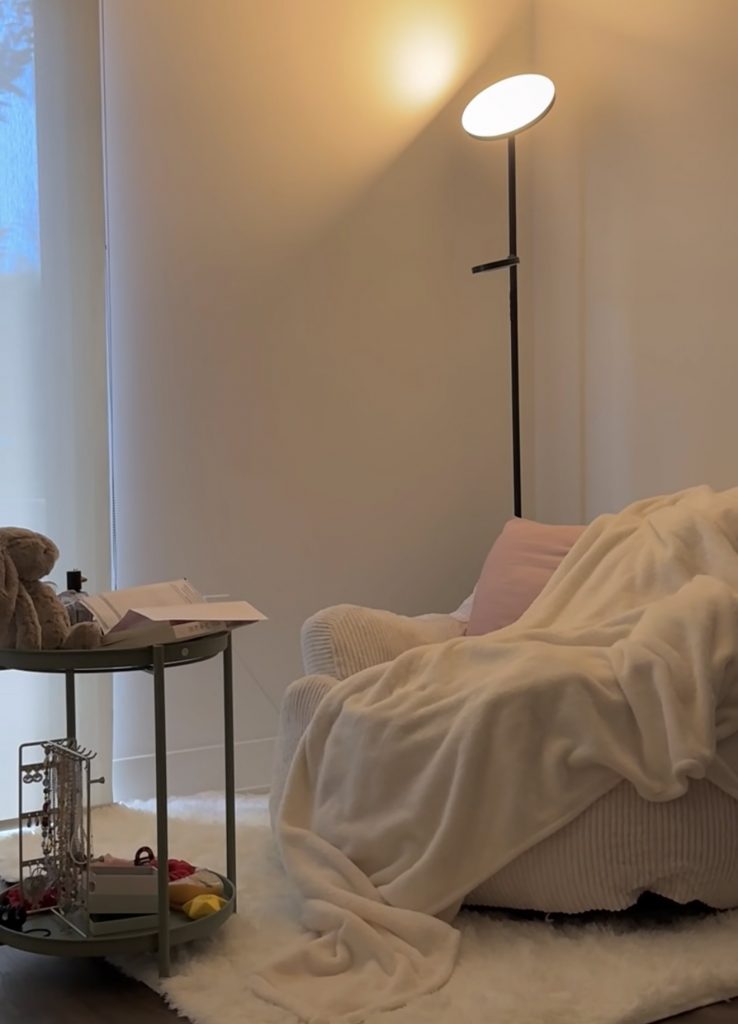
- Rui: I used a metal round tray cart, an upward-reflecting disk floor lamp, and a cream corduroy circular floor lounger to set up my area in the deep nook behind the door. My rented room’s overhead fluorescent lighting creates a severe glare. This corner was visually isolated from the rest of the studio by the concentrated flood of warm, indirect light produced by the simple floor lamp.
- For the tactile and olfactory sections, what particular objects did you collect?
- Rui: A silky pink lumbar cushion, a long-eared plush bunny sitting on the side tier table, and an enormous, thick cream fleece blanket covering the textured corduroy lounger were all tactile features. I set an open sketchbook that still smells like home-pressed cotton paper next to a tiny flacon of white tea and osmanthus essential oil for olfactory input.
Section 2: Memory Recall & Sensory Engagement
- Tactile Dimension: Over the course of ten to fifteen minutes, how did you feel when you held or touched these objects? Did they offer a feeling of security or physical grounding?
- Rui: I made a physical cocoon by nestling into the ridged texture of the corduroy lounger and completely encircling my shoulders with the thick, brushed fleece blanket. I was protected from drafts by the soft weight and cozy warmth, which also relieved the tension in my muscles from standing in the studio all day.
- Olfactory Dimension: What particular recollections sprang to mind? Did the aroma increase homesickness or arouse contemplative nostalgia?
- Rui: The subtle pairing of cotton paper and white tea brought back memories of peaceful weekend afternoons spent sketching in my former bedroom with the balcony window slightly open. Instead of causing anxiety, it created a tranquil home environment that contrasted the bustling, cacophonous city outside.
- Dual-Sensory Synergy: In contrast to seeing a picture or using a screen, how did touch and scent operate together?
- Rui: An instinctive physical reaction is produced by touch and smell. While feeling weighted fleece and breathing in familiar tea notes directly relaxed my anxious system, looking at images frequently causes cognitive comparisons between Beijing and London. It made it possible for me to feel at ease without requiring digital approval.
Section 3: Emotional Changes & Spatial Agency
- Has your current bedroom overseas changed as a result of deliberately constructing and maintaining this micro-space?
- Rui: The corner became the main emotional center of my living area instead of an underutilized architectural emptiness. It allowed me to customize light, texture, and scent, proving that careful sensory curation can give a generic apartment a unique meaning.
- Did you see any pivotal moments or changes in your everyday mood during the five days?
- Rui: Late on the last nite was the crucial moment. Rather than dozing off with my phone shining on my face, I drew silently under the floor lamp covered in the fleece throw for fifteen minutes as the aroma of tea around me. I experienced a significant decrease in daily spatial displacement as I felt firmly rooted in my surroundings.