Blog

  • Project Three: Investigating Impact—Reflective Writing

    1. Personal Motivation and Positionality

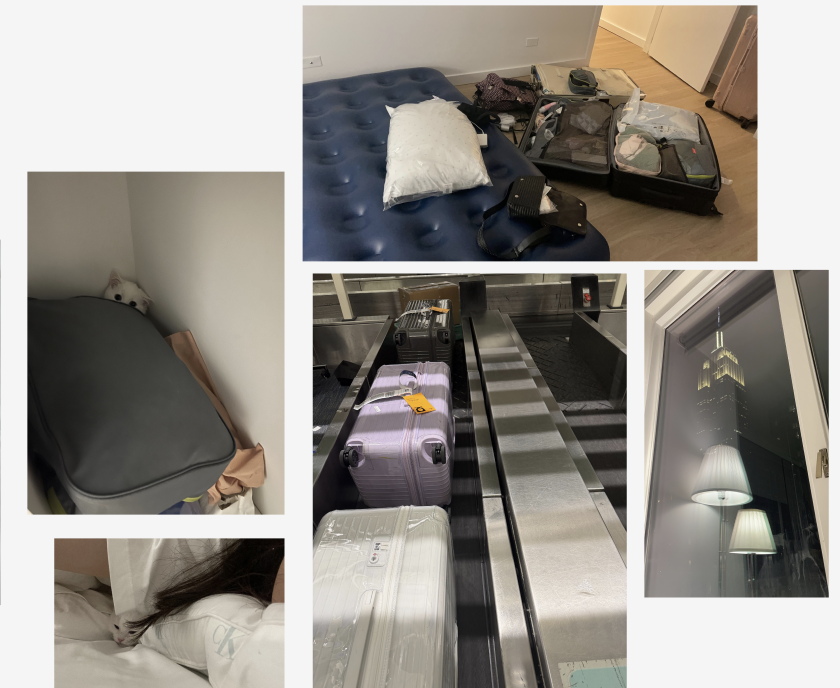
    I started my study by asking myself, “Where does my sense of safety at home come from?” Cross-cultural mobility has influenced my life. I was born in Hong Kong, grew up in Shenzhen, and went on to study abroad, graduating from Parsons with a background in fashion design.

    Since I was around eleven years old, I had known that I would eventually pursue my education abroad. This affected my objectives, but it also meant that I would feel dislocated from my homeland and culturally displaced. As a result, I entered an international school to prepare for studying abroad. This experience made me more aware of the need to actively construct a sense of “home” within changing cultural contexts.
    1. Sensory exploration and observation

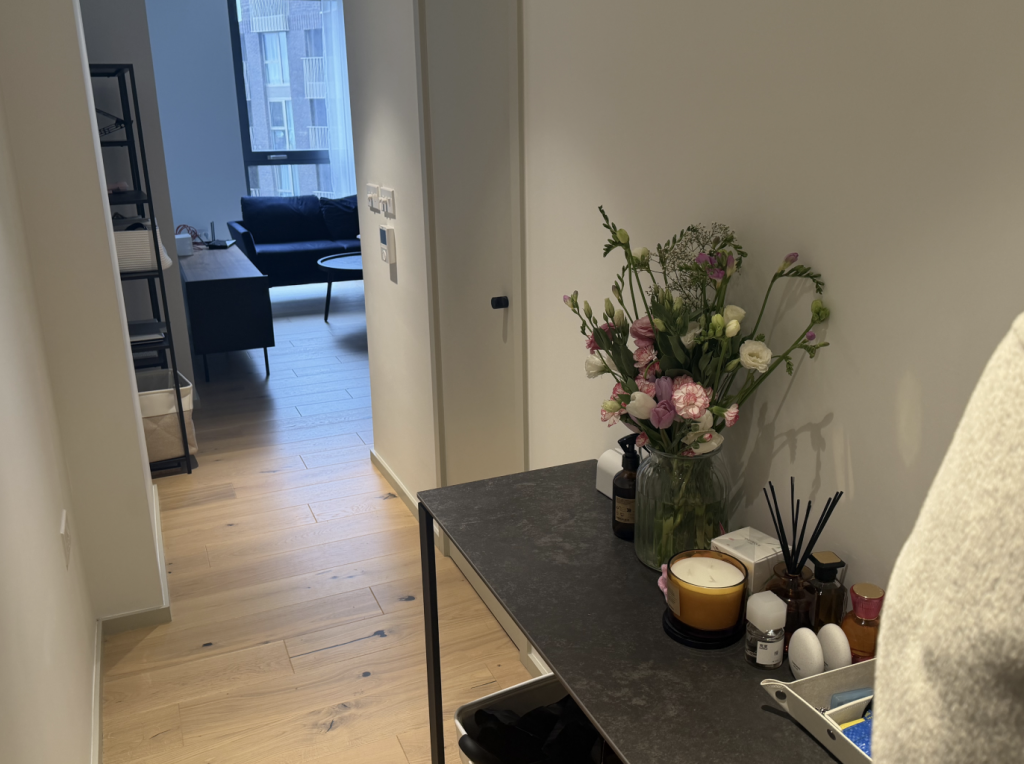
    I was in what Moon (1999) refers to as the “Notice” stage of reflective learning at the start of the project. I started by focusing on the little things in my everyday life that gave me a sense of security. I found that routines, familiar places, and well-organized surroundings helped foster a feeling of peace and order.

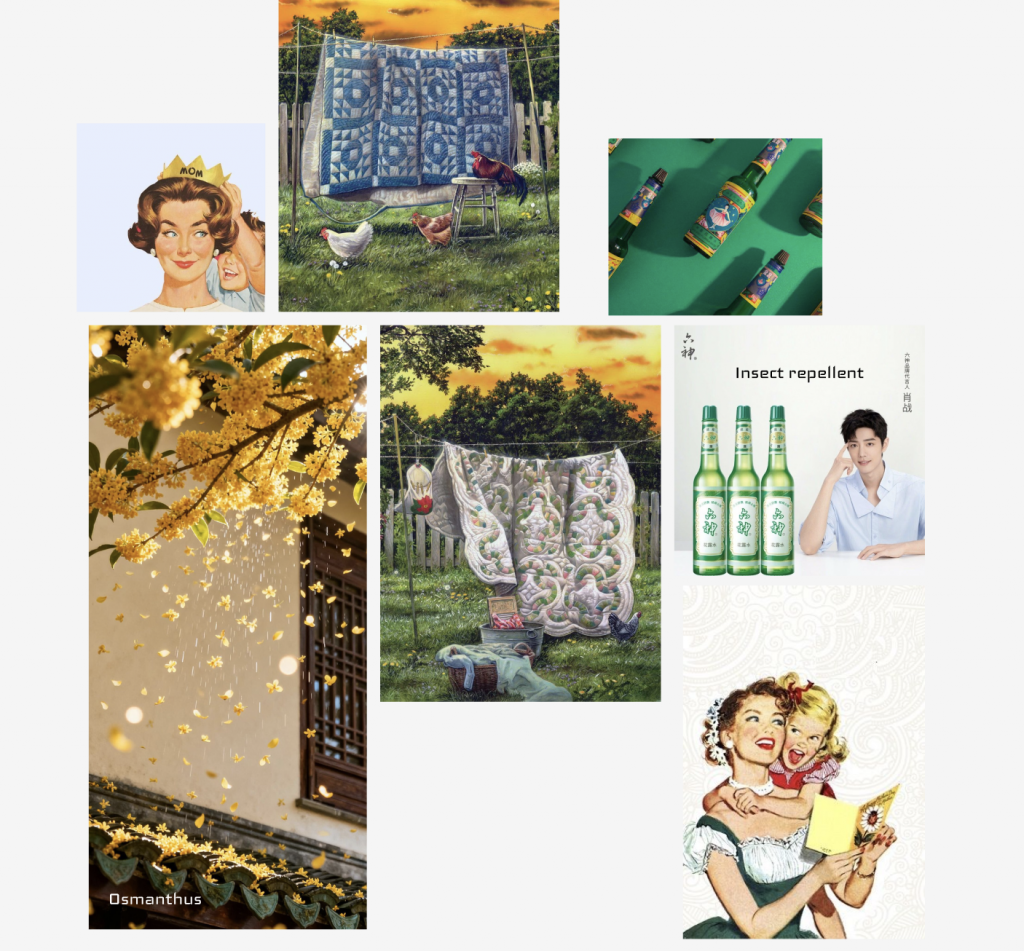
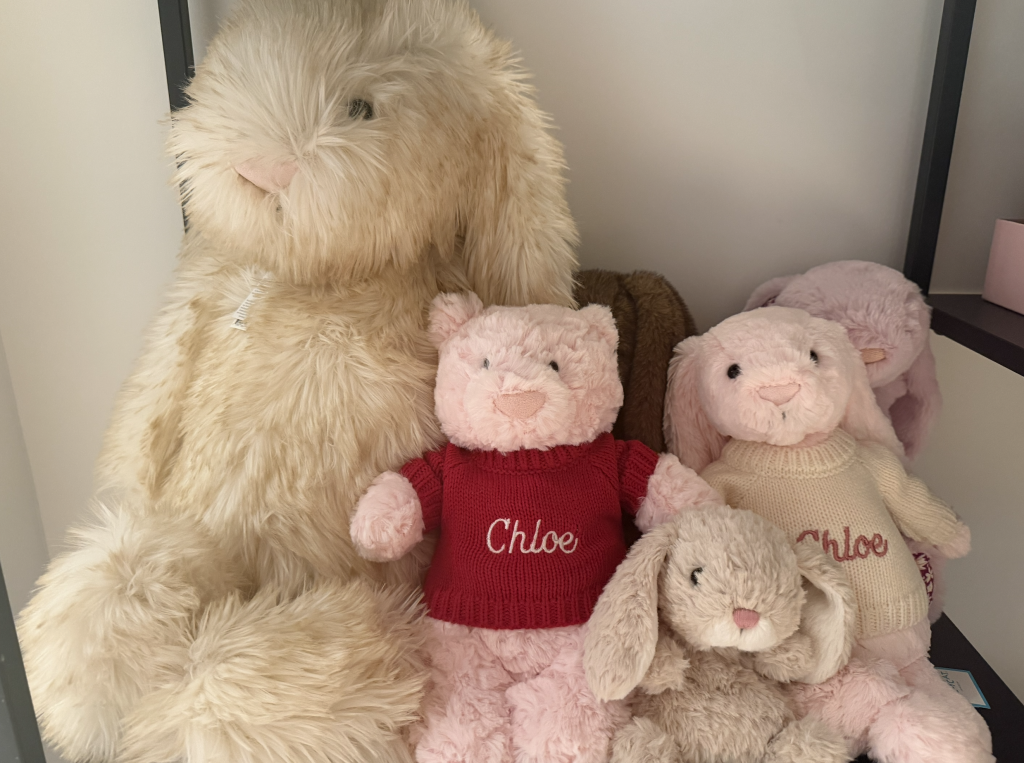
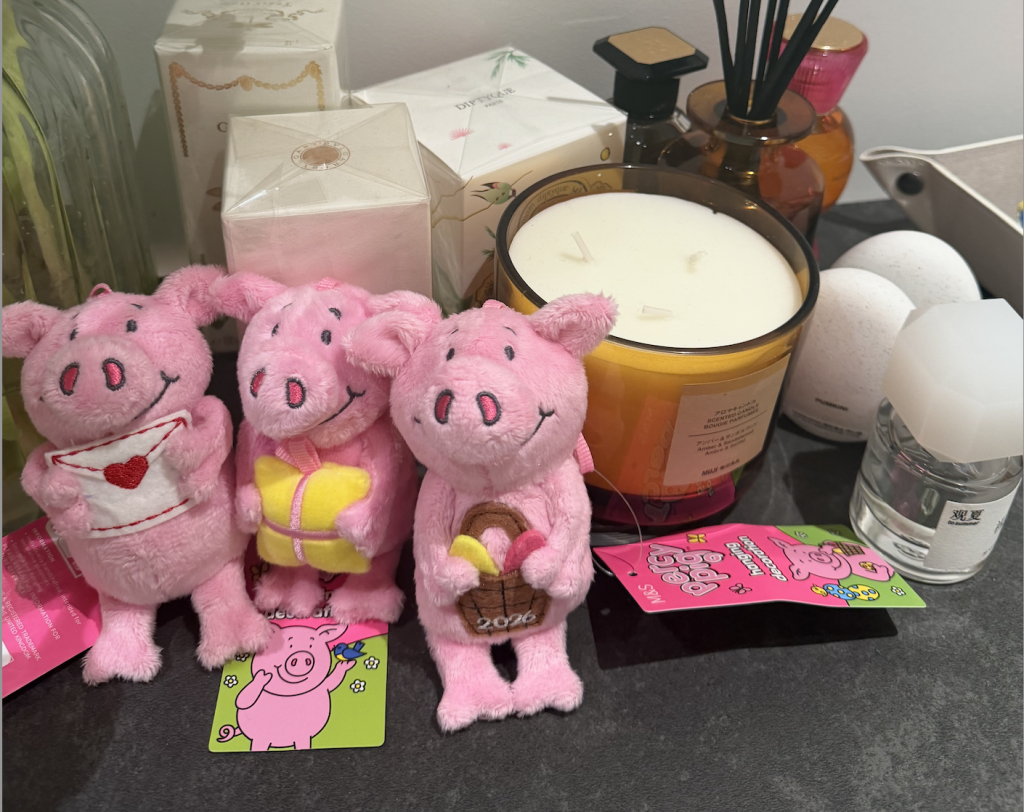
    I also found that comfort was greatly enhanced by sensory components like flowers, fragrance, and soft items like stuffed animals. I did informal research on Chinese online forums like Tieba to see whether anyone else had a similar experience. I noticed a lot of similarities: people described the aroma of osmanthus, floral water, sun-dried bed linens, and their mother’s scent. Childhood memories were closely associated with these scents.

    This insight has to do with how the body and memory are related. According to Kolk (2014), emotional experiences are both cognitive and embodied, which explains why powerful sentiments of familiarity and safety can be triggered by scent.
    1. Making Sense and Research Methodology

    I entered Moon’s “Making Sense” stage as the investigation progressed (Moon, 1999). I started to examine the significance of these sensory impressions and came to the conclusion that routine, memory, and emotional attachment are all strongly linked to a feeling of safety.

    I viewed my study as a type of action research in order to advance this investigation. Action research is a cyclical process of observation, reflection, and concept refinement, according to McNiff (2017). I constantly switch between research and firsthand observation in my project so that my concepts can develop via practice.
    1. Audience and Prospects

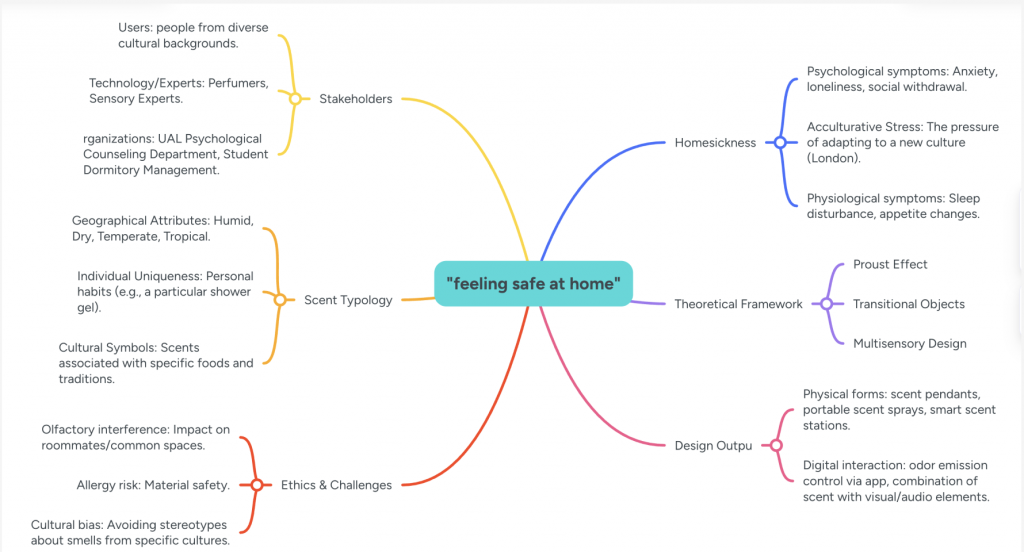
    I started to see how important my endeavor is to other people in addition to being personal. International students who struggle with homesickness and cultural adjustment make up my main audience.

    I’m now at Moon’s “Working with Meaning” stage, when I look at these experiences from other angles. I’m creating a design direction centered on multimodal emotional environments by tying together sensory memory, emotional attachment, and spatial experience. This research investigates how people who live in different cultures can have brief but significant moments of psychological ease through design.
    References

    Moon, J. (1999) Learning Journals: A Handbook for Academics, Students and Professional Development. London: Kogan Page.

    McNiff, J. (2017) Action Research: All You Need to Know. London: Sage.

    Kolk, B. (2014) The Body Keeps the Score. London: Penguin.
  • R. Edward: 《Stakeholder Theory: The State of the Art》, 2010

    According to Freeman’s Stakeholder Theory, an organization’s ability to successfully manage and create value for all of its stakeholders is equally as important to its success as its shareholders.

    Key Concept: It asserts that any group or people who has the potential to influence or be impacted by an organization’s actions is considered a stakeholder, including workers, clients, communities, and the environment. By balancing and co-creating value with these varied groups and prioritizing ethical considerations above a solitary focus on profit, sustainable success can be attained.

    I was also able to reevaluate how my project should be positioned beyond my own experience thanks to Freeman’s concept of stakeholder theory. According to Freeman (2010), a project’s success should be determined by taking into account the relationships and demands of several stakeholders rather than just one viewpoint. This concept forced me to consider my work’s target audience and potential effects on other groups.

    People who are facing emotional stress or homesickness, especially those who are living away from their familiar surroundings, are the main stakeholders in my initiative. Other stakeholders, such as those who may share a place yet have varying sensitivity to sensory factors like aroma, must also be taken into account. This helped me realize that creating for emotional comfort requires balancing many wants and experiences rather than being a neutral procedure.

    I also realized that these stakeholders are not separated because of Freeman’s concept of interdependence. Cultural background, environmental design, and emotional well-being are all related. I should look at more inclusive design strategies that let different experiences coexist rather than favoring one group over another.

    This viewpoint changed how I perceived the project. I started to consider my work as a negotiation between other users, situations, and emotional reactions rather than just expressing my own feelings. This has inspired me to approach design with greater responsibility and inclusivity.

    Freeman, R. (2010) Stakeholder Theory: The State of the Art. Cambridge: Cambridge University Press.

  • McNiff:《Action Research: All You Need to Know》,2017

    Action Research: An Overview of Essential Information
    Action research is described in this book as a practitioner-led approach that focuses on enhancing one’s own practice via an ongoing cycle of action and reflection.

    Essential Ideas:

    Cyclical Process: Each cycle of the spiraling, iterative Plan → Act → Observe → Reflect process enhances comprehension and improves practice.

    Self-Improvement: “How do I improve my work?” is the central question that drives action research. In order to improve professional efficacy, it places a strong emphasis on personal inquiry. 

    “Living Theory”: Theory is not abstract; rather, it arises from and is tested in practice. It is an individualized, values-based framework that changes as the practitioner acts.

    Educational Accountability: Practitioners are accountable for their work and must explain how their efforts result in improvements.

    I was better able to comprehend my project as a continuous process of learning by doing thanks to McNiff’s idea of action research. Planning, acting, observing, and reflecting comprise the cyclical structure of action research, with each step influencing the subsequent one (McNiff, 2017). This paradigm is strongly related to my research into the sources of my sense of security at home.

    For instance, I started by looking at my everyday surroundings and noting things, rituals, and smells that made me feel at ease. I subsequently took action by recording these encounters and looking into related online conversations. I identified patterns through observation and introspection, especially the link between childhood memory and scent. As I develop my ideas and turn them into design concepts, this process keeps changing.

    In this way, my effort might be viewed as a type of “living theory,” in which knowledge is constantly formed by my own experiences and deeds rather than being static. Instead of keeping research and practice apart, I’m starting with my own experiences to create a more comprehensive design approach that emphasizes emotional and sensory well-being.

    McNiff, J. (2017) Action Research: All You Need to Know. London: Sage.

  • Jenny Moon:《Learning Journals》, 1999

    Stages of Representation:

    1. Notice: Simply recording what happened.
    2. Making sense: Beginning to integrate information and trying to figure out what happened.
    3. Making meaning: Beginning to connect new experiences with existing knowledge.
    4. Working with meaning: Being able to examine the same event from multiple perspectives.
    5. Transformative learning: Reflection that ultimately changes your behavior, attitudes, or worldview.

    I was in the “Notice” phase at the beginning of the project. I just noted specifics of my everyday life, like how certain areas, items, or routines at home made me feel comfortable. For example, I started to observe emotional changes that were brought on by ordinary actions like staying in a familiar room, arranging things, or taking in my home’s surroundings.

    I entered the “Making Sense” phase as the research went on. I collected these experiences into more lucid observations and started to examine why these commonplace components offered a sense of comfort. For example, I found that a sense of security is connected to memories, routines, and individual experiences in addition to actual locations.

    I progressively advanced into the “Making Meaning” level through additional introspection. I started making connections between these intimate experiences and more general ideas like “home,” emotional attachment, and personal development. This helped me understand that a person’s psychology and past experiences play a significant role in their sense of security, rather than just the exterior world.

    I’m currently trying to go into the “Working with Meaning” stage through constant observation and documenting. During this stage, I reexamine previous memories from many angles. For example, I use the three dimensions of place, memory, and emotion to comprehend the “sense of security at home.” I am able to comprehend my own emotional structure better because of this multifaceted approach.

    According to Moon (1999), the most profound kind of introspection is “transformative learning,” which implies that introspection eventually alters a person’s thoughts or actions. This project offers me the chance to reconsider my relationship with home spaces, memories, and personal identity in addition to analyzing the sources of a sense of security.

    Moon, J. (1999) Learning Journals: A Handbook for Academics, Students and Professional Development. London: Kogan Page.

  • Hello world!

    Welcome to myblog.arts. This is your first post. Edit or delete it, then start blogging!