My study evolved into a historical investigation after I visited independent fragrance workshops in Yunnan and Sichuan: How have people in China historically collected, carried, and interacted with scent through tangible objects?
Despite the fact that scent is intrinsically intangible, traditional Chinese culture has a long history of incorporating scent into concrete objects. A distinct trajectory of tactile-olfactory embodiment is shown by examining historical everyday odors and archival artifacts from the Qing Dynasty to the Republic of China to the present.
Wearable Smell Devices from the Qing Dynasty to the Republic of China
Significant design concepts were obtained from two historical silver artifacts:
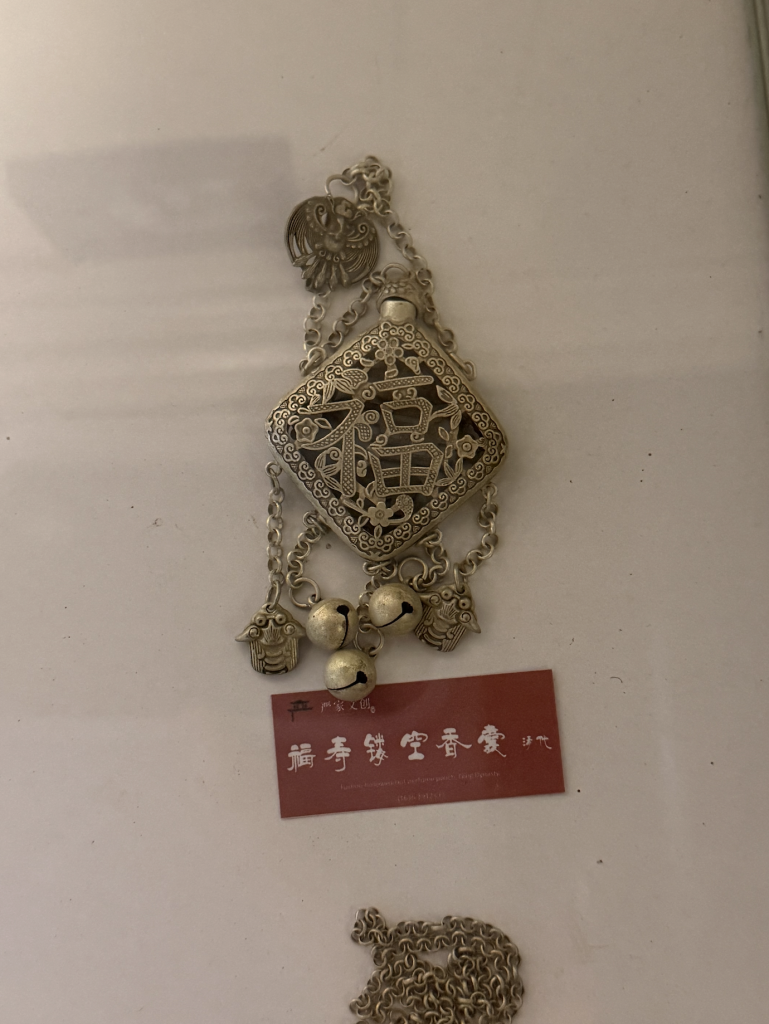
Qing Dynasty Openwork Silver Fragrance Pouch (福寿镂空香囊):
This wearable container, which was made in the shape of a diamond and included elaborate filigree engravings of the words “Fu” (fortune) and “Shou” (longevity), allowed botanical spices, including clove, agarwood, and sandalwood, to freely disseminate through its perforated walls. It was a multisensory protection talisman that was suspended from clothing or waists and combined tactile weight, soft chime sounds from attached silver bells, and ambient fragrance.
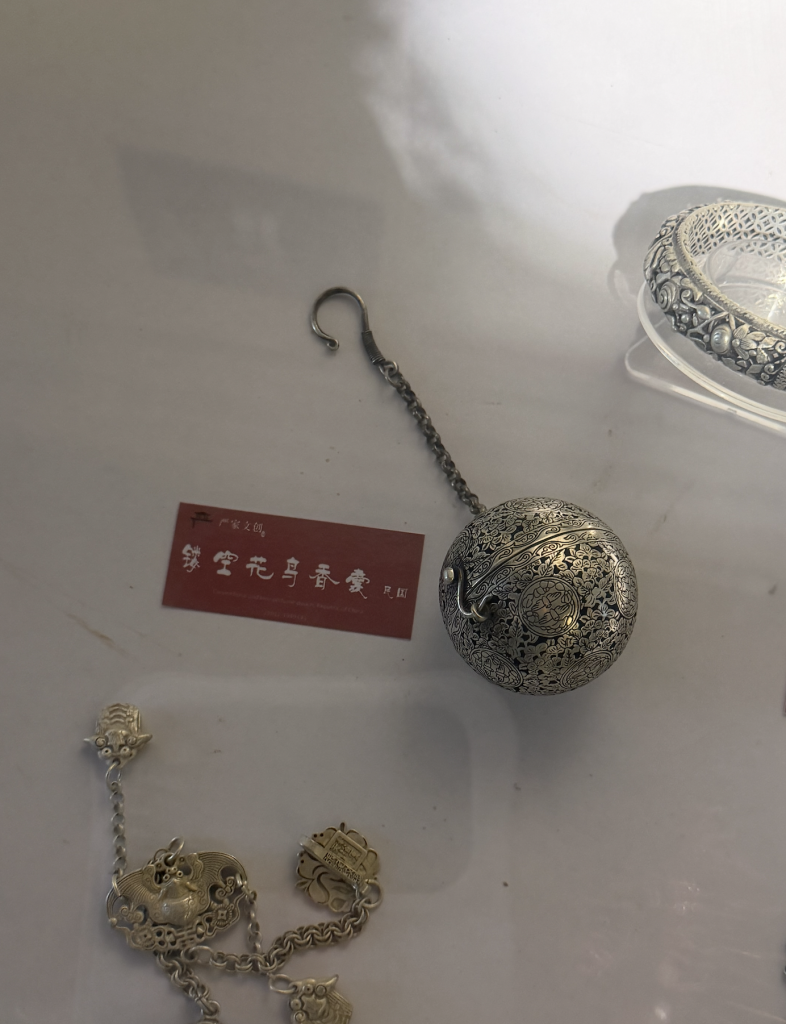
Openwork Floral & Bird Scent Ball, Republic of China (镂空花鸟香囊):
This hanging spherical gadget guarantyd that interior incense stayed level independent of movement, carrying on the classic gimbal mechanism of ancient Chinese censer spheres. It was an early historical example of purposefully creating a movable “micro-comfort zone,” whether it was carried on trip or used inside bed curtains.
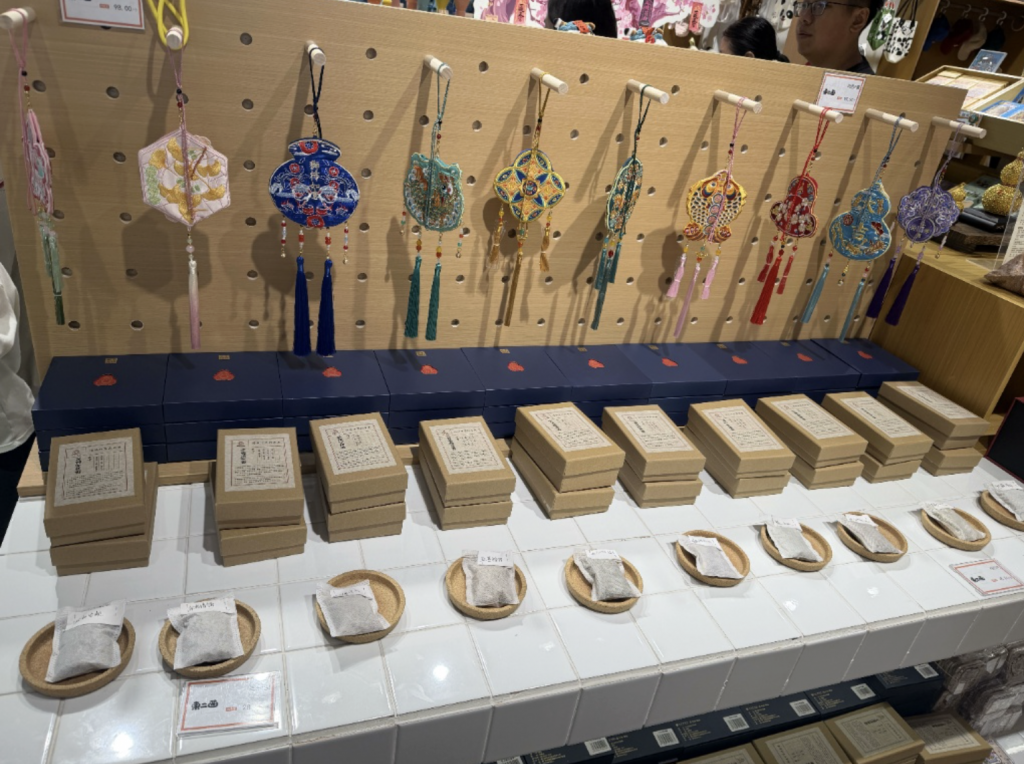
Commonplace Vernacular Traditions: Vanishing Creams and Embroidered Sachets
Beyond metal craftsmanship, fabrics and everyday cosmetic pomades are the foundation of the widespread use of scent:
Embroidered Herbal Sachets: These sachets, which combine traditional silk embroidery with loose-leaf herbal packets, are ritualistic symbols of wellbeing that highlight passive slow-release processes and natural fiber absorption.
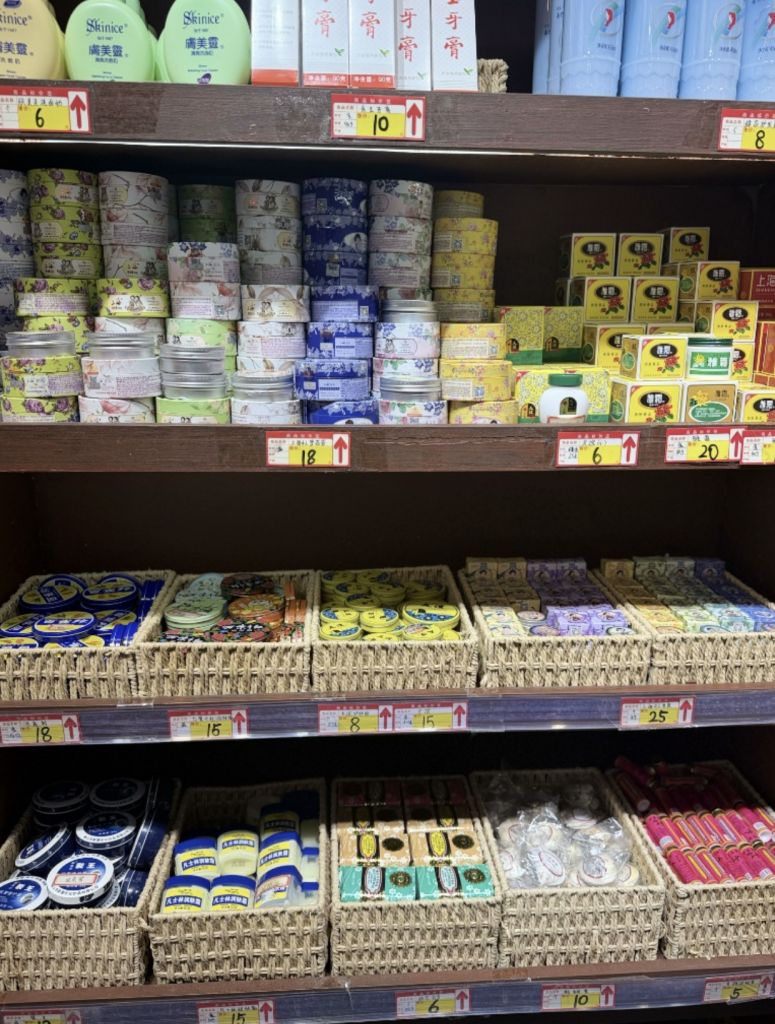
Traditional Vanishing Creams (Shanghai Lady, Yazhuang): For contemporary Chinese generations, the ubiquitous nostalgic aromas of gardenia, white orchid, and jasmine preserved in antique tin compacts form a potent collective memory, illustrating how lipid-based carriers create intimate, skin-close comfort.
Perspectives on Action Research
This material investigation shows that, rather than depending exclusively on automated aerosol sprays, traditional Chinese sensory practices place a higher priority on incorporating aroma into tactile, weighted physical vessels.
Incorporating porous natural cores (such cedar chips and volcanic rock) and perforated enclosure (influenced by the silver filigree) directly influences the structural evolution of my tactile companion objects, enabling people living abroad to carry a durable, palpable anchor of home.
Leave a Reply