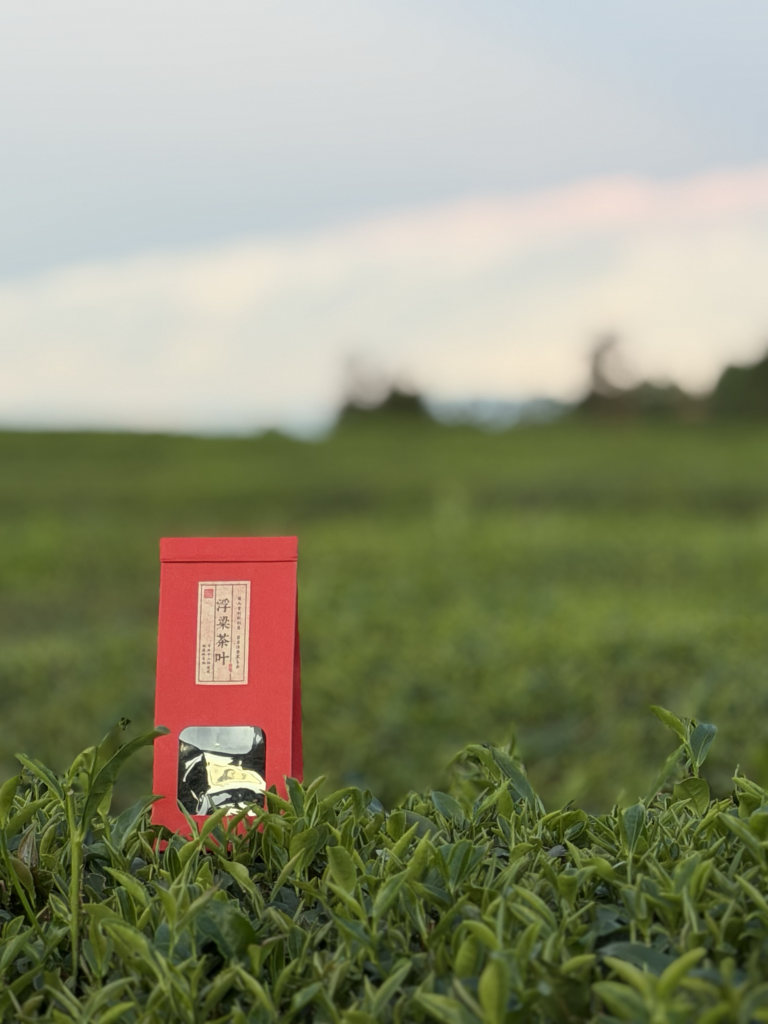
I visited Fuliang, Jiangxi, as part of my olfactory field research around China, to investigate tea not just as a beverage but also as a sensory substance associated with location, memory, and daily Chinese culture.
Throughout my investigation into fragrances that could evoke sentiments of warmth and familiarity, tea has frequently come up. But I didn’t want to learn about tea from a finished scent or perfume sample alone. I wanted to go back to the place where the material comes from so I could smell it more directly.
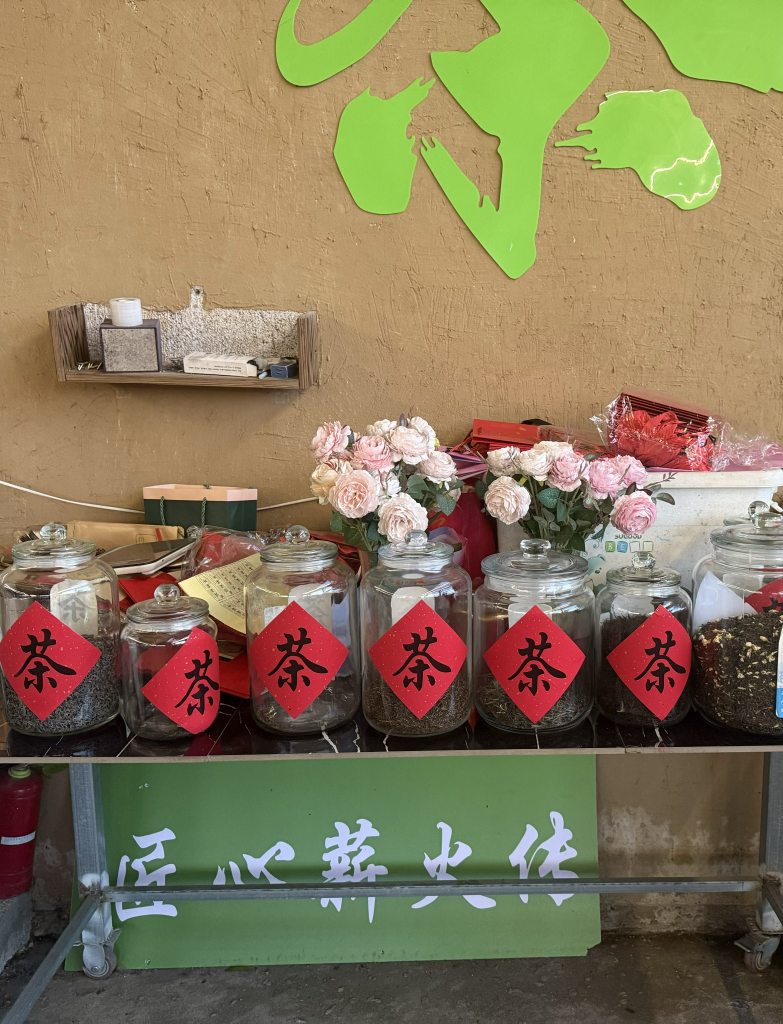
From Aroma to Location
My perception of tea as an aromatic substance was altered when I arrived at the tea-growing region. Rather than feeling a single, distinct “tea scent,” I became conscious of a much broader sensory experience, which included the surrounding vegetation, the leaves themselves, the air and humidity of the surrounding area, and the way the smell of tea changed as it was handled.
This encounter caused me to consider the distinction between emulating a fragrance and actually experiencing its source.
Tea is an easily identifiable smell element in perfume composition. However, fragrance coexists with the environment, materials, labor, and cultural history at its site of origin. As a result, the scent is part of a broader sensory context rather than just something that can be isolated and included into a product.
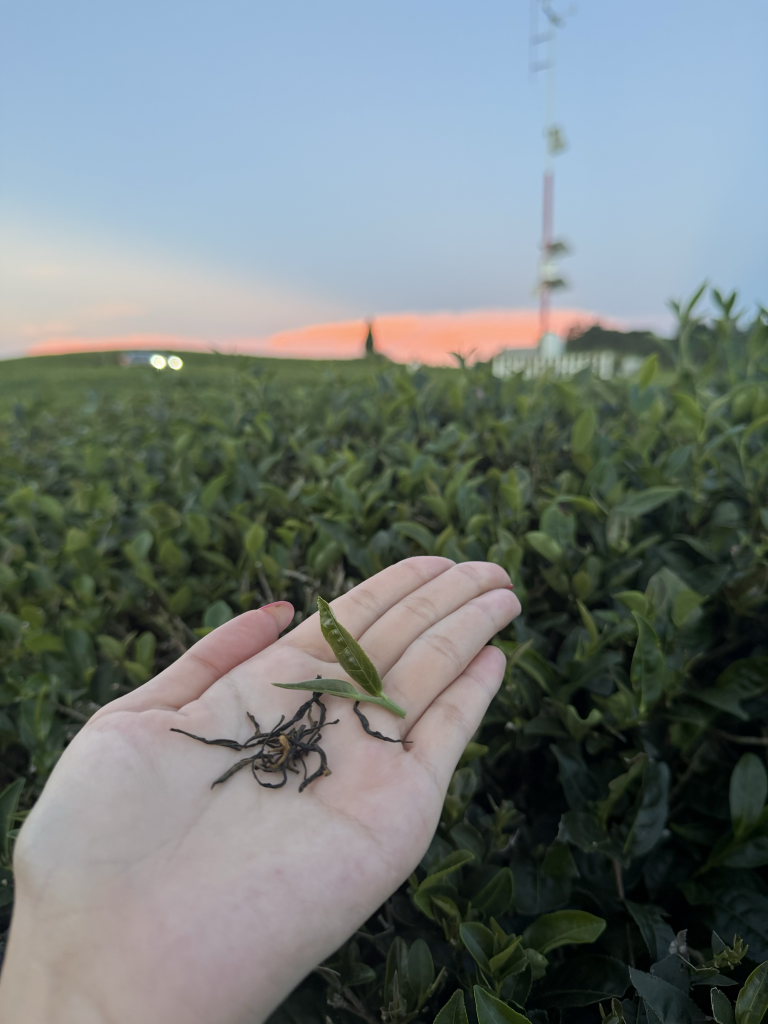
Tea, Recollection, and Knowledge
This was very pertinent to my topic since I’m investigating the ways in which Chinese individuals residing overseas could utilize tactile and olfactory experiences to foster a feeling of security and community.
In my earlier interventions, I found that certain autobiographical recollections were frequently awakened by familiar scents. Tea was especially intriguing because it doesn’t always symbolize a single dramatic “home” memory. Rather, it can be subtly present in day-to-day activities, such as studying, having discussions, sitting at family tables, or just going about daily business.

This caused me to reevaluate what kind of fragrance would be appropriate for my project. Maybe comfort doesn’t have to come from the most potent or blatantly nostalgic scent. Because it relates to recurring everyday experiences, a faint, everyday scent may occasionally be more potent.
Leave a Reply