Category: Uncategorised

  • Turning points

    Intervention 1 – “Micro-Comfort Zone”
    Six adult participants from overseas were recruited for the “5-Day Micro-Comfort Zone Challenge” to use their own tactile and olfactory goods (such as cozy transitional items, blankets, and familiar aromas) to create a dedicated domestic sanctuary. The study used transitional object theory and olfactory memory activation to test whether actively exercising spatial agency over an immediate micro-environment can alleviate homesickness and spatial disorientation by having participants interact with this sensory nook for 10 to 15 minutes every day for five days in a row. The results were then assessed through semi-structured debrief interviews.

    Reclaiming Spatial Agency: In order to shut out visual memories of academic work and regain control over generic rental rooms, participants purposefully avoided high-stress desks and beds and dropped to the floor (within a 1-2 square meter footprint).

    Deep Pressure Touch: Using familiar transitional plush toys successfully decreased physical restlessness and muscle stiffness, while thick blankets and firm cushions offered somatic anchoring through deep pressure touch.

    Pre-Cognitive Olfactory Recall: Self-selected fragrances (including sandalwood, pine resin, spiced fruit tea, and dried peel) immediately activated the limbic system, transforming intense homesickness into consoling, introspective nostalgia that confirmed cultural continuity.

    Physical Synergy Over Screen Reliance: The closed loop of tactile warmth and instant smell offered an offline, embodied sense of calm that anchored the nervous system, in contrast to digital screens and video calls that highlight time zones and physical distance.


    Intervention 2 – “Mobile Sensory Companion”
    A “semi-bespoke design probe” technique is used in this second action-research cycle to change the experimental focus from a static home nook to dynamic public settings. In order to verify the effectiveness of a portable dual-sensory companion in creating a discrete “psychological boundary,” assess the privacy of passive scent diffusion in public areas, and collect participant-led criteria for future modular prototype iterations, the study uses daily mobile diaries and post-intervention debrief interviews with overseas Chinese participants who attach a standardized natural solid scent pack (such as roasted oolong tea, sweet osmanthus, or mountain cedar) to their own personal plush charms and interact with them for one to two minutes during times of acute stress, homesickness, or language anxiety.

    Dual-Sensory Synergy: Cedarwood calms breathing and heart rate, osmanthus-tea scents convey cultural affiliation, and a variety of textures (plush, vinyl, satin) reduce physical strain.

    Invisible Psychological Boundary: In high-stress public areas (such as transit, supermarkets, and social gatherings), rapid tactile kneading and close sniffing create an instant, private safety zone.

    Discreet Passive Diffusion: The practical, non-intrusive practicality of the solid-state smell core is confirmed by the fact that it stays private and personal without spreading into the common area.


    Turning points
    The idea of a “psychological safe zone” experiences a drastic spatial compression during the two action-research cycles, changing from a stationary physical niche to a transportable, handheld artifact. Intervention 2 condensed this territorial haven into a transportable scented plush charm, while Intervention 1 confirmed the effectiveness of recovering a 1-2 square meter residential corner through tactile and olfactory curation. Fragrance serves as an invisible sensory barrier in this dynamic environment: in alienating, chaotic public spaces, the non-intrusive scent immediately creates an olfactory buffer that shields the user from environmental stressors and translocates them into a familiar, internalized space to effectively alleviate homesickness and spatial dislocation.
  • Reflection on Tutorial Feedback

    I was able to see how much my project has changed since I first proposed it thanks to this instruction. Initially, my concept was centered on the Micro-Comfort Zone, in which participants used aroma, familiar objects, and soft materials to create a small, secure area in their rooms. The training helped me realize that this concept was still quite comparable to existing sensory comfort or sensory regulation rooms, even if the intervention shown that participants found these places helpful for relaxation. Although I had tested the intervention’s effectiveness for my subjects, I had not made it apparent how my method differed.

    The addition of mobility and olfactory experience was the most significant turning point in my research. I started to realize that homesickness does not only occur when a person is by themselves at home thanks to my second intervention, the Mobile Sensory Companion. Additionally, it may manifest when traveling, dining alone, studying, commuting, or interacting with strangers. My perspective shifted from building a physical “comfort corner” to a movable psychological safe zone as a result. The idea that fragrance could establish an imperceptible personal barrier between a user and an unfamiliar environment piqued my interest.

    The tutor’s comments also caused me to reevaluate my perfume selection. Through perfume workshops, hotels, tea gardens, museums, and traditional fragrance objects, I investigated many culturally identifiable materials and scents during my field research in China. I now understand, though, that I shouldn’t presume that a single fragrance can symbolize “home” for every Chinese person. Personal memories and sensory preferences are still highly unique, while cultural memory is somewhat common.

    As a result, I should make my next intervention more interactive. Rather than distributing a single scent that I have chosen, I may offer multiple scent profiles and let participants select the one that most closely relates to comfort, safety, or home. I may then learn which sensory attributes need more development based on their selections and comments. Instead of framing me as the designer who determines what comfort should smell like, this would shift the project toward co-design.

    Strengthening my scholarly references, especially in relation to multisensory settings, multisensory items, and olfactory design, was another crucial takeaway from the session. This will enable me to explain my project’s unique contribution and place it more clearly in connection to current practices.

    Ultimately, the comments altered my perspective on documentation. Throughout my fieldwork, I have gathered a large number of photos, which are not limited to serving as proof of my travels. I may turn them into a visual journal that depicts the individuals, locations, supplies, smells, and choices that progressively influenced the project.

    Overall, this lesson made it clear to me that creating a cozy scented object is no longer the only aspect of my project. It is evolving into an inquiry into the ways in which involvement, touch, scent, and cultural memory might assist individuals in creating a transportable sense of identity.

  • Interview: Intervention 1 – “Micro-Comfort Zone”

    Participant 1: Lin (24, MA Design, London)

    Section 1: Preparation and Micro-Space Configuration

    • Could you explain the nook or area where you established your “Micro-Comfort Zone”? Why did you choose that particular location?
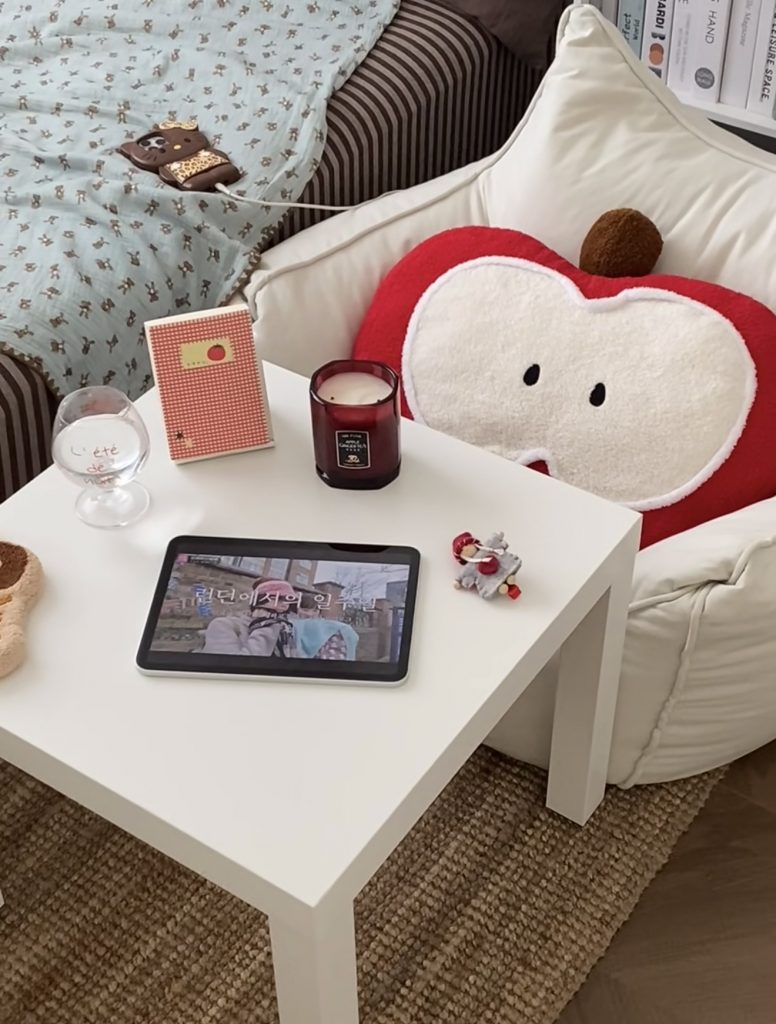
      • Lin: I positioned my nook in the small space between the white wardrobe and the edge of my mattress on the floor. The typical study desk faces a clinical-looking bare plaster wall in my small, boxy London dorm. I established a floor-level haven where my line of sight remains low and I am visually isolated from the academic clutter stacked on the main desk by setting a low white coffee table and a beige beanbag on top of the woven jute rug.
    • For the tactile and olfactory sections, what particular objects did you collect?
      • Lin: I used a lightweight checkered travel blanket folded over the bed and a high-density, plush apple cushion with a soft sherpa backing and deep red fleece for touch. Before I boarded my trip to Heathrow, an old friend gave me a red glass-jar candle that was perfumed with warm baked apple and ginger tea.

    Section 2: Memory Recall & Sensory Engagement

    • Tactile Dimension: Over the course of ten to fifteen minutes, how did you feel when you held or touched these objects? Did they offer a feeling of security or physical grounding?
      • Lin: Immediate postural comfort came from sinking onto the beanbag and pressing the firm apple cushion against my chest. Working on digital CAD models causes my shoulders to become stooped and tight during the day. My upper body was grounded by the continuous physical counter-pressure that came from clutching the soft, durable plush, which caused my shoulders to naturally sink.
    • Olfactory Dimension: What particular recollections sprang to mind? Did the aroma increase homesickness or arouse contemplative nostalgia?
      • Lin: The scent of warm, spiced apples instantly brought back memories of the winter fruit teas my family used to make on an induction stove while watching TV in our living room. Instead of evoking agonizing longing, the rich sweetness replaced the sterile smell of academic paint and filled the chilly, drafty room with a sense of domestic coziness.
    • Dual-Sensory Synergy: In contrast to seeing a picture or using a screen, how did touch and scent operate together?
      • Lin: When video calls malfunction or social media shows people hanging out at home, screens require cognitive attention and frequently intensify emotional distance. Breathing in spicy steam and giving each other a tactile hug had a pre-cognitive effect. It grounded me in physical body warmth rather than digital abstraction and required no mental interpretation.

    Section 3: Emotional Changes & Spatial Agency

    • Has your current bedroom overseas changed as a result of deliberately constructing and maintaining this micro-space?
      • Lin: The room’s territorial balance was altered. The room used to be just a practical place to sleep in between studio sessions. Now, just one square meter of woven rug serves as a deliberate transition area that lets my body know that the workday is officially over.
    • Did you see any pivotal moments or changes in your everyday mood during the five days?
      • Lin: Day 3, after a critical studio review, was the pivotal moment. I used to spend hours numbly scrolling through my phone on the bed. Rather, I lit the jar, sat right on the rug, and spent twelve minutes with my chin resting on the apple cushion. I had a concrete way to deal with my frustration without becoming paralyzed by homesickness thanks to the routine.

    Participant 2: Yuting (22, MSc Finance, London)

    Section 1: Preparation and Micro-Space Configuration

    • Could you explain the nook or area where you established your “Micro-Comfort Zone”? Why did you choose that particular location?
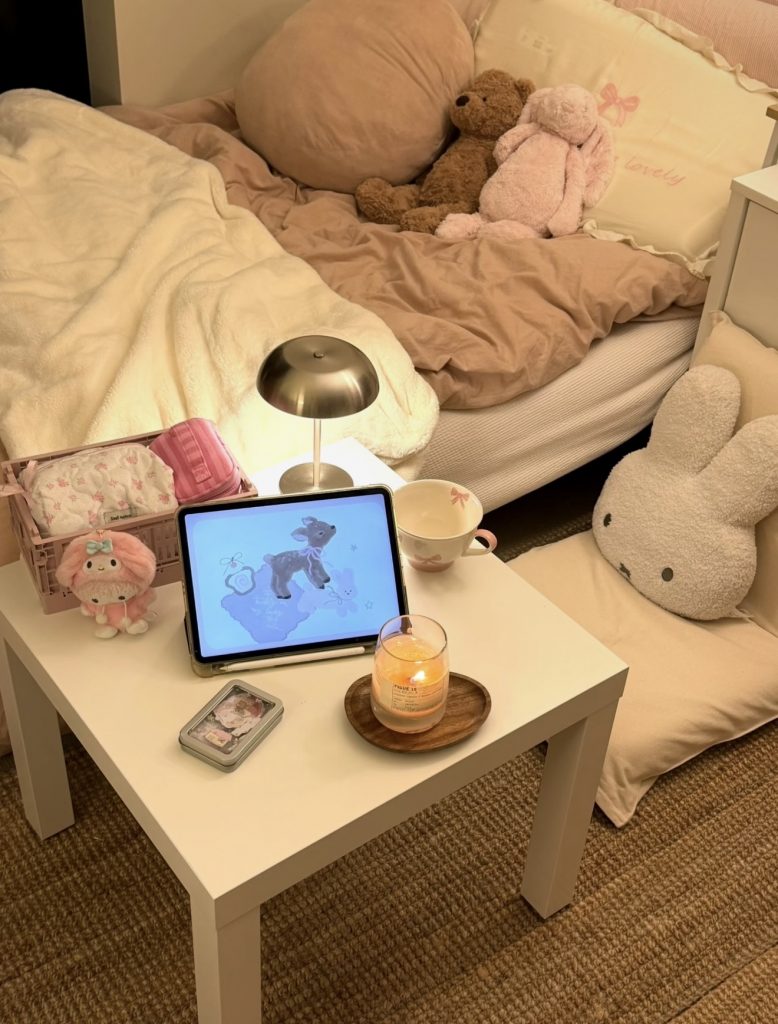
      • Yuting: I placed an upright Miffy fleece floor lounger next to the bed valance on the woven carpet between my bed frame and the bedside shelf. The shared apartment’s central heating is tightly controlled, and the floorboards are drafty. This particular pocket transforms an uncomfortable hallway into a private haven by capturing the gentle ambient glow of my brushed-metal mushroom lamp.
    • For the tactile and olfactory sections, what particular objects did you collect?
      • Yuting: A cream microfiber fleece duvet hanging from the mattress, a brown teddy bear, a floppy Jellycat bunny, and a tiny pink rabbit pendant were among the tactile goods, along with a cozy, cord-edged Miffy floor chair. I set a porcelain teacup with warm water and an amber jar soy candle with fragrant honey milk and toasted oats on a wooden saucer for olfactory cues.

    Section 2: Memory Recall & Sensory Engagement

    • Tactile Dimension: Over the course of ten to fifteen minutes, how did you feel when you held or touched these objects? Did they offer a feeling of security or physical grounding?
      • Yuting: Regular soft bedding does not offer the same level of mild lower-lumbar support as the Miffy chair. I felt completely enclosed when I tucked my bare feet under the fleece blanket and ran my fingertips over the curly fur of my plush bear. My hands remained motionless and anchored thanks to the range of materials, which included plush ear linings and fine microfibre.
    • Olfactory Dimension: What particular recollections sprang to mind? Did the aroma increase homesickness or arouse contemplative nostalgia?
      • Yuting: The aroma of oats and honey immediately reminded me of warm breakfast porridge made before school runs on weekend mornings when I was younger. The room smelled inhabited rather than rented, and the familiar culinary warmth soothed the unusual dampness of the London evening rather than causing intense grief.
    • Dual-Sensory Synergy: In contrast to seeing a picture or using a screen, how did touch and scent operate together?
      • Yuting: Sensory engagement binds you where you are, whereas digital photographs remind you of places you can’t go. My heart rate was dropped and my racing thoughts were soothed by the direct sensorimotor loop produced by holding the plush and breathing in the milky wax.

    Section 3: Emotional Changes & Spatial Agency

    • Has your current bedroom overseas changed as a result of deliberately constructing and maintaining this micro-space?
      • Yuting: The floor area between the desk and bed used to be squandered. By converting the corner into a lighted sensory zone, a localized sensation of domestic safety was established and the corner no longer seemed like an anonymous leased apartment.
    • Did you see any pivotal moments or changes in your everyday mood during the five days?
      • Yuting: Settling into the warm lamp pool with the fuzzy toys on Day 4, when the room felt dark by 4 PM due to the constant London drizzle, broke an emerging episode of seasonal blues. It produced an internal haven that was unaffected by the weather or remote location.
    Participant 3: Bowen (25, PhD Mechanical Engineering, Sheffield)

    Section 1: Preparation and Micro-Space Configuration

    • Could you explain the nook or area where you established your “Micro-Comfort Zone”? Why did you choose that particular location?
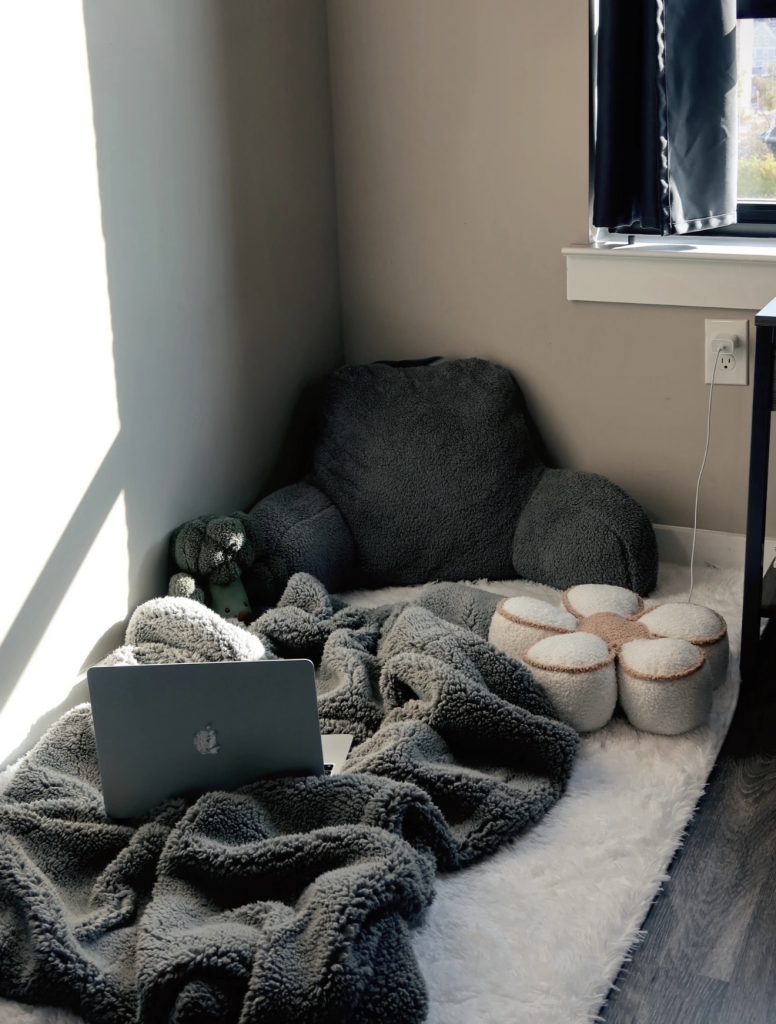
      • Bowen: I set up a white shag rug and a hefty, dark-charcoal sherpa reading lounger in the furthest corner of my studio, right under the window. My desk is filled with gear, charging wires, and monitors because I’m an engineer. The only area of the flat without any cables touching the floor is this corner, where morning sunlight casts clear, geometric wall shadows.
    • For the tactile and olfactory sections, what particular objects did you collect?
      • Bowen: I used a segmented plush flower cushion, an ergonomic back-support armchair pillow with armrests, and an extra-thick, curly charcoal fleece throw with significant physical heft for touch. Since open flames are forbidden in my building, I put an unlit sachet filled with dried Sichuan pine needles and crushed cedar shavings within the lounger seam for aroma.

    Section 2: Memory Recall & Sensory Engagement

    • Tactile Dimension: Over the course of ten to fifteen minutes, how did you feel when you held or touched these objects? Did they offer a feeling of security or physical grounding?
      • Bowen: The distinguishing feature was the charcoal fleece blanket’s actual weight. I felt a deep pressure touch when I draped it across my lap, which instantly stopped my bodily restlessness. My upper back was stabilized by leaning into the thick sherpa lounger, which ended the tendency of constantly changing positions brought on the unpleasant computer chairs.
    • Olfactory Dimension: What particular recollections sprang to mind? Did the aroma increase homesickness or arouse contemplative nostalgia?
      • Bowen: During my university breaks, I hiked through southwestern mountain forests with my father, and the dry, sharp smell of pine and aromatic cedar brought back memories. It imparted mental clarity without being overly nostalgic. It carried a crisp, organized airiness that eliminated the stale smell of institutional carpets and heating units.
    • Dual-Sensory Synergy: In contrast to seeing a picture or using a screen, how did touch and scent operate together?
      • Bowen: I often get homesick when I look at photos on my phone because it draws attention to what is missing. On the other hand, smelling crisp resin and feeling heavy, warm wool activated my nervous system somatically. It brought my focus back to the present moment’s bodily comfort.

    Section 3: Emotional Changes & Spatial Agency

    • Has your current bedroom overseas changed as a result of deliberately constructing and maintaining this micro-space?
      • Bowen: It no longer feels like an ad hoc computer lab in my room. Now, the window corner functions as an offline area where I may stop tackling analytical problems and let my mind relax.
    • Did you see any pivotal moments or changes in your everyday mood during the five days?
      • Bowen: Day 2 was crucial. Instead of resting down on the mattress, I withdrew to the floor covering after battling through an eight-hour coding block. My cerebral headache was eased after ten minutes of weighted pressure and the aroma of resin, which proved to be considerably more healing than watching passive media.

    Participant 4: Meng (23, MA Media & Communications, Leeds)

    Section 1: Preparation and Micro-Space Configuration

    • Could you explain the nook or area where you established your “Micro-Comfort Zone”? Why did you choose that particular location?
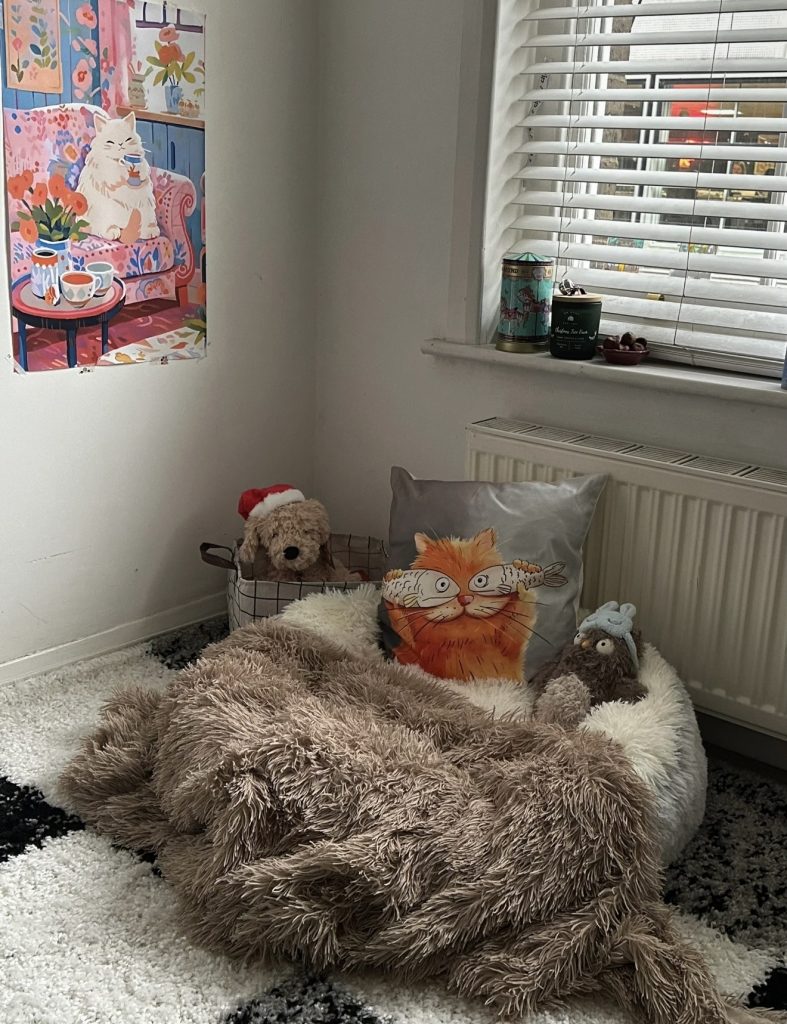
      • Meng: I set up a deep, high-pile black-and-white wool rug with an incredibly luxurious circular faux-fur pet nest on top, and I found my comfort zone beside the radiator behind the big window shades. I chose this location because the window shades let me block out the drab urban street view outside, and sitting next to the working radiator offers consistent physical warmth.
    • For the tactile and olfactory sections, what particular objects did you collect?
      • Meng: The tactile components were a curly sheepskin throw, a soft puppy plush with a red winter hat, a smooth silk-screened cat cushion, and a large, long-pile faux-fur donut lounger. I placed a tiny beautiful tin canister with dried osmanthus and dried mandarin peel (chenpi) on the nearby windowsill, along with a dark green jar candle for aroma.

    Section 2: Memory Recall & Sensory Engagement

    • Tactile Dimension: Over the course of ten to fifteen minutes, how did you feel when you held or touched these objects? Did they offer a feeling of security or physical grounding?
      • Meng: Curling up inside the round nest resembled a safe, contained burrow. Holding the cat cushion across my stomach and burrowing my hands into the long, fluffy synthetic fibers produced a cocooning warmth that immediately reduced the physical signs of anxiety, such as cold extremities and shallow breathing.
    • Olfactory Dimension: What particular recollections sprang to mind? Did the aroma increase homesickness or arouse contemplative nostalgia?
      • Meng: The windowsill’s faint scent of beautiful flowers and dried citrus brought back memories of sunny fall afternoons spent drying orange peels on woven bamboo trays in my grandmother’s apartment. It provided a comforting sense of domestic continuity that significantly reduced the alienating atmosphere of the chilly northern English room.
    • Dual-Sensory Synergy: In contrast to seeing a picture or using a screen, how did touch and scent operate together?
      • Meng: I frequently feel alone when I close an app after staring at family images on a bright screen. On the other hand, I felt embodied reassurance when I wrapped myself in a deep pile and smelled the familiar scent of sun-dried peel. It directly stimulated my senses, transforming longing into peaceful reflection.

    Section 3: Emotional Changes & Spatial Agency

    • Has your current bedroom overseas changed as a result of deliberately constructing and maintaining this micro-space?
      • Meng: I used to dread being in my room throughout the day because I felt confined by the gloomy views beyond the window. Reclaiming the negative border by creating a sensory nest on the floor next to the radiator transformed a chilly window nook into the most healing area of the apartment.
    • Did you see any pivotal moments or changes in your everyday mood during the five days?
      • Meng: After group presentations on the third evening, I sat in the fur nest without turning on the overhead lights since I was experiencing extreme second-language tiredness. A dependable daily recuperation routine was established by just kneading the fur fibers while inhaling the citrus overtones, which produced an unanticipated sensation of emotional stability.

    Participant 5: Chen (26, LLM International Law, Edinburgh)

    Section 1: Preparation and Micro-Space Configuration

    • Could you explain the nook or area where you established your “Micro-Comfort Zone”? Why did you choose that particular location?
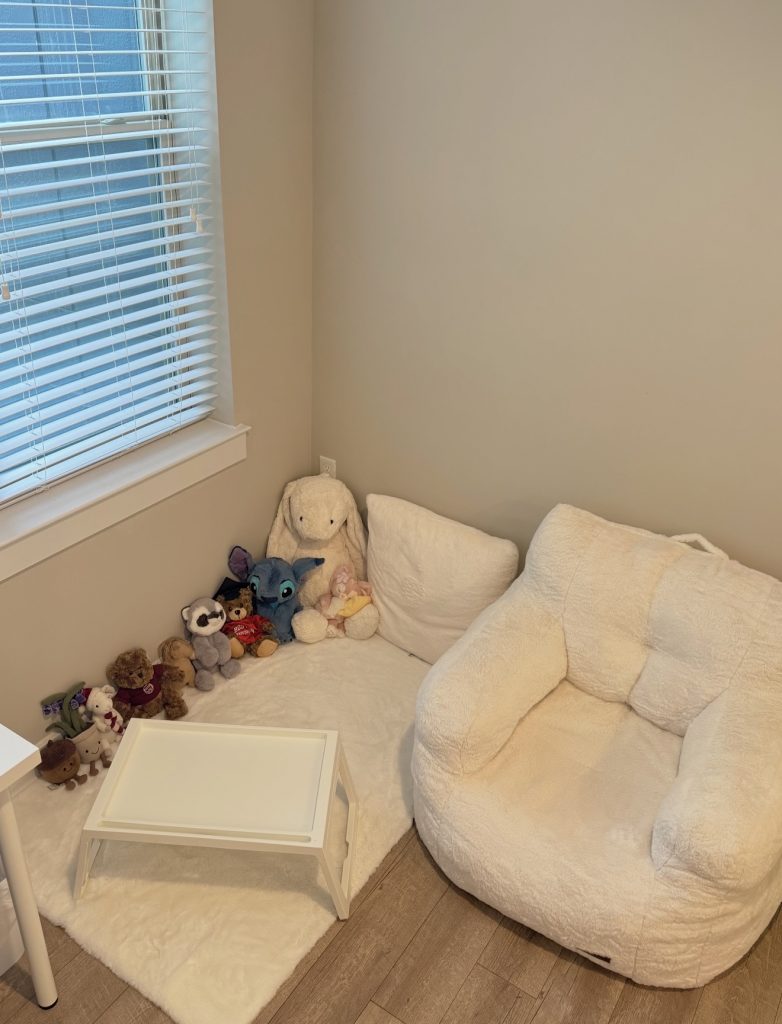
      • Chen: I placed a rectangle fleece rug and a deep off-white sherpa beanbag armchair next to a low folding bed tray in the quietest corner of my bedroom, across from the window blinds. Old Edinburgh tenements have large, drafty, and unwelcoming rooms due to their high ceilings. I was able to create a safe haven with distinct boundaries by consolidating this tiny corner.
    • For the tactile and olfactory sections, what particular objects did you collect?
      • Chen: My tactile elements included a structured backrest cushion, an off-white fleece armchair, and a personal assortment of transitional companions arranged neatly against the skirting board, such as graduating bears, Stitch, a long-eared plush hare, and tiny felt plants. I put a tiny tin with sandalwood balm and fragrant camphor wood blocks next to the tray table for aroma.

    Section 2: Memory Recall & Sensory Engagement

    • Tactile Dimension: Over the course of ten to fifteen minutes, how did you feel when you held or touched these objects? Did they offer a feeling of security or physical grounding?
      • Chen: I had a strong sense of structural support as I sat on the plush floor rug with my back pressed up against the armchair. My body felt anchored rather than ephemeral, and the familiarity of feeling my plush companions—items that accompanied me through my undergraduate years and worldwide travel—restored a grounded emotional rhythm.
    • Olfactory Dimension: What particular recollections sprang to mind? Did the aroma increase homesickness or arouse contemplative nostalgia?
      • Chen: The scents of clean camphor and dry sandalwood brought back memories of my grandfather’s oak bookshelf and the peaceful study space where I used to spend weekends getting ready for tests. Despite the confusion of studying overseas, the scent served as an anchor of continuity, comforting me that my intellectual identity remained stable.
    • Dual-Sensory Synergy: In contrast to seeing a picture or using a screen, how did touch and scent operate together?
      • Chen: After spending hours reading digital legal documents, digital media can lead to cognitive overload. My hands were immediately grounded by the scent of dry wood and the comforting fleece of my childhood fuzzy. It provided a calm, physical area where my mind could stop processing digital information.
    Section 3: Emotional Changes & Spatial Agency

    • Has your current bedroom overseas changed as a result of deliberately constructing and maintaining this micro-space?
      • Chen: The business, sterile environment of the rented flat was radically disrupted. I created a distinct psychological space that was all mine by assembling my intimate friends on the floor mat, turning an impersonal tenancy into a useful haven.
    • Did you see any pivotal moments or changes in your everyday mood during the five days?
      • Chen: During a time of intense exam review, the pivotal moment came on Day 4. When I was feeling very stressed, I sat on the mat and held the stuffed hare for ten minutes instead of pacing or checking my phone. My heart rate was constantly dropped by that sensory stop, and calm serenity took the place of terror.

    Participant 6: Rui (23, BA Fine Art, London)

    Section 1: Preparation and Micro-Space Configuration

    • Could you explain the nook or area where you established your “Micro-Comfort Zone”? Why did you choose that particular location?
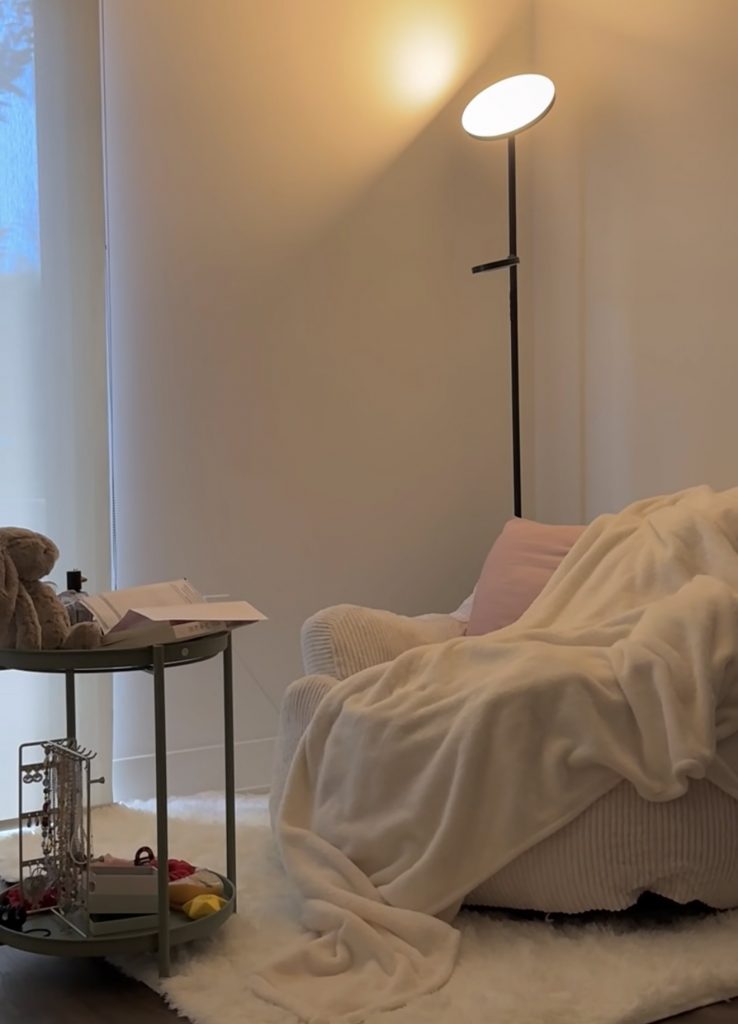
      • Rui: I used a metal round tray cart, an upward-reflecting disk floor lamp, and a cream corduroy circular floor lounger to set up my area in the deep nook behind the door. My rented room’s overhead fluorescent lighting creates a severe glare. This corner was visually isolated from the rest of the studio by the concentrated flood of warm, indirect light produced by the simple floor lamp.
    • For the tactile and olfactory sections, what particular objects did you collect?
      • Rui: A silky pink lumbar cushion, a long-eared plush bunny sitting on the side tier table, and an enormous, thick cream fleece blanket covering the textured corduroy lounger were all tactile features. I set an open sketchbook that still smells like home-pressed cotton paper next to a tiny flacon of white tea and osmanthus essential oil for olfactory input.

    Section 2: Memory Recall & Sensory Engagement

    • Tactile Dimension: Over the course of ten to fifteen minutes, how did you feel when you held or touched these objects? Did they offer a feeling of security or physical grounding?
      • Rui: I made a physical cocoon by nestling into the ridged texture of the corduroy lounger and completely encircling my shoulders with the thick, brushed fleece blanket. I was protected from drafts by the soft weight and cozy warmth, which also relieved the tension in my muscles from standing in the studio all day.
    • Olfactory Dimension: What particular recollections sprang to mind? Did the aroma increase homesickness or arouse contemplative nostalgia?
      • Rui: The subtle pairing of cotton paper and white tea brought back memories of peaceful weekend afternoons spent sketching in my former bedroom with the balcony window slightly open. Instead of causing anxiety, it created a tranquil home environment that contrasted the bustling, cacophonous city outside.
    • Dual-Sensory Synergy: In contrast to seeing a picture or using a screen, how did touch and scent operate together?
      • Rui: An instinctive physical reaction is produced by touch and smell. While feeling weighted fleece and breathing in familiar tea notes directly relaxed my anxious system, looking at images frequently causes cognitive comparisons between Beijing and London. It made it possible for me to feel at ease without requiring digital approval.

    Section 3: Emotional Changes & Spatial Agency

    • Has your current bedroom overseas changed as a result of deliberately constructing and maintaining this micro-space?
      • Rui: The corner became the main emotional center of my living area instead of an underutilized architectural emptiness. It allowed me to customize light, texture, and scent, proving that careful sensory curation can give a generic apartment a unique meaning.
    • Did you see any pivotal moments or changes in your everyday mood during the five days?
      • Rui: Late on the last nite was the crucial moment. Rather than dozing off with my phone shining on my face, I drew silently under the floor lamp covered in the fleece throw for fifteen minutes as the aroma of tea around me. I experienced a significant decrease in daily spatial displacement as I felt firmly rooted in my surroundings.
  • Participant Field Feedback Intervention 2-The 3-Day “Mobile Sensory Companion” Field Probe

    Profile: Golden Osmanthus, Roasted Oolong & Mountain Cedar

    Scent Formulation:A hybrid formulation that uses a dry, non-intrusive woody base to encourage physiological down-regulation and somatic grounding in public settings while combining top notes of sweet, culturally identifiable golden osmanthus with a base of warm, slightly bitter roasted oolong tea and grounding mountain cedar. This profile provides cultural resonance to trigger autobiographical belonging.

    1. Participant A

    • Context & Trigger: Evening rush-hour Tube commute combined with studio review stress; acute claustrophobia, noise, and cognitive overload.
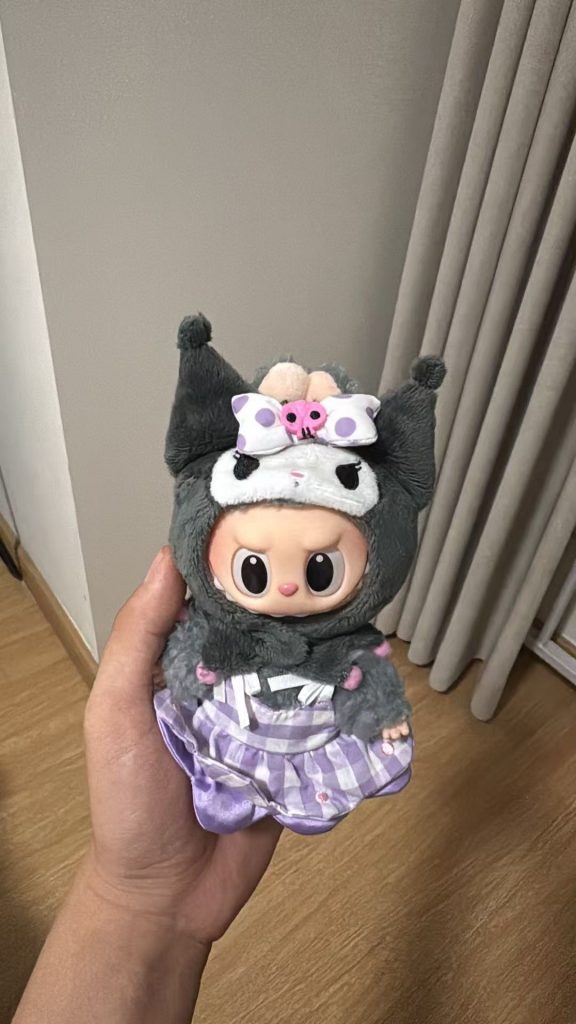
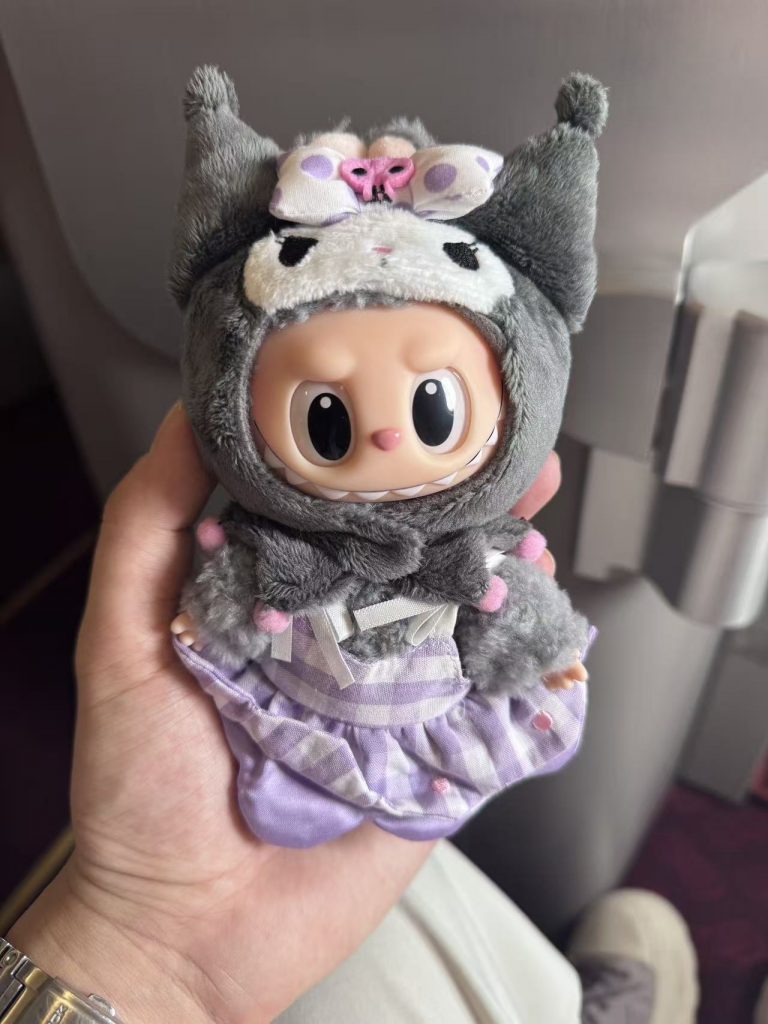
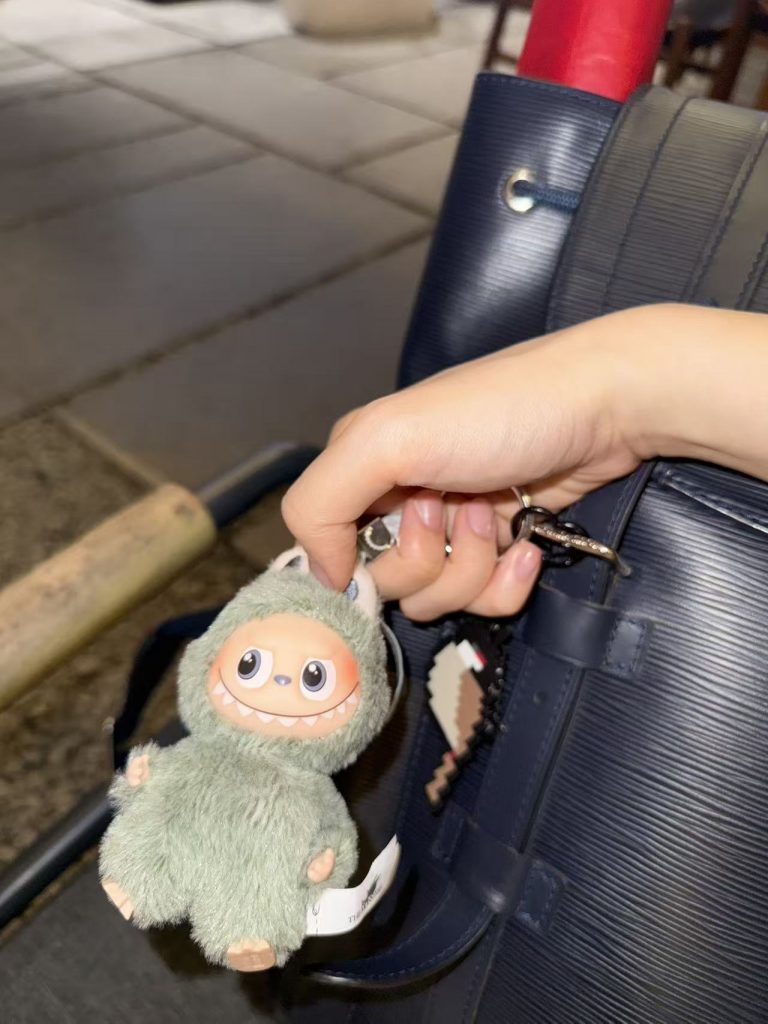
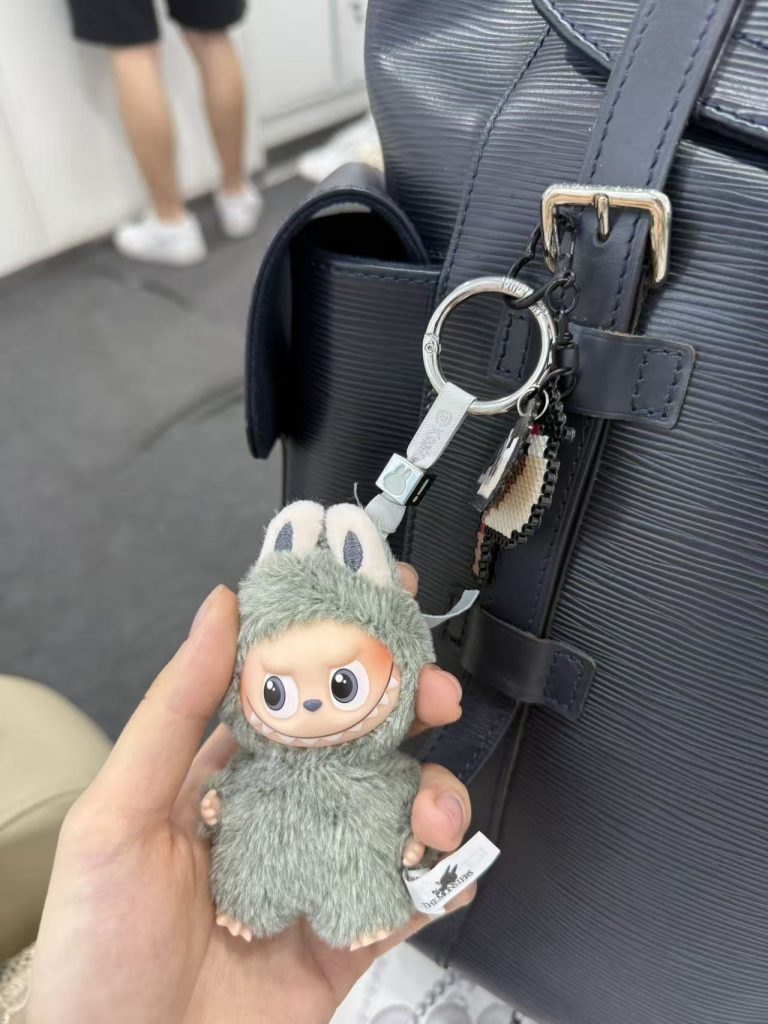
    • Interaction & Feedback:“My Labubu’s hard vinyl face, soft, plush ears, and layers of fabric created a dynamic tactile contrast for my fingers. Suffocating in the stuffy, hot carriage, I reached into my coat pocket, grasped its soft ears, and leaned down to take a breath. The deeper roasted tea and cedar foundation swiftly lowered my heartbeat, while the first osmanthus note instantly brought back memories of familiar fall streets back home. Amidst the surrounding turmoil, the smell functioned as an imperceptible protective bubble, remaining entirely private and self-contained.”

    2. Participant B

    • Context & Trigger: Navigating a fluorescent-lit, sterile supermarket alone after work; sudden social exhaustion and spatial alienation.

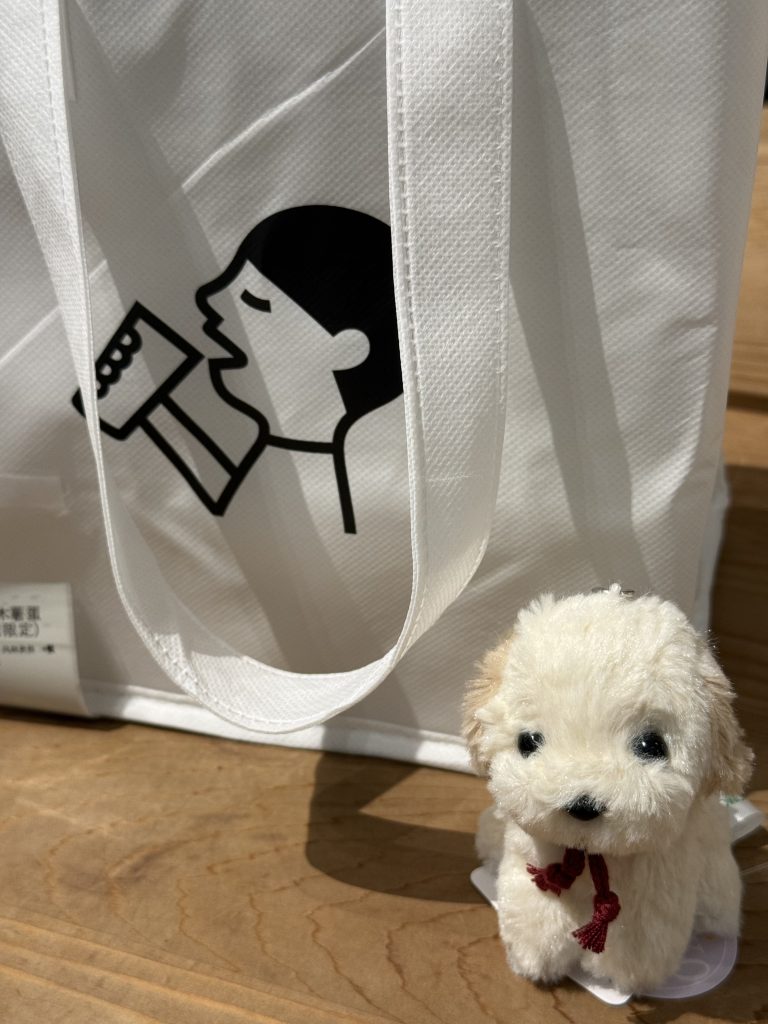
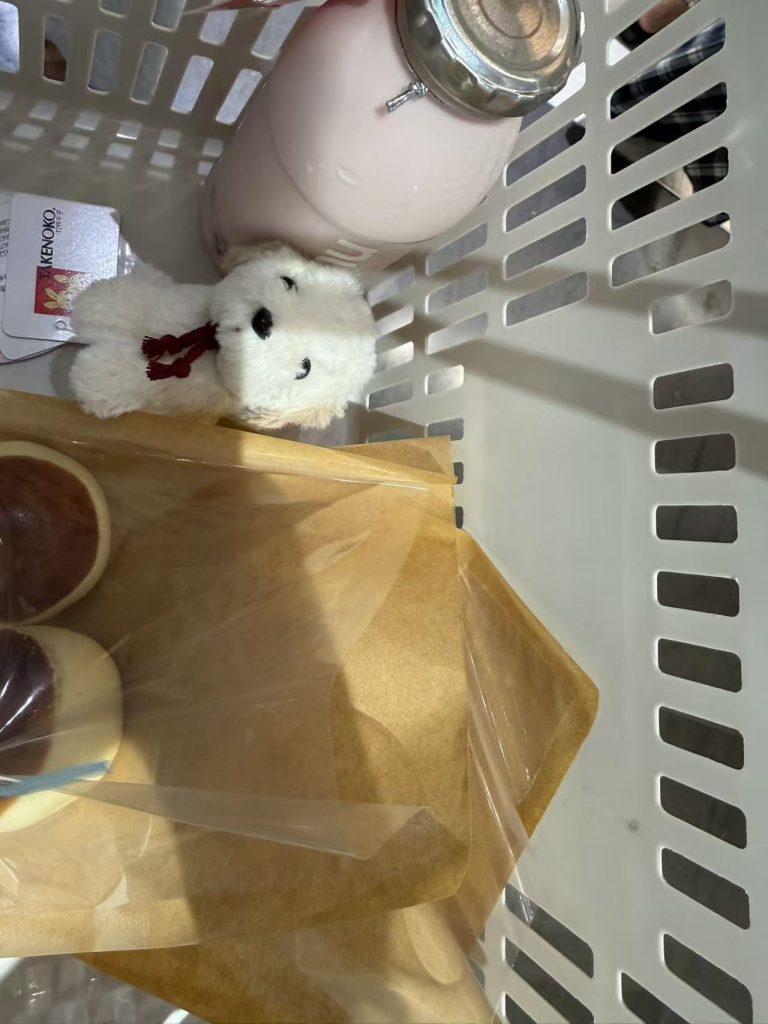
    • Interaction & Feedback:“The dog charm is fluffy and airy. I immediately reached down to rub its textured fur and bring it closer to smell while I stood in a long checkout line beneath buzzing fluorescent lighting. The store’s icy, mechanical detachment was broken by the delicate combination of sweet tea and dry cedar. It served as an instantaneous physical grounding switch, stabilizing my posture and promoting relaxation before I left again.”

    3. Participant C

    • Context & Trigger: Dining alone in a noisy, fast-paced Asian restaurant; experiencing acute homesickness and social self-consciousness.
    • Interaction & Feedback:“I frequently feel awkward and self-conscious when dining by myself at a busy restaurant. I was able to trace the furry limbs of the rabbit and smell the aroma of tea and wood by placing it near to my drink. The sweet osmanthus undertone brought back memories of family dinners at home, while the roasted oolong accent mixed in well with the overall restaurant aromas. An indifferent metal table became an anchor of familiarity thanks to that tactile, fragrant buddy.”

    4. Participant D

    • Context & Trigger: Fast-paced social gathering with international peers; cognitive fatigue from colloquial second-language processing and social anxiety.
    • Interaction & Feedback:“My mental capacity was totally depleted trying to keep up with slang and quick banter during the board game. I kept the stuffed animal on my lap beneath the table. I grounded myself by rubbing its soft ears between my thumb and forefinger and inhaling the faint cedar-tea aroma. It provided me with the precise nonverbal solidity I required to stay present, yet it never extended outward to disrupt other people at the table.”

    5. Participant E

    • Context & Trigger: Walking home alone late at night under cold London drizzle after overtime; experiencing sharp spatial disorientation and isolation.

    • Interaction & Feedback:“My fingers felt instant tactile relief when I reached back to touch the soft, fuzzy charm in my stiff, heavy rucksack. The roasted tea base and the crisp, woodsy cedar notes pierced the chilly, damp nite air. Instead of making me feel alone on a deserted street, the aroma had a natural sense of warmth and structure, reminiscent of my home’s mountain trails, which enabled me to walk steadily and resiliently.”

    6. Participant F

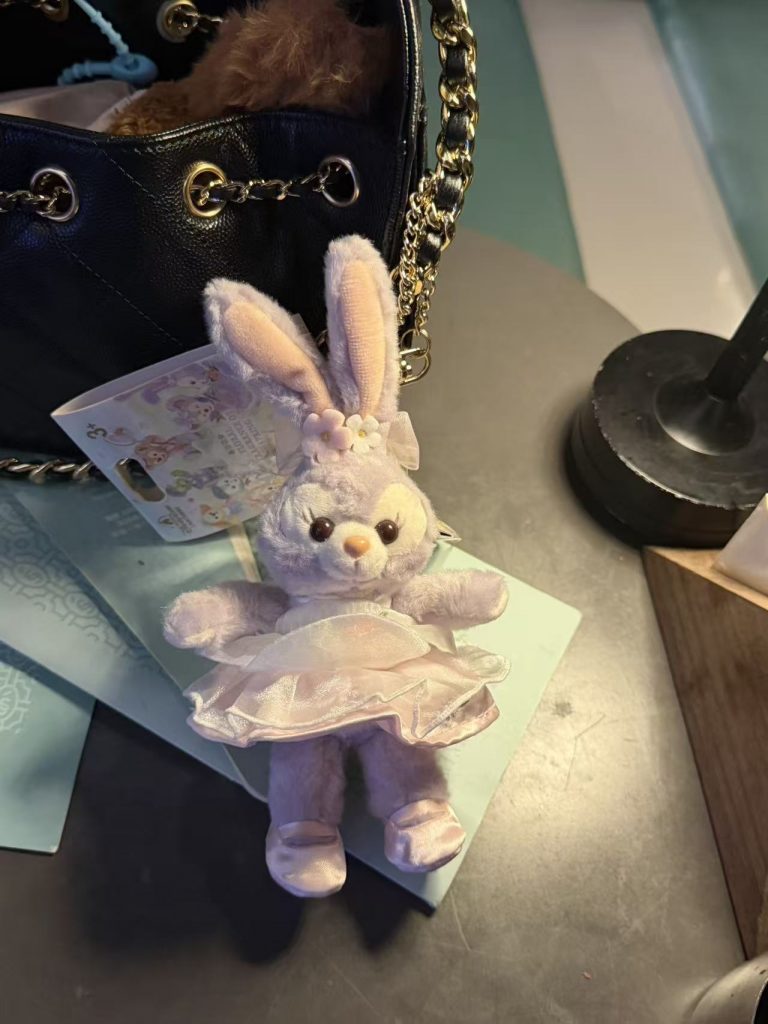
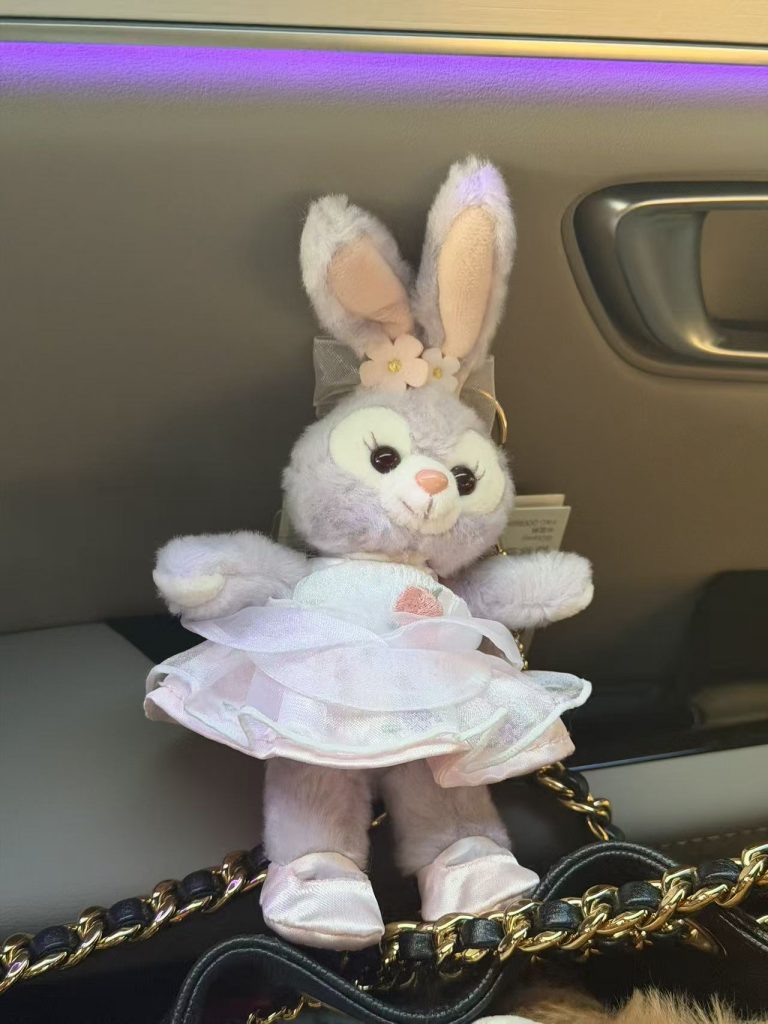
    • Object Used: StellaLou Ballet Bunny Plush resting on a table in a university study lounge
    • Context & Trigger: Drafting an essay late into the night in an empty, institutional student accommodation common room; experiencing physical neck stiffness and acute isolation.
    • Interaction & Feedback:“Velvet ears provided a tactile transition that relieved my hands of the repetitive strain of typing.” The aroma of cedar, oolong, and osmanthus created a soft, personal circle around my laptop. It didn’t fill the space, but leaning down to breathe in the well-known tea-flower scents gave me the confidence I needed to finish my work by softening the institutional lounge’s sterile chill.”

    Unified Scent Testing’s Key Action Research Findings

    Dual Synergy of Cultural Recall and Somatic Grounding: Using a single profile in a variety of public settings (such as study halls, supermarkets, restaurants, and transit) revealed that dual-sensory comfort works best through complementary mechanisms: the solid woody base offers non-intrusive somatic stability, while the floral tea top notes evoke comforting cultural memories of home.

    Discreet, Passive Public Feasibility: Passive solid-state diffusion demonstrated functional viability in all six testing conditions. Participants were able to reach personal comfort without forcing their scent into common social areas since the perfume stayed close and private.

  • Design Intervention Proposal 2: The 3-Day “Mobile Sensory Companion” Field Probe

    Background of the Intervention and Methodological Pivot
    This second action-research cycle uses a “semi-bespoke design probe” approach because present manufacturing limitations prohibit the mass production of tailored companion dolls. In order to examine how a dual-sensory anchor (tactile + olfactory) gives real-time emotional grounding throughout fleeting daily life, the study switches its experimental lens from a static indoor domestic nook to dynamic, movable public settings.

    Framework & Protocol for Intervention

    Three Chinese adults (18+) who have lived overseas for at than six months make up the participant demographics.

    Three days in a row.

    Supplies and Setup:

    Each participant receives a standardized, carefully chosen natural scent packet (such as roasted oolong tea, sweet osmanthus, or mountain cedar) from the researcher.

    In order to capitalize on the personal attachment, participants affix the smell packet to a little bag charm or plush necklace rather than presenting a new mass-produced item.

    Instructions for Participants:

    Attach the supplied aroma core to a little doll or personal plush charm that can be carried around every day.

    Take the fragrant charm with them on their everyday out-of-home activities (e.g., public transportation journeys, university libraries, workplaces, or solitary city walks).

    Engage directly with the charm (holding, tactile kneading, or breathing the aroma) for one to two minutes whenever you are experiencing unpleasant emotions, such as sudden homesickness, spatial disorientation, language anxiety, or everyday tension.

    Record the context, emotional triggers, times of engagement, and immediate sensory changes in a quick daily mobile diary.

    Plan for Data Gathering and Assessment

    Mobile Diary Logs: During the three-day period, the three participants’ real-time notes and contextual photos are gathered to record their instant physical reactions.

    Post-Intervention Debrief Interviews: Following Day 3, each of the three participants will participate in a 15-minute semi-structured online interview to assess:

    How successfully a mobile tactile-olfactory companion establishes a portable “psychological boundary” in public spaces.

    The privacy, subtlety, and practicality of passive solid smell dispersal in communal areas.

    Participant-led specifications for refillable scent systems, tactile textures, and weight for later physical prototyping iterations.

  • Olfactory Journey across China (VI): Experiencing Spatial Belonging in a Scent-Driven Hotel

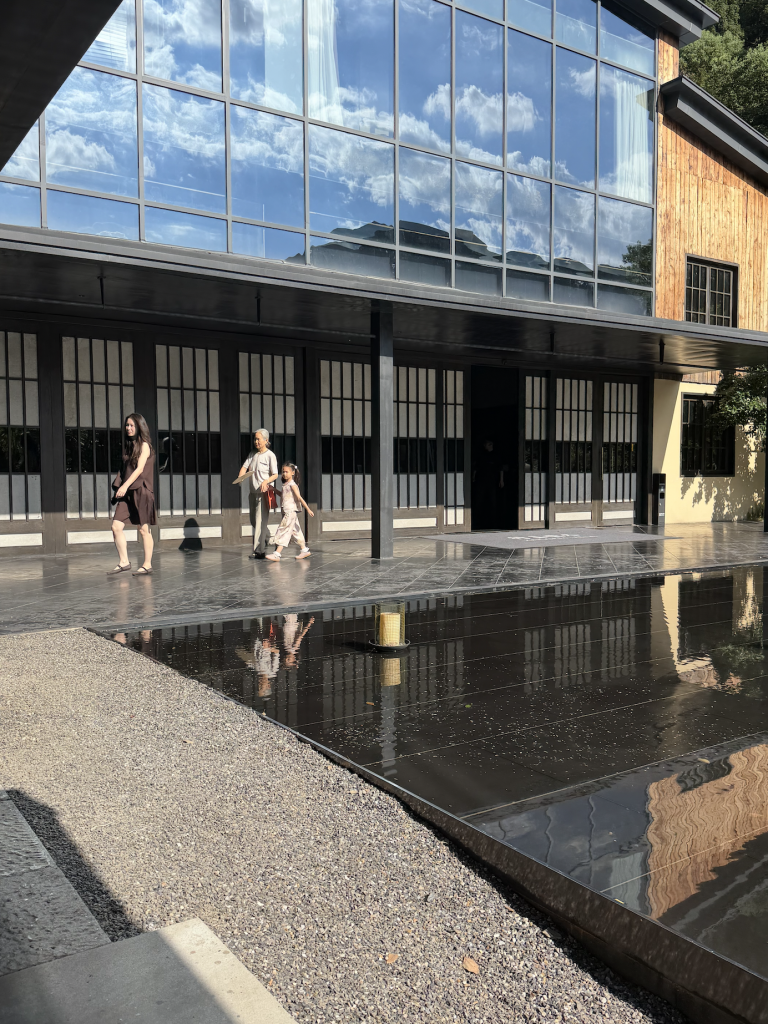
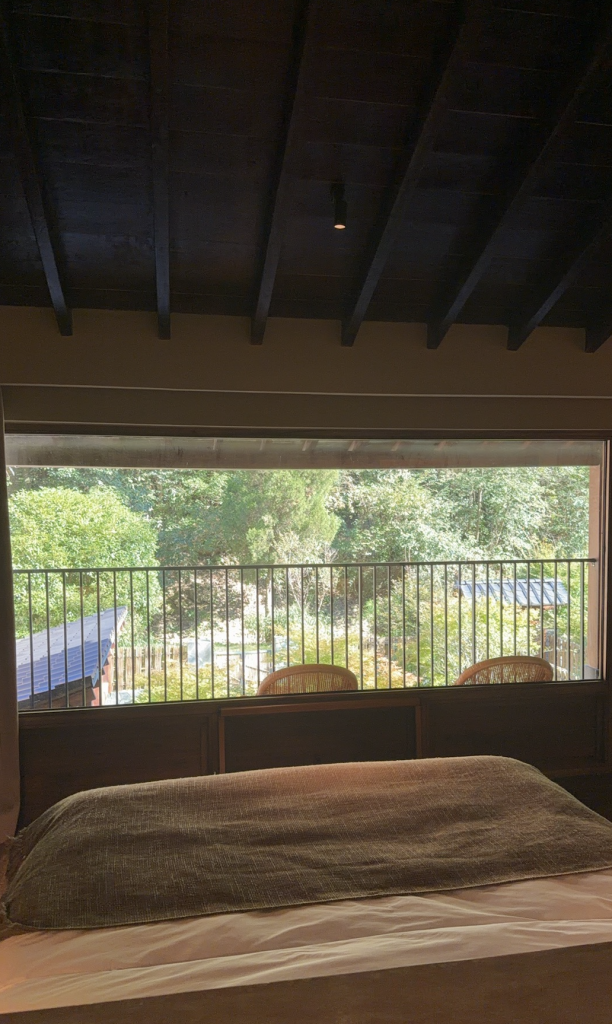
    My fieldwork extended into a critical commercial setting: scent-driven hospitality design, when I investigated independent perfumeries, archival jars, and culinary odors. A hotel inherently represents displacement because it is a temporary place to live. A fascinating real-world case study on how aroma actively reconstructs a sense of belonging in new surroundings was offered by visiting a hotel where fragrance is a key component of the design.

    An Aromatic Ritual from Check-in to Private Quarters

    Aroma becomes an active narrative medium throughout the room, transcending passive ambient background diffusion:

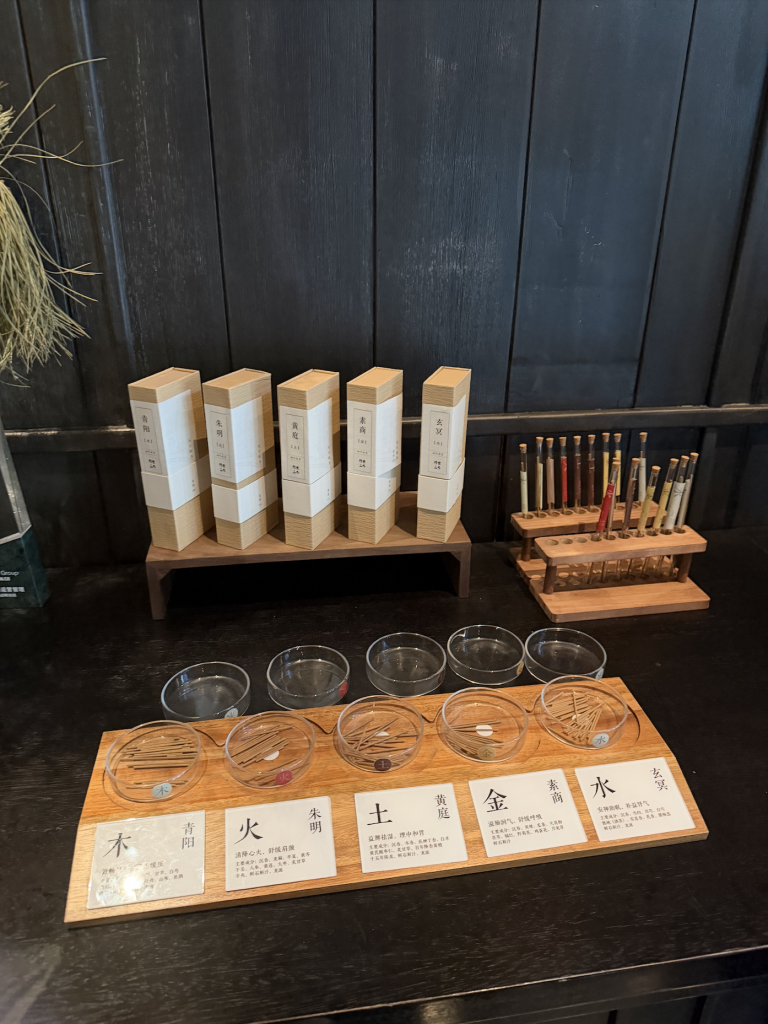
    Interactive Scent Selection Bar: Upon arrival, visitors engage with a special olfactory station that features plant extracts and glass cloches. Guests have instant control over their temporary domestic environment when they choose a personal room fragrance upon check-in.

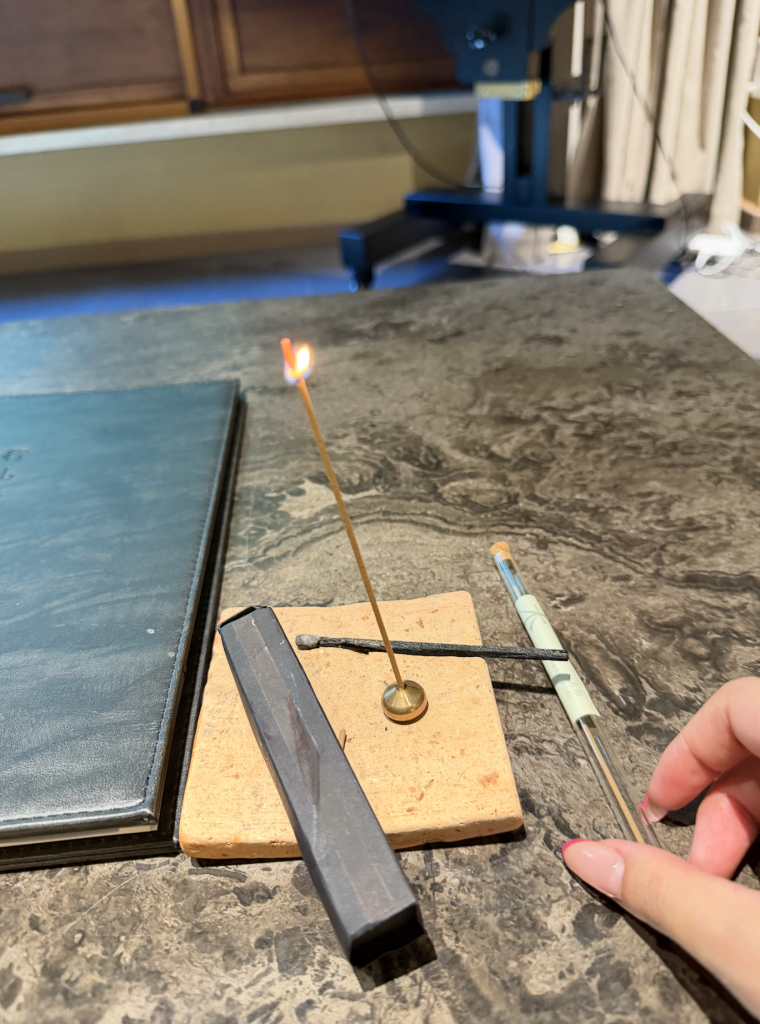
    In-Room Incense Ritual: An incense holder and handcrafted sticks with calming woody and herbal profiles are available inside the private room. Within minutes of lighting the incense, a cold, foreign hotel room becomes a cozy, emotionally stable haven.

    Perspectives on Action Research

    Important lessons for my ongoing studies on transitional objects came from this experiential case study:

    Instant Spatial De-alienation: Olfactory cues quickly get past cognitive barriers to create an invisible “safe zone,” but visual unfamiliarity promotes sensations of disorientation.

    Empowerment through Agency: People can take charge of their immediate microenvironment by simply selecting and activating a scent. The idea behind my 5-Day “Micro-Comfort Zone” intervention is directly supported by this: active sensory engagement reduces temporary distress and spatial alienation.

    The next goal of my iterative work will be to translate this spatial, ritualized olfactory experience into a portable, tactile companion object.

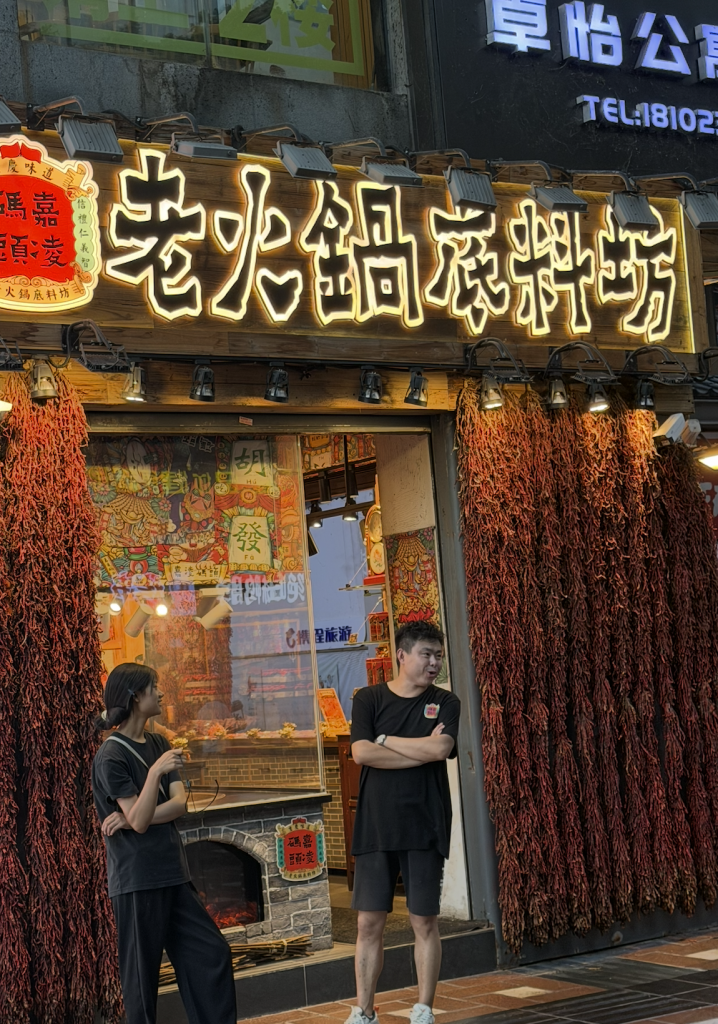
  • Olfactory Journey across China (V): Capturing the Raw Vitality of Chongqing’s Hotpot and Spices

    My continued fieldwork took me to the vertical metropolis of Chongqing after I had explored mountain flora in Yunnan, literati botanicals in Chengdu, and antique fragrance artifacts.

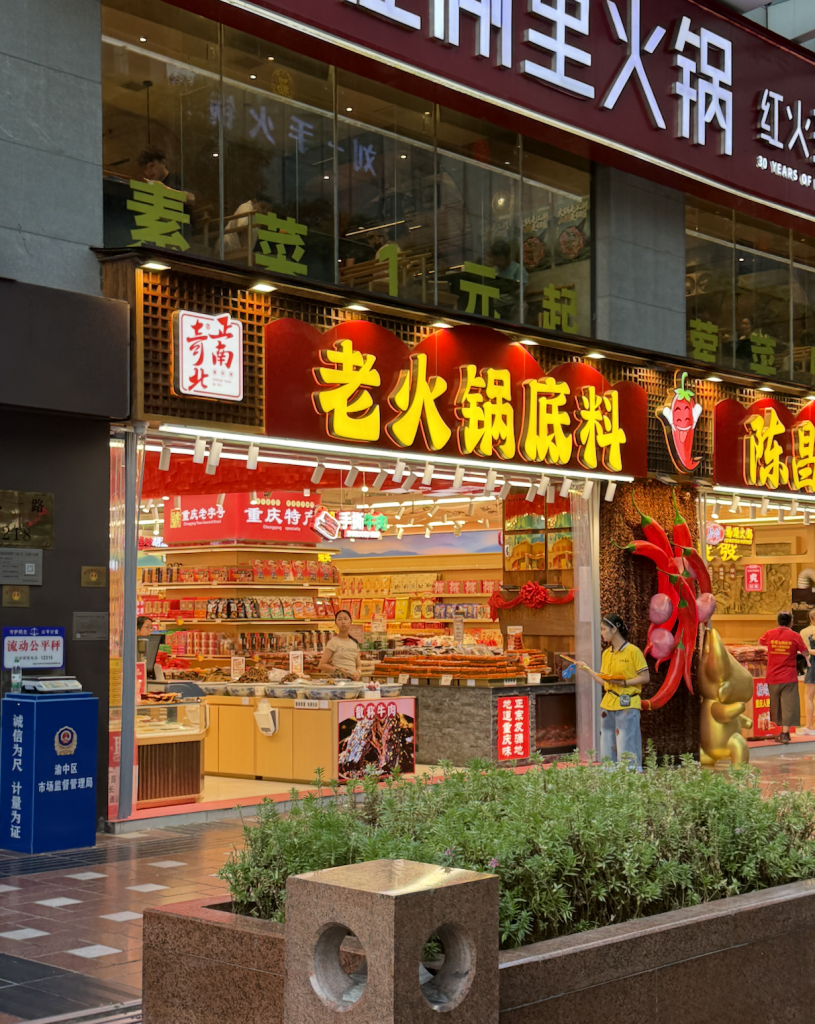
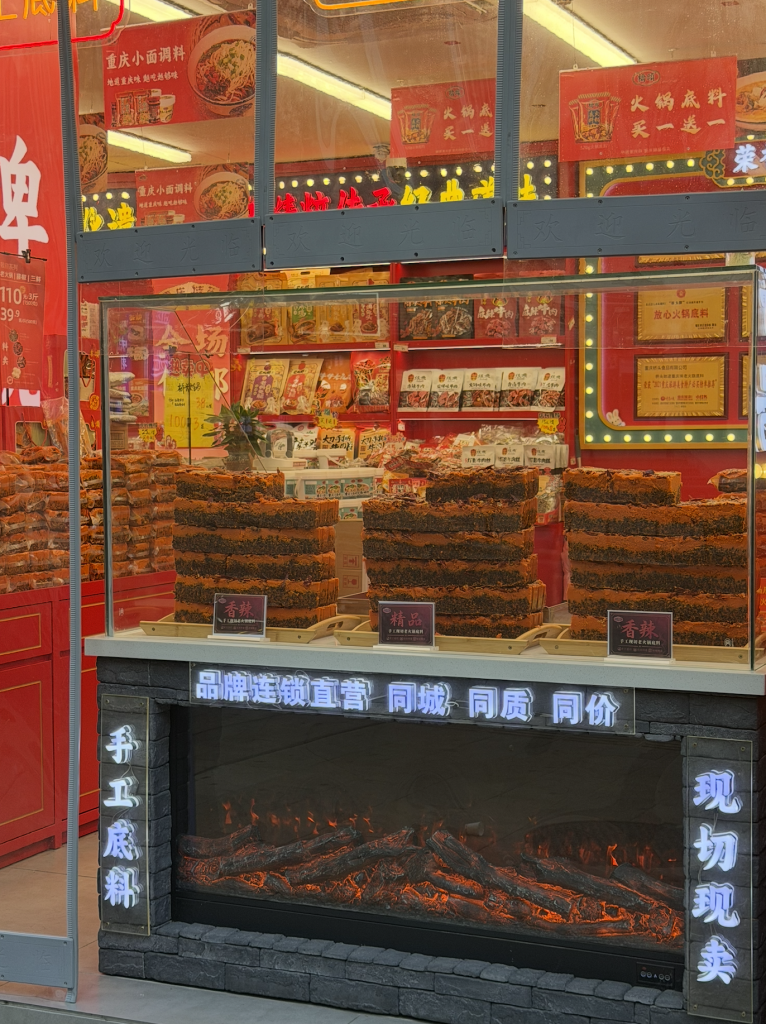
    The vivid scent of sizzling tallow, dried chiles, and Sichuan peppercorns found in Chongqing’s streets symbolizes the visceral, social warmth of daily living, while floral and woody qualities indicate the reflective, peaceful aspect of Eastern culture. Compared to traditional fine perfumes, food-related scents frequently elicit homesickness far more strongly and directly in the collective diaspora memory.

    Tallow, Peppercorn, and Star Anise: The Scent of Identity

    Rich, vibrant culinary aromas fill the air as one strolls through busy food lanes dotted with traditional brands like Qiaotou Hotpot and artisanal spice workshops:

    Simmered Beef Tallow as an Emotional Base: The rich, savory lipid profile offers a solid, stabilizing base that inadvertently evokes sentiments of warmth, domestic comfort, and fullness.

    Complex Sichuan Spices: The combination of numbing peppercorns, cinnamon bark, and star anise with the strong toastiness of wok-fried chilies creates an identifiable, penetrating aroma that is a fundamental source of culinary nostalgia for Chinese professionals and students living overseas.

    Perspectives on Action Research

    Key insights for my ongoing involvement came from observing the deep emotional resonance of culinary scents:

    Extending the Olfactory Spectrum: Homesickness has several facets. In addition to peaceful natural fragrances like tea, dirt, and mountain orchids, food scents evoke strong recollections of social events, coziness, and cultural identity.

    Material and Olfactory Parallels: My material testing with porous carriers (such cedar chips and volcanic stone) is similar to the physical form of solid hotpot blocks, which lock in volatile aromatic molecules until activated.

    From Chengdu’s street corner magnolias and Chongqing’s vivid spices to Dali’s high-mountain tea and Lijiang’s alpine cedar, my fieldwork throughout Southwest China offers an empirical, culturally rich palette to inform my dual-sensory transitional companion designs.

  • Olfactory Journey across China (IV): From Qing Dynasty Silver Pomanders to Vanishing Creams—The Evolution of Scent Carriers and Somatic Anchors

    My study evolved into a historical investigation after I visited independent fragrance workshops in Yunnan and Sichuan: How have people in China historically collected, carried, and interacted with scent through tangible objects?

    Despite the fact that scent is intrinsically intangible, traditional Chinese culture has a long history of incorporating scent into concrete objects. A distinct trajectory of tactile-olfactory embodiment is shown by examining historical everyday odors and archival artifacts from the Qing Dynasty to the Republic of China to the present.

    Wearable Smell Devices from the Qing Dynasty to the Republic of China

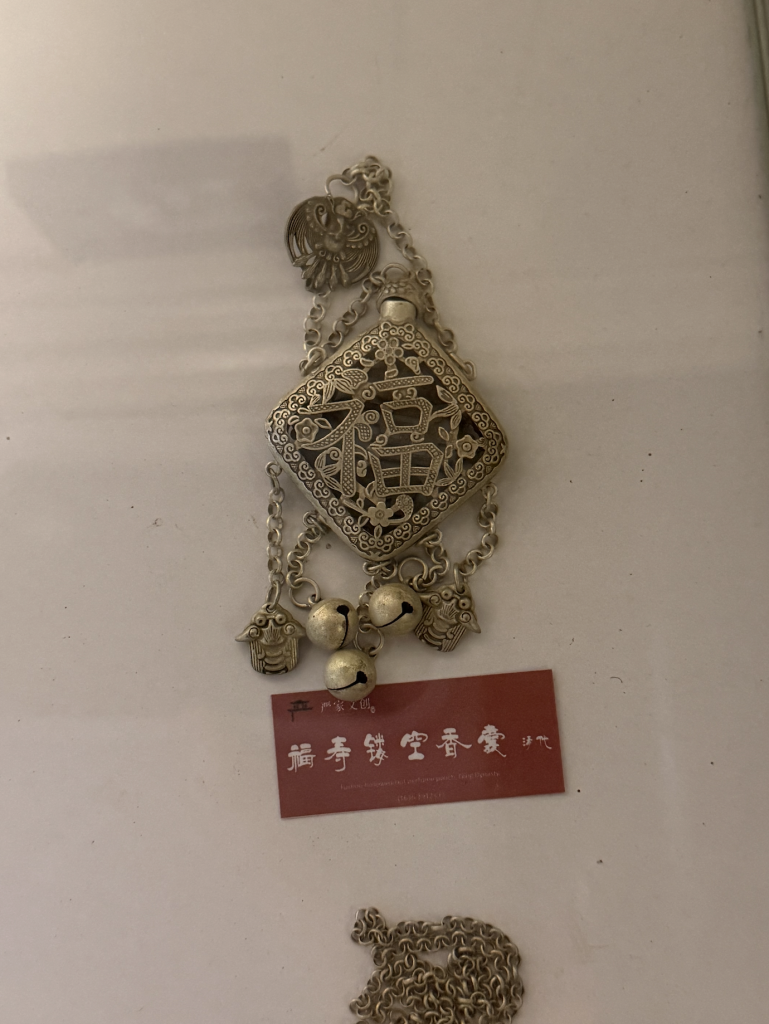
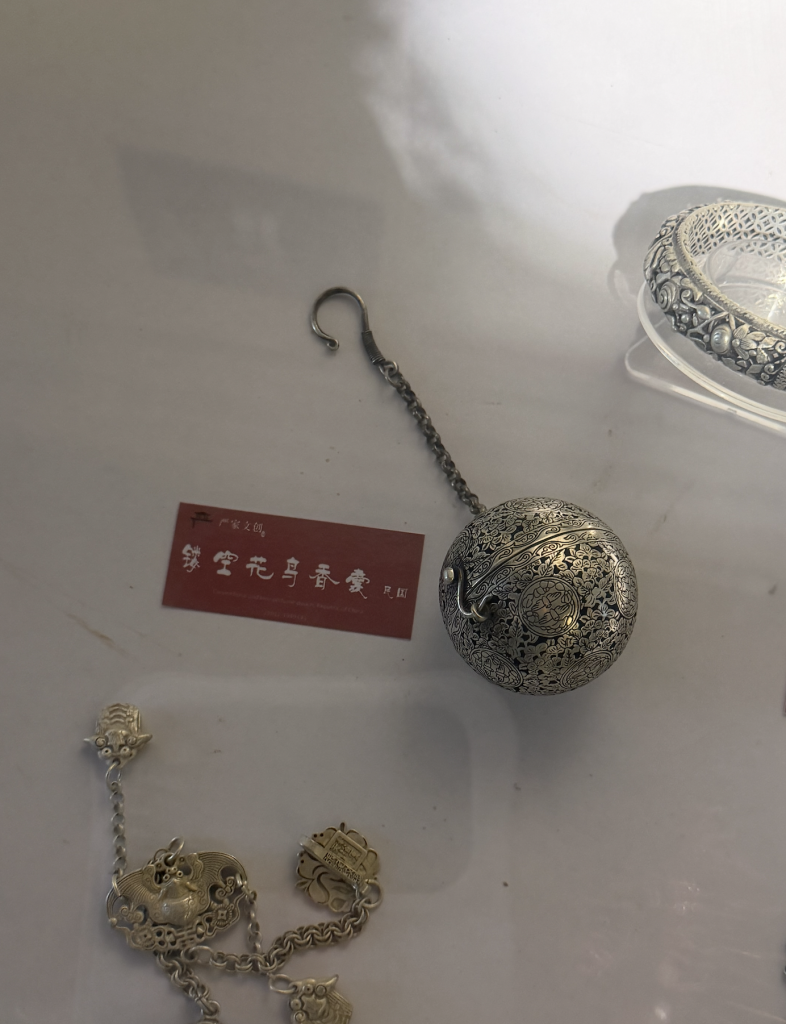
    Significant design concepts were obtained from two historical silver artifacts:

    Qing Dynasty Openwork Silver Fragrance Pouch (福寿镂空香囊):

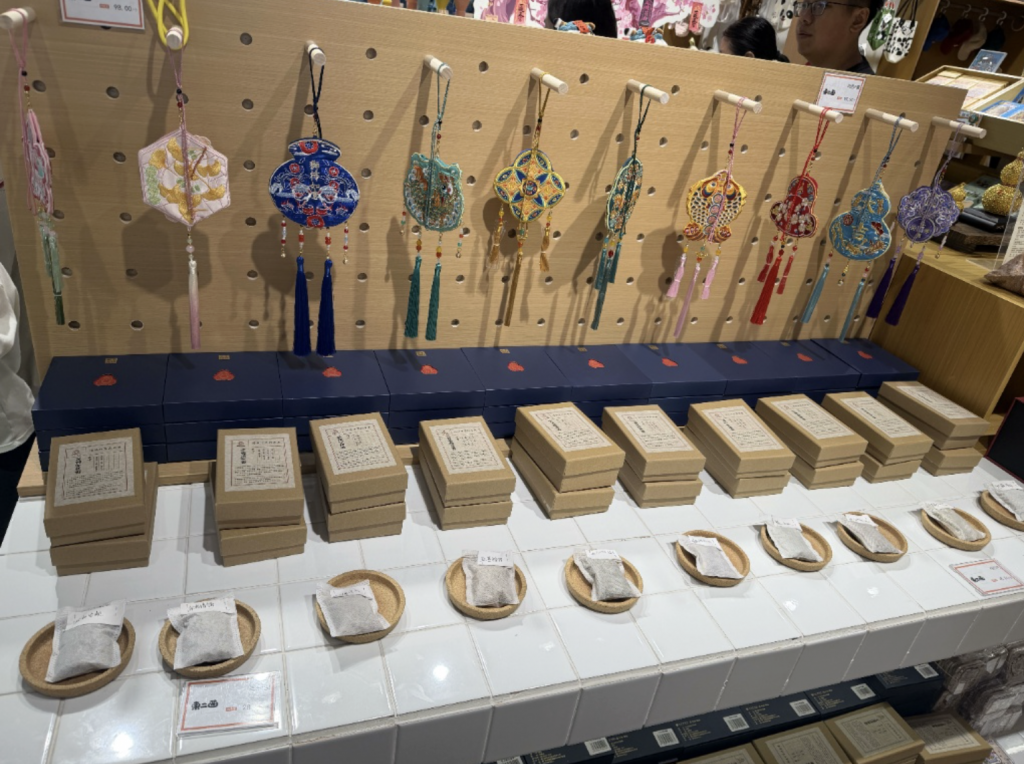
    This wearable container, which was made in the shape of a diamond and included elaborate filigree engravings of the words “Fu” (fortune) and “Shou” (longevity), allowed botanical spices, including clove, agarwood, and sandalwood, to freely disseminate through its perforated walls. It was a multisensory protection talisman that was suspended from clothing or waists and combined tactile weight, soft chime sounds from attached silver bells, and ambient fragrance.

    Openwork Floral & Bird Scent Ball, Republic of China (镂空花鸟香囊):

    This hanging spherical gadget guarantyd that interior incense stayed level independent of movement, carrying on the classic gimbal mechanism of ancient Chinese censer spheres. It was an early historical example of purposefully creating a movable “micro-comfort zone,” whether it was carried on trip or used inside bed curtains.

    Commonplace Vernacular Traditions: Vanishing Creams and Embroidered Sachets

    Beyond metal craftsmanship, fabrics and everyday cosmetic pomades are the foundation of the widespread use of scent:

    Embroidered Herbal Sachets: These sachets, which combine traditional silk embroidery with loose-leaf herbal packets, are ritualistic symbols of wellbeing that highlight passive slow-release processes and natural fiber absorption.

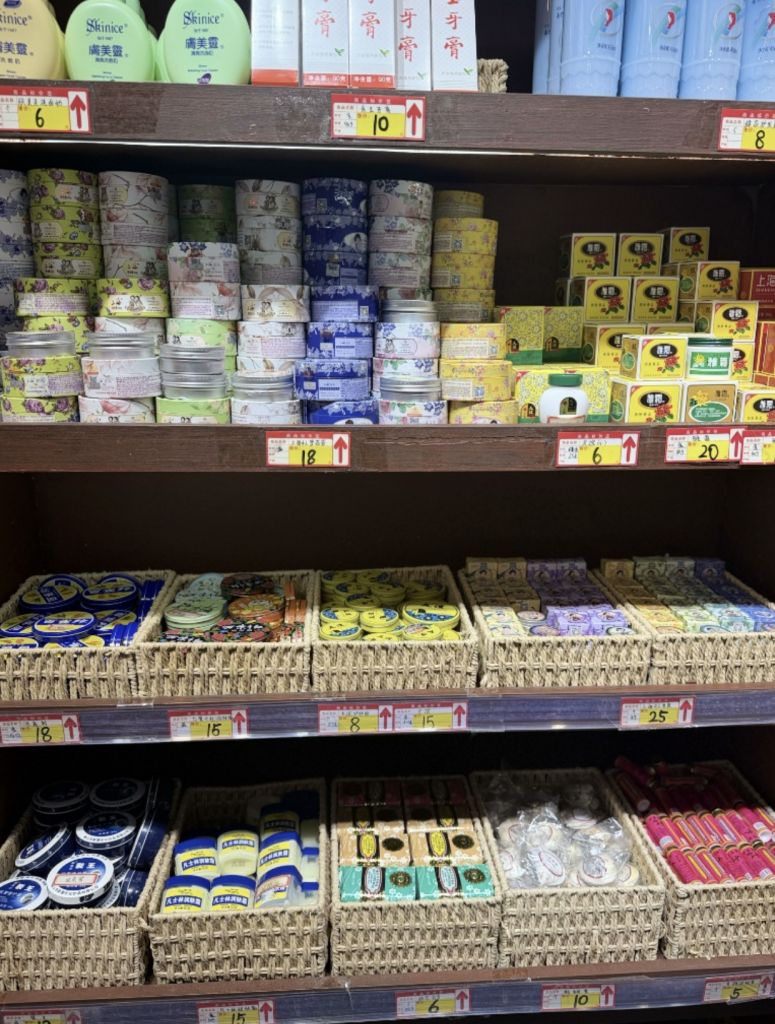
    Traditional Vanishing Creams (Shanghai Lady, Yazhuang): For contemporary Chinese generations, the ubiquitous nostalgic aromas of gardenia, white orchid, and jasmine preserved in antique tin compacts form a potent collective memory, illustrating how lipid-based carriers create intimate, skin-close comfort.

    Perspectives on Action Research

    This material investigation shows that, rather than depending exclusively on automated aerosol sprays, traditional Chinese sensory practices place a higher priority on incorporating aroma into tactile, weighted physical vessels.

    Incorporating porous natural cores (such cedar chips and volcanic rock) and perforated enclosure (influenced by the silver filigree) directly influences the structural evolution of my tactile companion objects, enabling people living abroad to carry a durable, palpable anchor of home.

  • Olfactory Tour of China (III): Using “Guan Hua Zhe Ye” in Chengdu to Capture Vernacular Botanicals and Ink Esthetics

    After leaving Yunnan’s mountain peaks and untamed vegetation, my third field research trip took me to Chengdu, a thriving cultural basin.

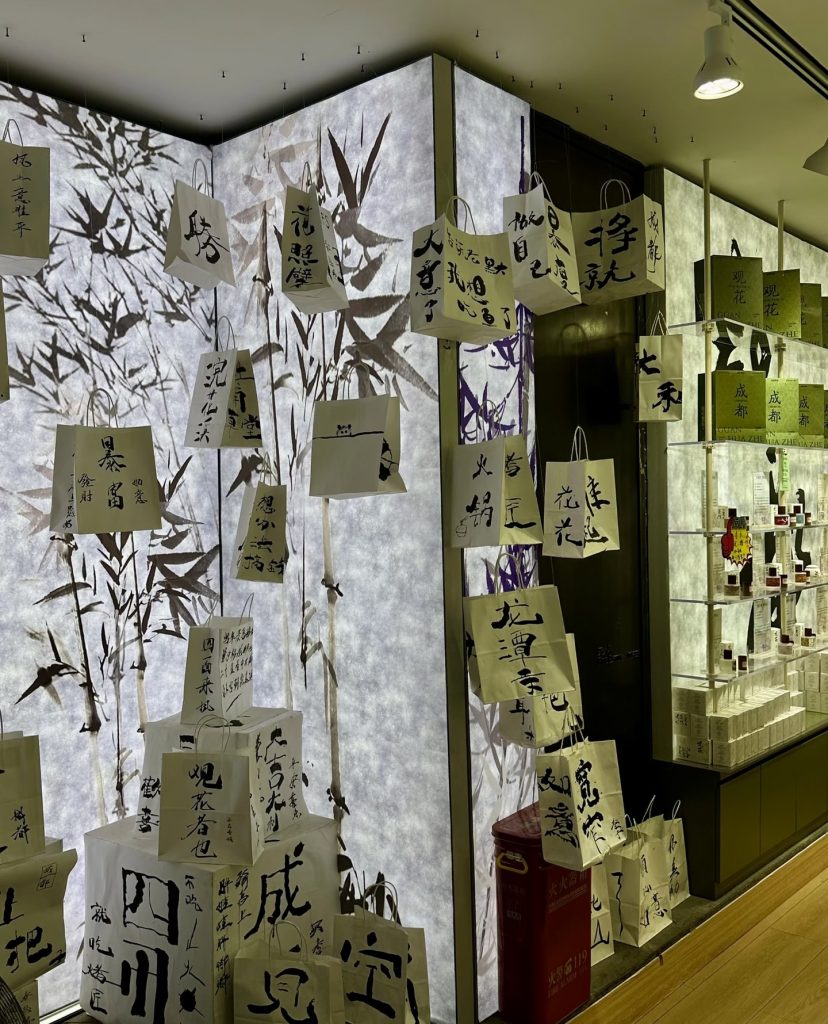
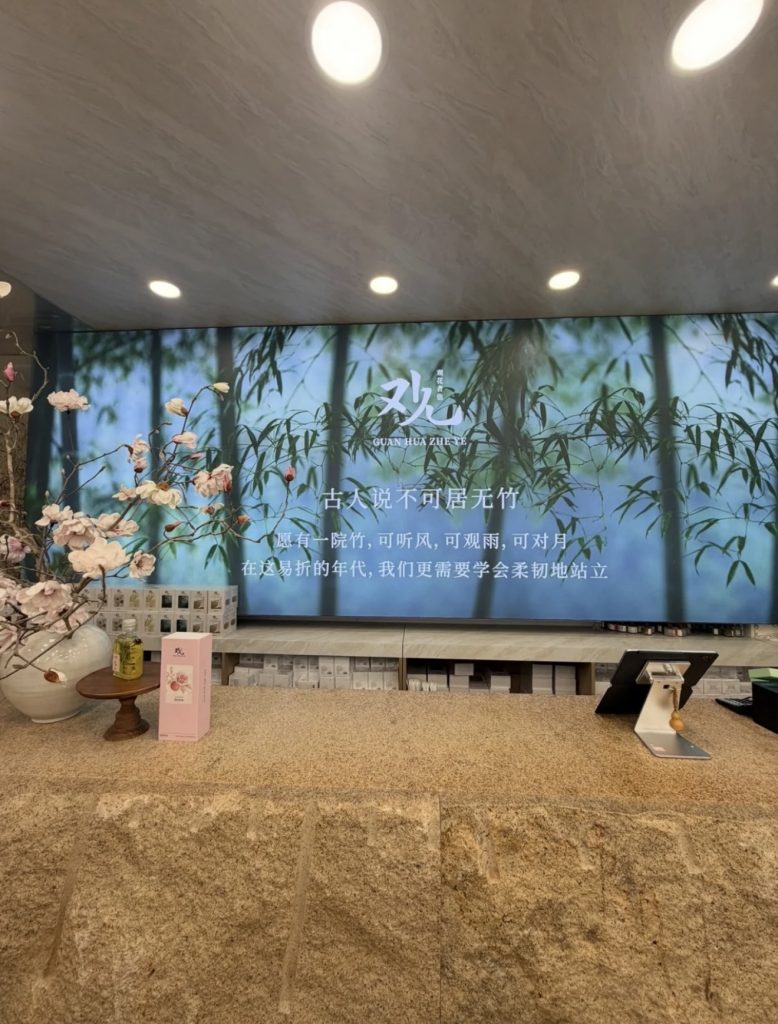
    Chengdu gave an intimate sensory blend of common household warmth and poetic leisure, while Yunnan delivered the unadulterated vigor of high-altitude environment. Here, I interacted with “Guan Hua Zhe Ye” , a local Eastern esthetic scent studio.

    Screenshot

    “Observing the Earth, Inhaling All Creations”

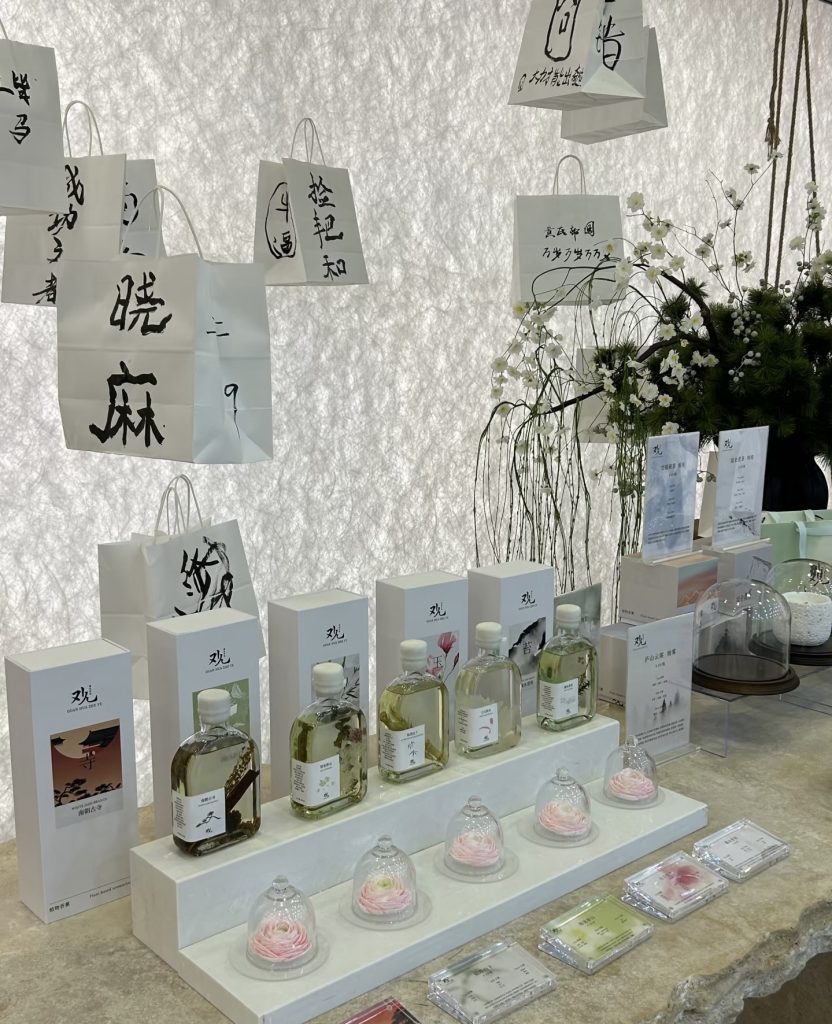
    With the motto “Infusing scents with botanical flora, entering imagery through Eastern ink,” Guan Hua Zhe Ye bases its creative framework on traditional Chinese literati culture and ink esthetics. Their spatial narratives, which include poignant observations about bamboo’s ability to withstand adversity, strongly correspond with my study question of how cultural metaphors and tangible items promote emotional resilience.

    Important Olfactory Profiles Found

    Several unique botanical profiles were identified through rigorous discussion and practical olfactory assessment:

    Mulan Ci (Magnolia/Huangjiao Orchid): This fragrance portrays the widespread vernacular memory of Southwestern China—fresh magnolia blossoms sold in woven baskets along street corners—by blending notes of green grass with yellow magnolia. It has a clean, subtle cold-floral character that is strongly associated with early household recollections.

    Guang Han Xian (Autumn Osmanthus): This fragrance, which symbolizes homecoming and seasonal transition, perfectly captures the ambient autumn air of southern Chinese cities by combining citrus and mint top notes with a flowering osmanthus heart and a grounded cedar base.

    Thoughts on Action Research

    My work in Chengdu confirmed that the quiet, sensory micro-moments of local life, rather than just enormous geography, are often what cause homesickness. By incorporating these culturally ingrained plants into tactile carriers, temporary foreign residents are given instant psychological stability.

    In the hilly city of Chongqing, I will wrap up my fieldwork in the Southwest with these lessons from Chengdu.

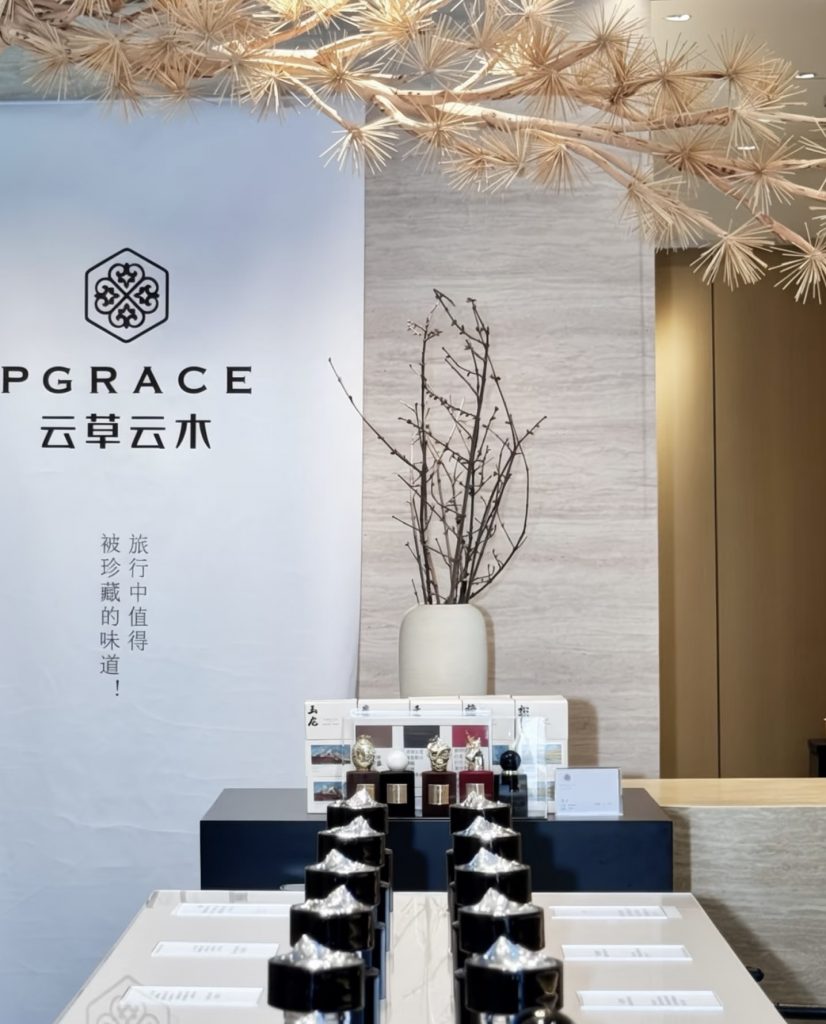
  • Olfactory Tour of China (II): Using PGRACE in Lijiang to Distilll Highland Memories

    The second stop on my olfactory voyage took me to Lijiang, Yunnan, which is characterized by higher altitudes, pure alpine air, and the majestic Jade Dragon Snow Mountain. I left behind the soft flora of Dali.

    “Extracting Yunnan’s Authenticity” is the result of eight years of grounded craft.

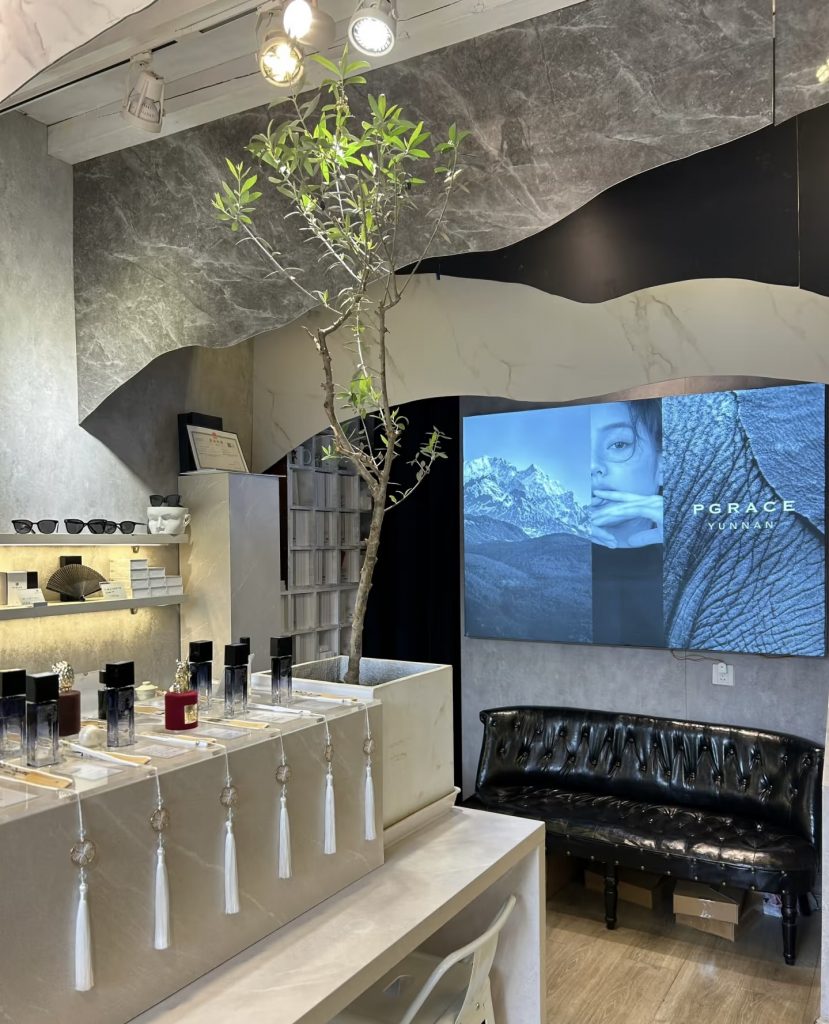
    PGRACE’s unwavering dedication to regional authenticity is what makes them unique. Based on the idea of “extracting Yunnan’s true essence and restoring natural scents,” the company incorporates uncommon botanical raw ingredients from all throughout Yunnan into each perfume. In order to guaranty that customers experience their fragrances in unaltered, physically grounded settings, they have purposefully concentrated on immersive offline experiences rather than growing into e-commerce, even though they run over thirty physical storefronts. They have received international recognition for their commitment to workmanship and esthetic rigor, including the MUSE Design Award and the French iF Design Award.

    Conversation with Alpine Botanicals

    We investigated how Lijiang’s unique ecological character could be transferred into emotive olfactory anchors in collaboration with the PGRACE creative team:

    Alpine Cedar & Cold Fir: High-altitude coniferous smells quickly bring an open, grounding stillness into private places, in contrast to the heavy, dense woody notes of lower elevations. They carry a crisp, crystalline chill reminiscent of melting snow.

    Resilient Highland Herbs: The local plants here provide strong, mildly bitter herbal scents that conjure raw, unadulterated memories of the ground while being subjected to harsh sunlight and sharp day-to-night temperature swings.

    Using Physical Objects to Ground Memory

    Our cooperative discussion connected local extraction knowledge with theoretical olfactory design. This stage increased my research on developing mobile, dual-sensory transitional products for Chinese people living abroad by investigating how rare alpine botanicals can be sustainably kept within permeable physical carriers.

    In order to experience the rich, everyday warmth of metropolitan teahouses and busy streetscapes, I will next journey toward Chengdu and Chongqing while carrying the pristine botanical clarity of Lijiang.